
The 2026 BRICS New Industrial Revolution Partnership Forum wrapped up in Xiamen on May 28, marking a pivotal moment as China steers the bloc toward a radical shift in manufacturing—one that blends artificial intelligence, green energy, and digital infrastructure into a unified vision for the developing world. Over two days, officials from five member nations (Brazil, Russia, India, China, and South Africa) alongside partners like Indonesia, Egypt, and Ethiopia signed 138 new collaboration projects worth over $90 billion, with China’s tech giants and state-backed platforms leading the charge in AI-driven industrial transformation.
Why Xiamen Became the Epicenter of BRICS’ Digital Industrial Revolution
Xiamen’s selection as the forum’s host wasn’t accidental. Since 2020, the city has operated as the BRICS New Industrial Revolution Partnership Innovation Base—a hub where China’s industrial policy meets global demand for smart manufacturing. The forum’s theme, “AI-Driven New Connections,” reflected a deliberate pivot: away from traditional infrastructure projects toward high-tech industrial ecosystems. As Xinhua reported, officials framed this as more than an upgrade—it’s a “zero-carbon leapfrog” for BRICS nations, where AI and renewable energy aren’t just tools but the foundation for competitive advantage.
The stakes are clear: China is betting that by embedding AI into manufacturing—from battery production to agricultural logistics—it can export not just goods, but entire industrial ecosystems. The numbers tell the story. Since the innovation base launched, it’s facilitated $90 billion in investments across 138 projects, with a focus on three pillars: smart factories, green energy integration, and cross-border digital infrastructure. The forum’s opening ceremony featured a $60 billion joint venture between China’s CATL (Contemporary Amperex Technology Co.) and Indonesian partners to build an end-to-end battery supply chain—mining, processing, and recycling—all optimized by AI-driven predictive maintenance.
Indonesia’s “Made in Indonesia 4.0” Roadmap: A Case Study in BRICS’ Digital Leap
Indonesia’s participation underscored the forum’s real-world impact. The country’s “Made in Indonesia 4.0” strategy, unveiled during the event, mirrors China’s playbook: digitize, automate, and green. Indonesia’s Minister of Industry, Tri Sandi, told reporters that the goal is to “accelerate industrial upgrading through smart manufacturing and digital transformation”—a direct response to China’s dominance in battery and semiconductor supply chains. What sets Indonesia apart is its ambition to use AI not just in factories, but in public services. Xinhua quoted a local startup CEO, Evelyn Maselina, who plans to deploy AI-powered hospital management systems in Jakarta within six months, with a Chinese partner.
The collaboration extends beyond hardware. China’s China Mobile’s Migu subsidiary showcased three AI-driven platforms at the forum—AI-powered heritage preservation, automated e-commerce content generation, and interactive digital storytelling—all designed for “double circulation” (domestic and global markets). Migu’s AI heritage tools, for example, use generative models to digitize intangible cultural assets like Chinese paper-cutting and embroidery, turning them into marketable NFTs or AR experiences. As China.com reported, the system is already in pilot with Fujian’s cultural bureau, with plans to expand to BRICS partners.
The BRICS AI Alliance: Who’s Building It, and Who’s Left Behind?
The forum’s most ambitious announcement was the launch of the BRICS AI and New Connectivity Alliance, a framework to standardize AI integration across member nations’ industrial sectors. Backed by China’s Ministry of Industry and Information Technology, the alliance aims to create a “common technical language” for AI-driven manufacturing—critical for interoperability between Chinese and local systems. Sina Tech’s coverage highlighted a key tension: while China and Brazil are racing ahead with pilot projects, nations like South Africa and Ethiopia are struggling with infrastructure gaps. South Africa’s Durban city officials, for instance, revealed a five-year AI strategy to digitize public services—but acknowledged that “talent is the core bottleneck.” Without skilled workers, even the most advanced AI tools risk becoming white elephants.

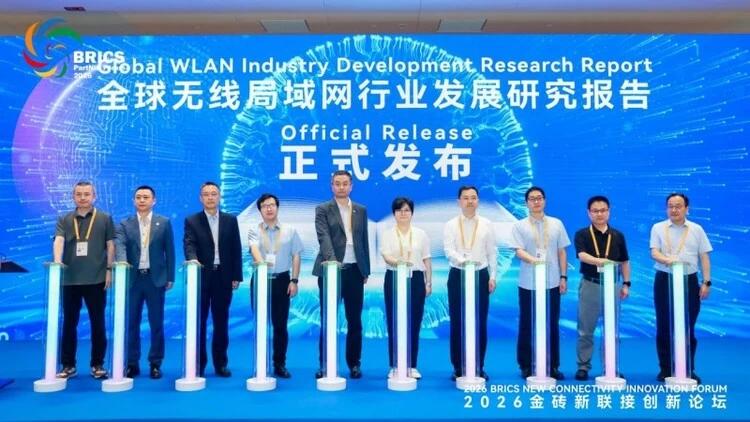
The forum’s Global Wireless LAN Industry Development Report, released during the event, laid bare the digital divide. China and India lead in 5G and Wi-Fi 7 adoption, while African and Latin American nations lag in both hardware and human capital. “We’re not just selling technology,” said Ma Yun (Alibaba founder), who attended as a representative of the BRICS Innovation Center. “We’re building ecosystems where local industries can thrive.” His warning: without targeted training programs, the AI-driven industrial revolution could deepen inequality within BRICS itself.
What Happens Next: The 30-Day Roadmap for BRICS’ Digital Industrial Shift
- Project Signings: The 138 projects announced in Xiamen—ranging from CATL’s Indonesian battery hub to Migu’s AI heritage tools—will enter pilot phases within 30 days. China’s state-backed BRICS Innovation Base will act as a clearinghouse, matching Chinese tech firms with local partners.
- Policy Alignment: BRICS nations will negotiate a “common technical standard” for AI in manufacturing by July 2026. China’s push for interoperability could force Western firms (like Siemens or GE) to adapt—or risk being locked out of BRICS supply chains.
- Talent Initiatives: The “Golden Phoenix Scholarship” program, announced by Ma Yun, will fund 1,000 students from BRICS nations to study AI and industrial automation in China. The first cohort is expected by October.
Critics warn that China’s dominance in the alliance could create a new form of dependency. “This isn’t just about technology transfer—it’s about control,” said a source familiar with BRICS negotiations. Yet for now, the momentum is undeniable. As Brazil’s Vale executive Lu Xinyan put it during the forum: “Smart manufacturing isn’t about adding tech to old systems. It’s about redesigning entire industries from the ground up.” The question isn’t whether BRICS will embrace AI-driven industry—it’s how quickly the rest of the world can catch up.
The next major test comes in November, when BRICS leaders gather in Johannesburg for their annual summit. Expect announcements on cross-border AI regulations, green industrial corridors, and—critically—whether South Africa and Ethiopia can bridge their digital gaps before being left behind.
