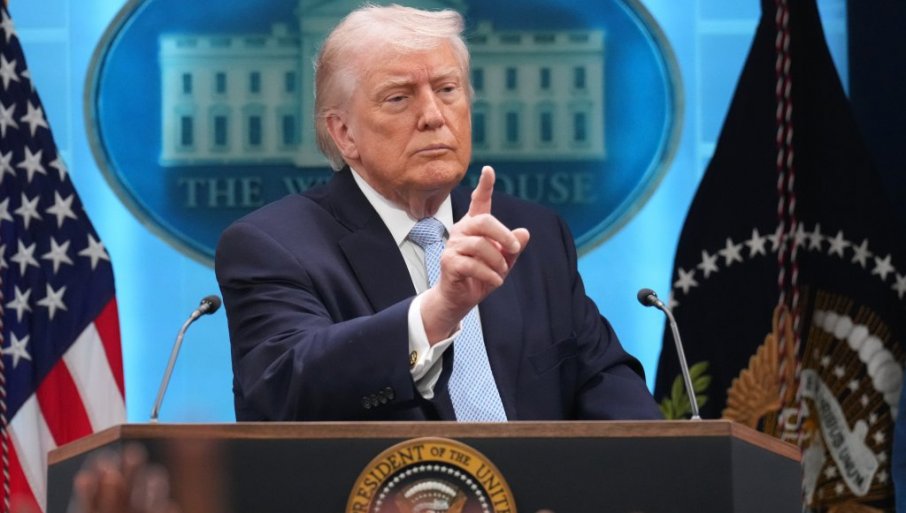
United States forces killed Hector Rusthenford Guerrero Flores, the alleged leader of the Tren de Aragua criminal organization, during a joint operation in Venezuela this week. President Donald Trump confirmed the strike on June 11, 2026, describing the action as a “swift and lethal” mission coordinated with Venezuelan authorities to dismantle the international gang.
The Operation Against Ninjo Guerrero
Photo: Naslovi.net
The military strike targeted a complex in Venezuela’s Bolivar state associated with the Tren de Aragua syndicate, according to reports from Novosti. U.S. Secretary of Defense Pete Hegseth confirmed that the operation took place earlier this week, marking a significant escalation in American efforts to neutralize the group’s leadership.
Known by the alias “Ninjo Guerrero,” Hector Rusthenford Guerrero Flores had been a primary target for U.S. law enforcement for over a year. The U.S. State Department had previously issued a $5 million reward for information leading to his capture. Following the strike, President Trump utilized his Truth Social account to assert that the group no longer has a “safe haven” in Venezuela.
“As a result, terrorists of Tren de Aragua no longer have a safe haven in Venezuela or anywhere else and, under my leadership, we will find those wicked killers and leaders of drug cartels anytime, anywhere, and send them to the depths of hell where they belong.”Donald Trump, President of the United States, via Novosti
Legal History and Criminal Expansion
Photo: Srbija danas
Federal prosecutors in New York had previously indicted Guerrero Flores on charges of racketeering, conspiracy to provide material support to terrorists, and cocaine trafficking. According to Naslovi.net, the organization began as a prison gang within Venezuela’s Tokoron prison before expanding into a sprawling international criminal network.
Guerrero Flores managed the gang’s activities from within the prison walls for over a decade. His escape in 2023 prompted an international manhunt that concluded with this week’s joint operation. While the Venezuelan Ministry of Communications confirmed its participation in the raid, previous U.S. intelligence reports have occasionally questioned the extent of the Venezuelan government’s direct control over the group’s operations.
The Doctrine of Narco-Terrorism
Trump says U.S. killed leaer of Tren de Aragua Niño Guerrero
The killing of Guerrero Flores occurs within a broader, aggressive U.S. security strategy in Latin America. As reported by Telegraf, the Trump administration has increasingly utilized the designation of “foreign terrorist organization” to justify military interventions and expand security ties across the continent.
Analysts note that this strategy echoes historical Cold War policies where the term “narco-terrorism” was deployed to link counter-narcotics efforts with anti-communist goals. The label was first popularized in 1982 by Peruvian President Fernando Belaunde Teri to describe the infiltration of the “Shining Path” (Sendero Luminoso) into the cocaine trade. The Srbija Danas analysis suggests that modern U.S. interventions, including the recent Operation “Absolute Determination” to capture former President Nicolas Maduro, rely on this same framework to consolidate geopolitical influence.
The political utility of the “narco-terrorism” label remains a subject of intense debate. While the administration frames these actions as essential for national security, critics argue the designation is highly politicized. The historical record, specifically regarding the 70,000 deaths associated with the Shining Path’s insurgency in Peru, highlights how the nexus of drugs and ideology has long served as a justification for armed intervention.
Geopolitical Implications
The current security climate in Latin America is defined by the following trends, according to recent reporting:
Increased Military Presence: U.S. Southern Command has intensified operations against small, fast-moving vessels in the Caribbean and Eastern Pacific.
Strategic Alignments: Washington has deepened security partnerships with right-leaning governments in Ecuador and El Salvador.
Pressure on Regional Rivals: Administrations in Colombia, Brazil, and Mexico face ongoing pressure to align with U.S. counter-narcotics doctrines or face diplomatic friction.
As the U.S. continues to target high-profile figures like Guerrero Flores, the long-term impact on regional stability remains uncertain. The administration maintains that these operations are necessary to disrupt international criminal networks, while observers continue to monitor whether these actions will lead to a lasting reduction in drug flow or merely further destabilize the political landscape in South and Central America.
ail: emily.johnson@headlinez.news
Bio:
Emily Johnson serves as News Editor at Headlinez.News, overseeing the publication’s coverage of national and breaking stories. She has worked in journalism for more than 12 years, building a reputation for precision, credibility, and rapid-response reporting. Emily’s editorial philosophy focuses on clear, fact-based writing that helps readers understand the full context behind the day’s most important events. Her expertise bridges traditional reporting and modern digital news strategies.
Expertise: Breaking news, political reporting, fact-checking, newsroom coordination, public affairs.
Location: Washington, D.C., USA