
Apple Releases Faster USB-C Developer Strap for Vision Pro
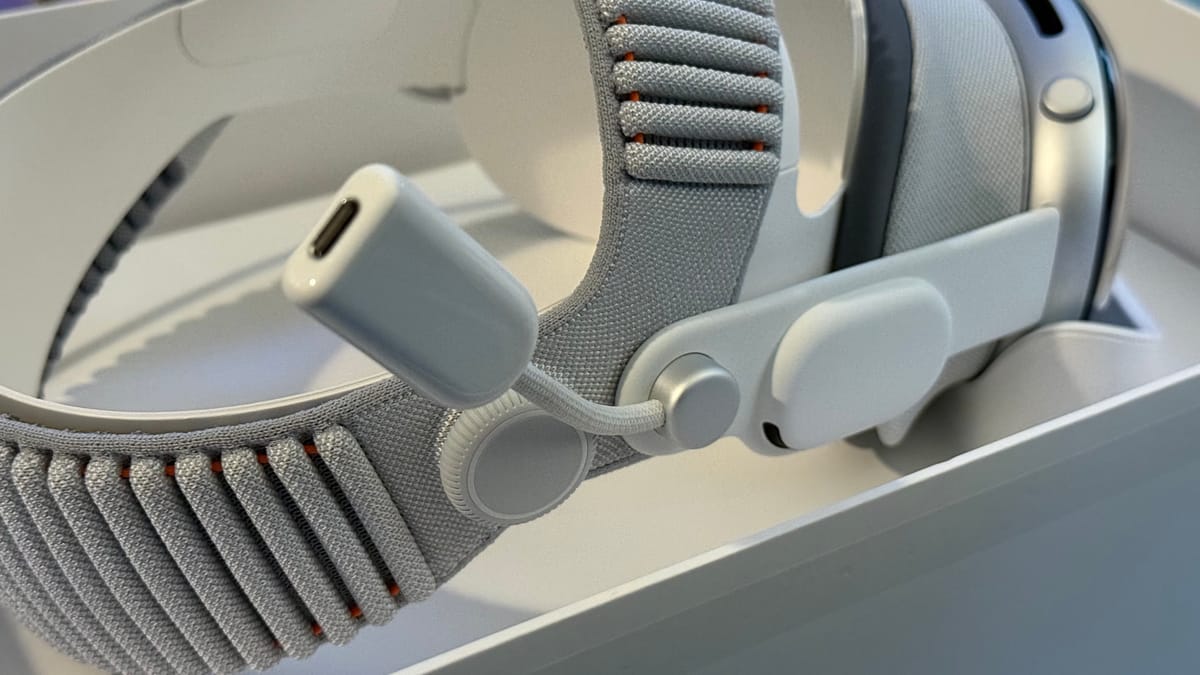
Apple today released a new Developer Strap for its Vision Pro headset, adding a high-speed USB-C port to the standalone device for $300.
The accessory, available to developers enrolled in the $99 Apple Developer Program, replaces the headset’s Right Audio Strap while maintaining the same audio functionality. Unlike the initial Developer Strap released with the M2 Apple Vision Pro in 2024, which offered USB 2 speeds of 480 Mbps, the new version supports data transfer rates up to 20 Gbps – comparable to or exceeding the speeds of most home wired networks.
This increased bandwidth is intended to accelerate the development of graphics-intensive applications and games. Demonstrations have shown the port capable of powering and mirroring the screen of a handheld gaming device, like the ModRetro Chromatic, directly within the Vision Pro environment, and even sharing that screen remotely via SharePlay. The addition of a dedicated port addresses a challenge faced by competitors like Meta’s Quest 3, where utilizing the USB-C port can conflict with the headset’s power demands, often requiring additional hubs. You can learn more about Vision Pro development on Apple’s official developer site.
Apple indicated the Developer Strap is “helpful for accelerating the development of graphics-intensive apps and games.” The availability of a faster, dedicated data connection could significantly streamline the workflow for developers creating complex virtual reality experiences, potentially leading to more sophisticated and immersive applications for the Vision Pro platform.
The company has not yet announced plans to release a consumer version of the strap, but will continue to monitor developer feedback.
A new accessory for Apple Vision Pro developers is compatible with both the M2 and M5 headsets, effectively adding a high speed USB-C connection port to the standalone headset for $300 extra.
Apple Vision Pro doesn’t feature ports of any kind as it draws power from a proprietary battery pack. For developers, who pay the $99 annual fee to build for Apple platforms, logging into their account allows them to purchase what’s essentially a USB-C port for data connections to their system. The Developer Strap replaces the rigid “Right Audio Strap” in the headset with the same audio experience and the added USB-C port.
Since launch in 2024, the M2 Apple Vision Pro offered the same accessory but it topped out with the speeds of USB 2, or 480 Mbps. The new Developer Strap can carry up to 20 Gbps. That’s double the throughput an iPhone 17 Pro can send over a USB 3 cable and as fast, or faster, than most wired networks can transport around a home.
The USB-C port on Quest headsets can be used for an array of device connections and engineers indicated a hidden one on Galaxy XR devices can be used for similar tasks, like a UVC camera for monitoring your physical environment without passthrough (a feature I used during last week’s VR Download). The challenge for Quest 3 is using that port conflicts with the headset’s extraordinary power draw, meaning users need to buy USB hubs to route in power and data on separate channels through the same port.
The need for a Quest-priced Apple Developer Strap accessory attached to the side of Vision Pro may vary from use to use, with Apple specifying it is “helpful for accelerating the development of graphics-intensive apps and games”.
I’ve connected the ModRetro Chromatic directly to my Vision Pro using the Developer Strap. With no battery pack in the device, the USB-C connection from the port of the handheld to the Vision Pro transferred enough power to play a video game cartridge from the 1990s on the handheld and display a virtual mirror of its screen inside the headset. I then shared that screen over SharePlay with others remotely on a FaceTime call.
If you can keep an eye on reality from Vision Pro through a Game Boy Camera cartridge from 1998 using a USB data connection – a positively minuscule amount of data passing through that cord – what could you do in VR with 20 gigabits each second streaming in or out alongside everything else the device does?
