
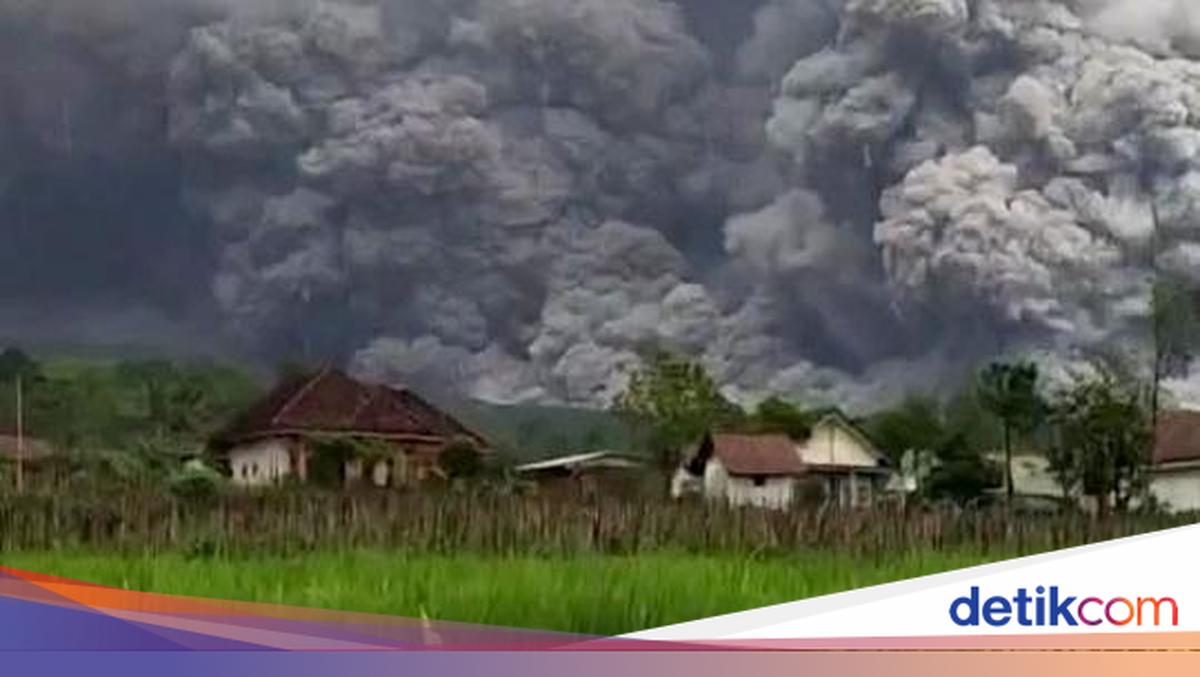
Mount Semeru, one of Indonesia’s most active volcanoes, erupted Wednesday, prompting the highest level of alert and a swift evacuation of nearby communities in East Java province[[1]]. The eruption, beginning around 2:13 PM local time, underscores the volcanic risks facing densely populated areas of Indonesia[[2]]. Authorities are currently focused on safeguarding residents as pyroclastic flows and potential mudflows pose an immediate threat to several villages[[3]].
Jakarta –
Mount Semeru, one of Indonesia’s most active volcanoes, erupted Wednesday, prompting authorities to raise the alert level to its highest status and triggering the evacuation of hundreds of residents from nearby villages. The eruption underscores the ongoing volcanic activity in the region and the potential risks to communities living near the mountain.
According to the National Disaster Management Agency (BNPB), three villages in Lumajang Regency have been directly impacted by the eruption. “There are three villages in two districts that have been affected. These areas are located in Lumajang Regency, East Java. The villages are Supit Urang and Oro-Oro Ombo in Pronojiwo District, and Penanggal in Candipuro District,” said Abdul Muhari, Head of the BNPB’s Data, Information and Communication Center, to reporters on Wednesday, November 19, 2025.
Evacuation teams have been deployed to the affected areas, and hundreds of residents have already been moved to safety.
SCROLL TO CONTINUE WITH CONTENT
“Currently, around 300 residents are temporarily sheltering in two locations,” Abdul stated.
The two evacuation centers are located at the Oro-oro Ombo Village Hall, housing 200 people, and Supiturang Elementary School 2, with 100 evacuees.
“In addition, some residents are being evacuated to the Penanggal Village Hall, but the local disaster management agency is still collecting data in the field,” Abdul added.
Mount Semeru, which sits on the border of Lumajang and Malang Regencies in East Java Province, began erupting around 2:13 PM local time (WIB) on Wednesday, November 19. According to the Volcanology and Geological Hazard Mitigation Center (PVMBG), the pyroclastic flow traveled less than 8 miles (13 km) during the eruption.
Visually, a pyroclastic flow was observed traveling 8 miles (13 km) southeast and south. Authorities also recorded one pyroclastic flow traveling less than 8 miles (13 km) southeast-south of Besuk Kobokan.
The PVMBG has issued several recommendations, including a strict no-go zone within a 12-mile (20 km) radius southeast of Besuk Kobokan, along the volcano’s peak. Outside of this zone, residents are advised to stay at least 1,640 feet (500 meters) away from the banks of the Besuk Kobokan River due to the potential for pyroclastic flows and mudflows.
Authorities are also advising people to avoid entering a 5-mile (8 km) radius of the crater due to the risk of falling rocks and volcanic debris.
Residents are urged to remain vigilant for potential pyroclastic flows, lava flows, and mudflows along rivers and valleys originating from the peak of Mount Semeru, particularly along Besuk Kobokan, Besuk Bang, Besuk Kembar, and Besuk Sat, as well as potential mudflows in smaller tributaries of Besuk Kobokan.
(ygs/isa)
