
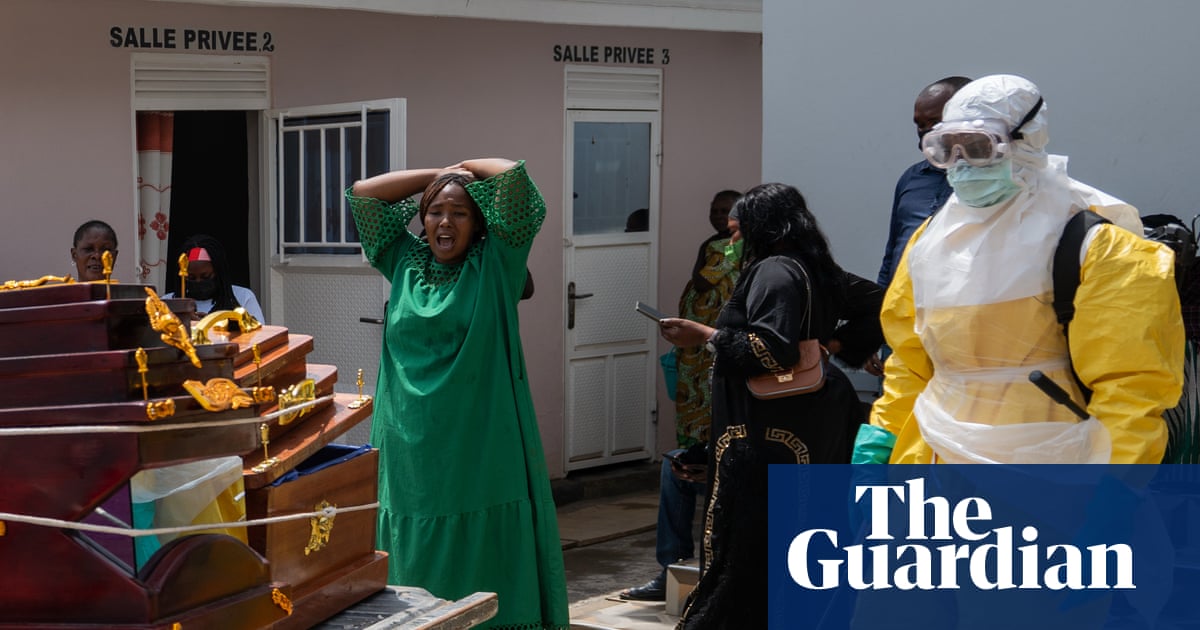
On May 23, 2026, the U.S. government announced a 30-day temporary ban on green-card holders who have traveled to the Democratic Republic of the Congo, Uganda, or South Sudan in the last 21 days, citing concerns over the Ebola outbreak. The measure, issued by the Department of Health and Human Services (HHS) and Centers for Disease Control and Prevention (CDC), expands previous restrictions that only barred non-U.S. citizens from entering the country after visiting those regions. The Guardian reported the policy, which the CDC argued balances public health protection with resource management.
Escalating Ebola Controls and Resource Concerns
The CDC’s order emphasized that green-card holders, while lawful permanent residents, may have stronger ties to foreign communities, making entry restrictions “comparatively less burdensome” than barring U.S. citizens. The agency also cited “resource constraints” in managing quarantinable diseases, noting that 18 individuals remain in a dedicated facility at the University of Nebraska after being released from a hantavirus-affected cruise ship. The Guardian highlighted that containing such diseases requires “specialized and isolated facilities with limited capacity.”

Meanwhile, the CDC expanded its enhanced Ebola screening to Hartsfield-Jackson Atlanta International Airport, adding to existing measures at Washington-Dulles International Airport. This follows the Africa Centres for Disease Control and Prevention’s warning that 10 African nations face Ebola risks. The World Health Organization (WHO) raised the risk of the Bundibugyo strain in the DRC to “very high,” with 82 confirmed cases and seven deaths reported there. Yahoo noted the move as part of a layered public health strategy.
White House Resistance to Ebola Patient’s Return
Separately, The Washington Post revealed that the White House initially resisted allowing an American doctor exposed to Ebola in the DRC to return to the U.S. Five anonymous sources described delays in evacuating Peter Stafford, who was ultimately sent to Germany. The report underscored tensions between public health protocols and humanitarian concerns, though the administration did not publicly address the claim.
Marco Rubio’s Public Health Priorities
U.S. Secretary of State Marco Rubio, in remarks last week, reiterated the administration’s focus on preventing Ebola from entering the U.S. “Our No 1 objective on Ebola … has to be we can’t have it affect the United States. We can’t have Ebola cases coming here,” he said, per The Guardian. His comments align with the CDC’s rationale for the green-card ban, which stressed that “applying this authority to lawful permanent residents for a limited period of time provides a balance between protecting public health and managing emergency response resources.”
The policy has drawn scrutiny over its potential impact on families and communities connected to the affected regions. Critics argue that targeting green-card holders—many of whom have deep ties to the U.S.—may inadvertently hinder public health efforts by creating barriers to reporting symptoms or accessing care. However, the administration maintains that the measures are necessary to mitigate the “highly resource-intensive” task of containing outbreaks on U.S. soil.
What’s Next for the Ebola Response?
As the WHO prepares to reassess the DRC’s outbreak risk, the CDC’s expanded screening and travel restrictions signal a heightened focus on border security. The White House’s handling of the doctor’s case also raises questions about transparency in emergency decision-making. With the 30-day ban set to expire in early June, officials will face pressure to justify its continuation or revise the policy amid growing public and international scrutiny.
