
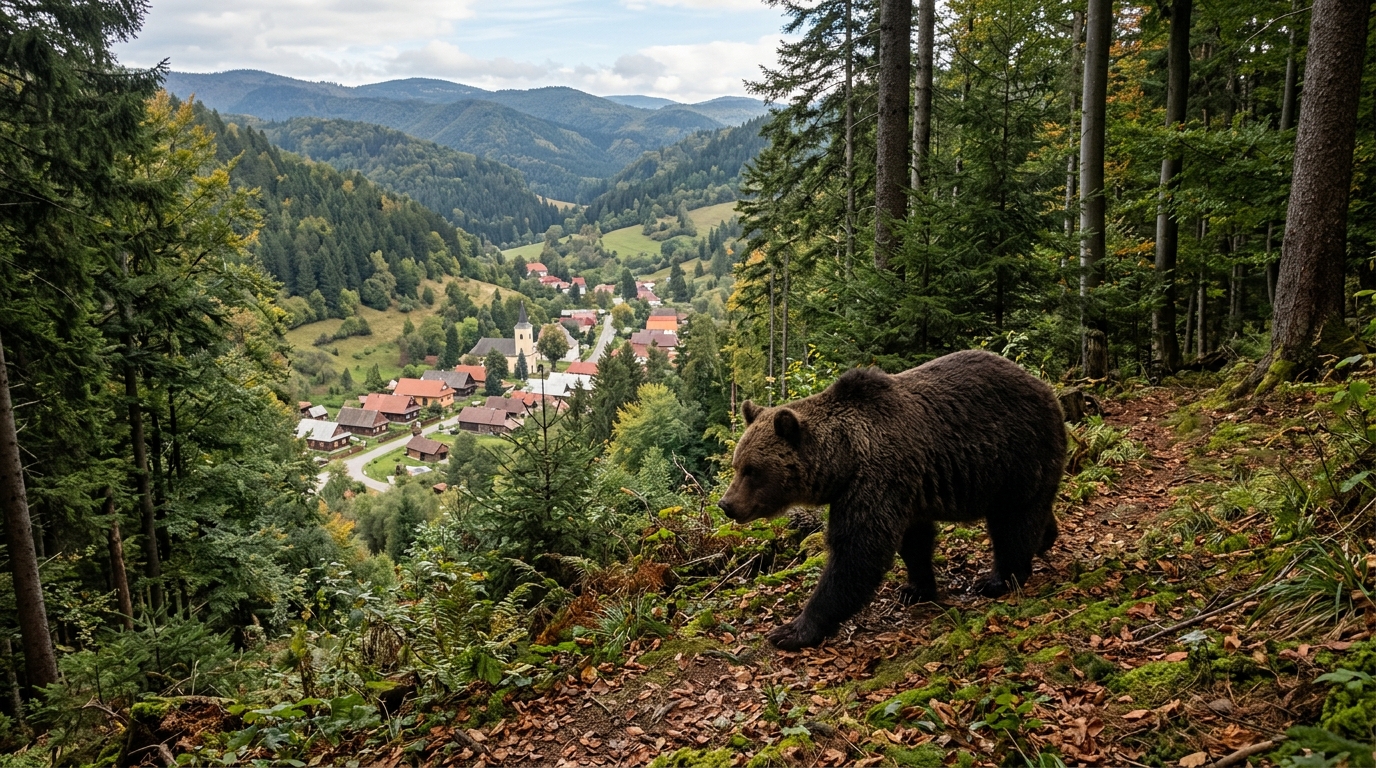
A brown bear has been spotted near a gas station in Košice, Slovakia, forcing local authorities to deploy a rapid-response team and issue urgent safety warnings to residents and hikers in the region.
As of Sunday, May 31, 2026, the bear—identified as a male brown bear (*Ursus arctos*)—was confirmed moving near a gas station in the vicinity of Jahodná, a village in the Košice-okolie district. The sighting follows a series of recent bear encounters across eastern Slovakia, raising concerns about human-wildlife conflict in areas where urban and natural habitats converge. Authorities are monitoring the situation closely, with no immediate plans for intervention unless the bear poses a direct threat to public safety.
Where and When the Bear Was Spotted
According to Keturist, the bear was first detected near a gas station in the Jahodná area, specifically in dense spruce forests near the Bujačná locality—just a few kilometers west of Košice. Modern wildlife cameras captured the bear moving through the area on May 26 and 27, 2026, around midday. The forest, located near human settlements and holiday cottages, has become a focal point for safety alerts.

This is not an isolated incident. Žilina SP21 reported that residents of Kysúce also spotted a bear in the Svrčinovec-Zatky-Praženková area earlier this month, prompting local authorities to urge caution in those regions as well. The Košice area has seen multiple bear sightings in recent weeks, including one near Betliar’s castle park in mid-May, where the animal was photographed near a roadway.
Why This Bear’s Presence Is Unusual
The bear’s movement near human infrastructure is notable because brown bears in Slovakia typically avoid populated areas. According to nasekosice.sk, the animal’s presence coincides with the annual mating season (*ruja*), when male bears roam farther in search of mates. Starosta Štefan Klein of Opátka, who is also a hunter, explained that the bear’s behavior is not unusual for this time of year but warned that its proximity to roads and gas stations increases the risk of conflict.
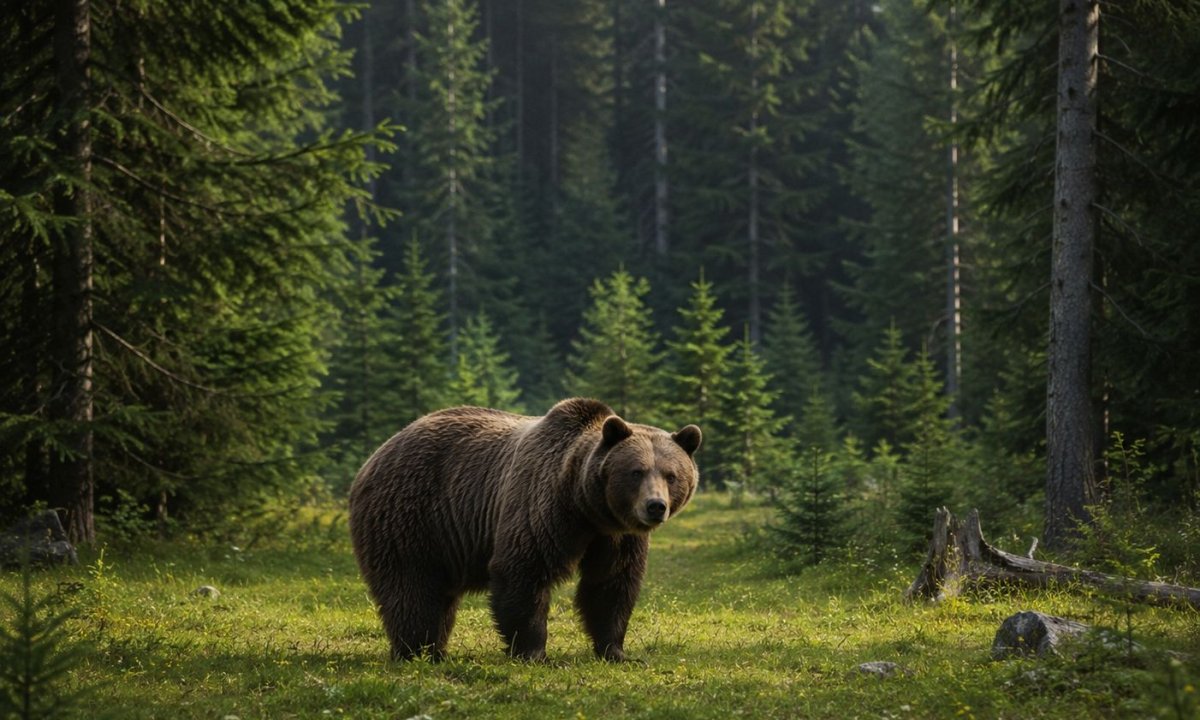
“The bear was spotted in multiple locations,” Klein said. “We assume it’s moving toward Ružín or Košická Belá, seeking shelter in dense forests from Lajoška to Kojšovská hoľa.” He added that while the bear’s presence is natural—given the region’s long history of brown bear activity—residents should remain vigilant, especially near forested edges and recreational trails.
How Authorities Are Responding
Local governments and forestry officials are taking a measured approach. Mestské lesy Košice confirmed that while the bear’s movements are being monitored, no extraordinary measures are planned unless its behavior becomes aggressive or it enters residential zones. Martin Konečný, an inspector for non-production forest functions, stated that the situation is “completely natural” and not cause for panic.
“We record a few bears appearing sporadically on camera traps,” Konečný said. “This is a normal part of biodiversity in eastern Slovakia.” However, he emphasized that forestry teams and hunters are actively tracking the bear’s movements. If it lingers near populated areas or shows signs of distress, officials will issue further alerts or consider relocation—though such interventions are rare and only used as a last resort.
Safety Advice for Hikers and Residents
The Košice region’s forestry department and local municipalities have issued clear guidelines to minimize risks. Košicak.
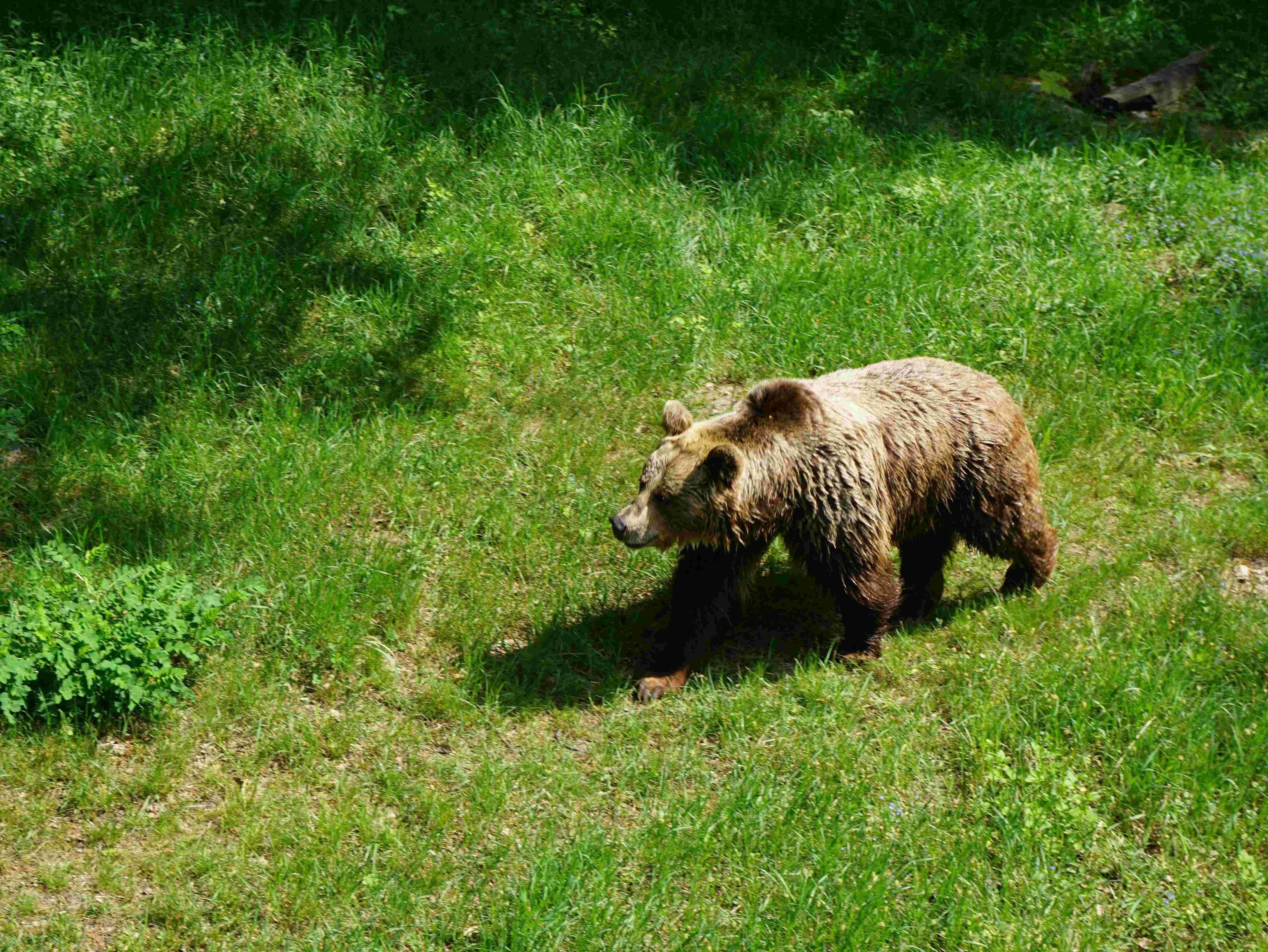
- Make noise: Talk, sing, or clap rhythmically while hiking to alert bears to your presence. Bears are typically shy and will avoid humans if they know we’re nearby.
- Stay on marked trails: Avoid dense undergrowth, fallen trees, and steep terrain—common hiding spots for bears, especially mothers with cubs.
- Avoid feeding bears: Never leave food or trash in forests, as it attracts bears to human areas.
- Travel in groups: Bears are less likely to approach larger groups.
- Carry bear spray: While not widely available in Slovakia, some outdoor stores sell bear deterrents. Making noise is the first line of defense.
In Jahodná, local authorities have advised residents to secure trash bins and avoid leaving food outside. The gas station where the bear was spotted has reportedly increased surveillance in the area, though no closures or restrictions have been imposed.
What Comes Next: Monitoring and Long-Term Trends
The bear’s movements will be tracked using camera traps and reports from hunters and forestry workers. If the animal remains in the area for more than a few days, officials may consider temporary trail closures or increased patrols in high-risk zones. However, given the bear’s current behavior—moving through forests rather than approaching settlements—the focus remains on education and prevention.
This incident is part of a broader trend: as Slovakia’s forests recover and urban areas expand, human-wildlife encounters are becoming more frequent. In 2025, the country recorded over 100 bear sightings near populated areas, according to the Slovak Environmental Agency. While most encounters are harmless, experts warn that as development encroaches on wildlife habitats, conflicts will likely rise.
For now, the message from authorities is clear: enjoy Slovakia’s stunning forests, but stay aware. The bear near Jahodná is a reminder that nature and urban life are increasingly intertwined—and that coexistence requires caution from both sides.
