
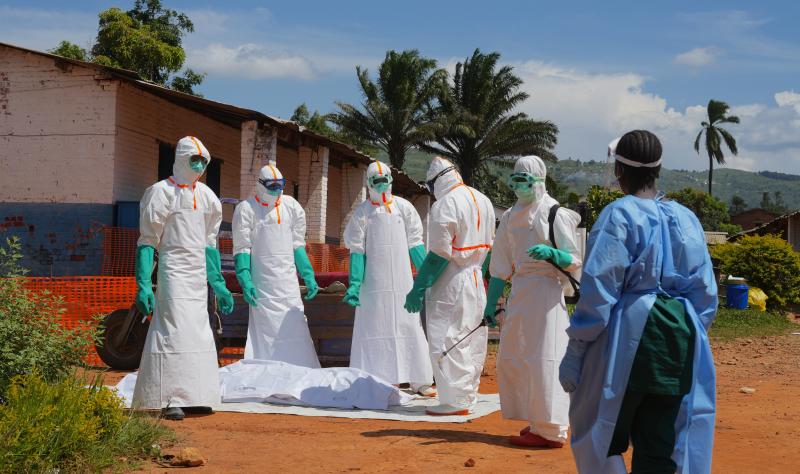
The Democratic Republic of Congo (DRC) is battling its 17th Ebola outbreak since 1976, with the Bundibugyo strain now spreading rapidly in Ituri province. As of June 7, 2026, confirmed cases have reached 397 with 63 deaths, but officials warn the true toll could be far higher due to misinformation and resistance to health protocols. The World Health Organization (WHO) and Africa CDC have launched a $518 million emergency response plan to contain the outbreak before it crosses borders.
Misinformation Fuels Resistance in Bunia
In the heart of the outbreak, Bunia’s residents are grappling with deep skepticism. When authorities confirmed the Ebola cases on May 15, many dismissed it as a “Western conspiracy,” according to AP News. The distrust has led to attacks on health workers and delayed treatment, with at least one resident, Samson Gerson, 52, refusing vaccination, saying, “I can never take the vaccine, I prefer to die because if the vaccine arrives, it can scare us even more.”

Radio Télévision Mont Bleu in Bunia has become a critical lifeline. Its daily 45-minute program, featuring health specialists and jingles about Ebola, is the only reliable source for many residents. Verité Johnson, the station’s editorial secretary, told AP News that the show’s goal is simple: “So far, there’s still a layer of resistance within the population, and that’s where the media plays an important role.” The station’s broadcasts are a rare example of how local journalism can counter fear when official messaging fails.
“Misinformation is almost as dangerous as the virus itself and spreads just as fast. Earning and keeping the trust of communities is at the heart of everything we do.”
A $518 Million Plan to Stop the Spread
The WHO and Africa CDC’s new response plan is the largest coordinated effort yet to tackle the Bundibugyo strain, which has no approved vaccine or treatment. The $518 million fund will focus on three priorities: containing the outbreak in DRC, supporting Uganda’s response, and preparing neighboring countries for potential spillover. According to CIDRAP, the plan aims to raise awareness, improve surveillance, and train local health workers—all while addressing the root cause of resistance: distrust.
WHO Director-General Tedros Adhanom Ghebreyesus framed the stakes bluntly: “This is a very serious outbreak, and we need to stop it now, where it is.” The plan’s emphasis on “one plan, one budget, one team” reflects a shift toward unified action, but the challenge remains daunting. The Bundibugyo strain has a 15.9% confirmed case-fatality rate—lower than some strains but still deadly—and the outbreak is spreading faster than previous ones of similar size.
Why This Outbreak Is Different
Two factors make this outbreak uniquely dangerous. First, the Bundibugyo strain is less understood than the more common Sudan or Zaire strains. Second, the region is already unstable: active conflict and weak healthcare infrastructure mean that even basic containment measures—like isolating patients within two days—are difficult to enforce. A CDC modeling study warns that if only 20% of infected individuals are detected early, cases could exceed 20,000 by mid-August—a trajectory eerily similar to the 2014–2016 West Africa outbreak, which killed over 11,000.
Yet there’s a glimmer of hope. In Uganda, where 16 cases and one death have been confirmed, officials credit rapid testing and contact tracing for limiting spread. The WHO’s plan includes cross-border coordination, but success hinges on whether local communities—especially in DRC—will trust the response. As Basile Rambaud, a public health expert, told AP News, “What is key is to involve the local actors at all levels. If we try to impose what we think is right to the community, we are running towards failure.”
What Happens Next?
The next six months will be critical. The WHO’s $518 million plan must be fully funded, and local trust must be rebuilt. Radio programs like Bunia’s are a start, but broader campaigns—including community leaders and religious figures—will be needed to counter misinformation. The CDC’s modeling underscores the urgency: every day of inaction increases the risk of a larger, uncontrollable outbreak. Meanwhile, Uganda’s experience shows that early detection and isolation can work—but only if the response is swift and trusted.
For now, the battle is as much about perception as it is about science. In Bunia, a radio jingle might be the only thing standing between Ebola and a full-blown crisis. The question is whether the world will listen.
