

Isar Aerospace scrubbed its second attempt to launch the Spectrum rocket on Monday, June 15, 2026, after detecting anomalies in the rocket’s liquid systems just before liftoff from Norway’s Andøya Spaceport. The Munich-based startup, which failed its first flight in March 2025, now faces another delay as engineers analyze the latest setback—one that mirrors earlier technical hurdles that have pushed back its orbital qualification mission by months.
Why the Launch Failed: A Pattern of Technical Snags
The cancellation came after Isar Aerospace detected “deviations from expected values in the liquid systems” of the Spectrum rocket, according to a statement from the company. This is the third scrubbed launch attempt for the mission, codenamed “Onward and Upward,” following earlier delays caused by a faulty pressurization valve in January, weather and range safety concerns in March, and a suspected leak in a composite pressure vessel in April. The company’s vice president of mission and launch operations, Alexandre Dalloneau, previously told reporters that the first flight’s failure—caused by a loss of attitude control and an open vent valve—had been a “fully successful story” for the company, demonstrating the safety of its flight termination system. But the recurring technical issues suggest deeper challenges in qualifying the rocket for operational use.


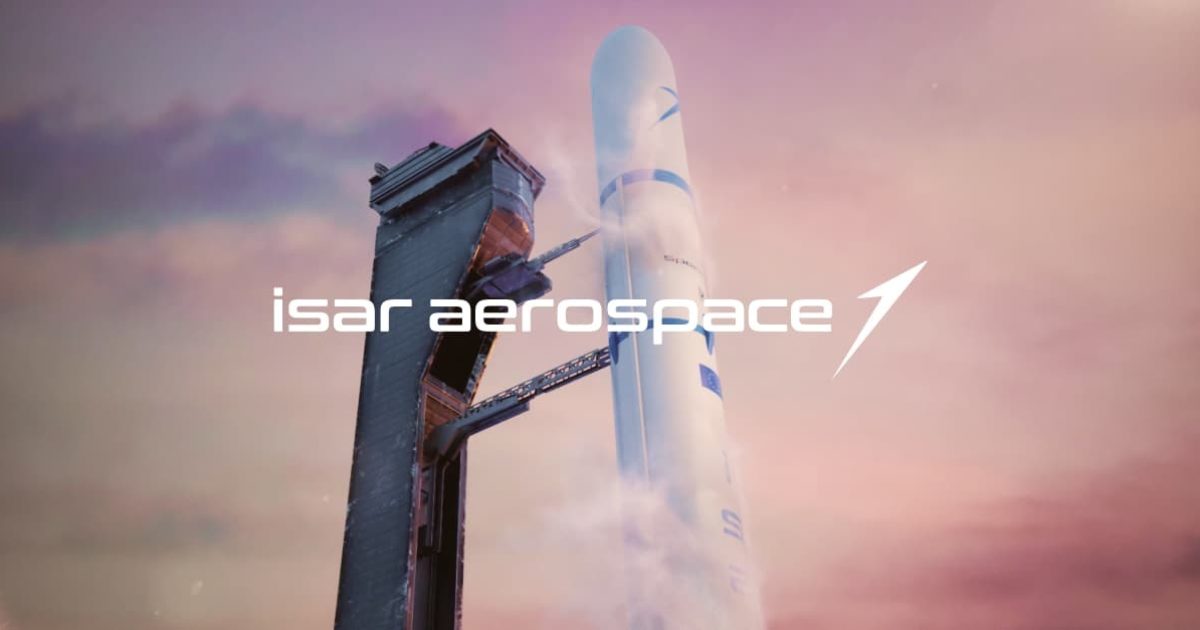
The Spectrum, a 28-meter-tall, two-meter-diameter rocket designed to carry up to 1,000 kilograms to low-Earth orbit (LEO), has been in development since its debut in March 2025. That first flight, “Going Full Spectrum,” ended in failure after just 30 seconds when the rocket lost control during a pitch-over maneuver. An investigation revealed that a vent valve had opened unexpectedly, triggering the flight termination system. According to SpaceNews, Dalloneau attributed the issue to “not properly characterizing bending modes of the vehicle at liftoff,” a problem the company has since revised in its modeling.
A Rocket Built for Europe’s Small-Satellite Boom
Spectrum is part of a new wave of European small-satellite launchers competing with established players like Rocket Lab and Firefly Aerospace. Unlike its competitors, Spectrum uses propane and liquid oxygen—a cleaner-burning, more efficient propellant combination that gives it an edge in payload capacity. While Rocket Lab’s Electron can carry just 200 kilograms to sun-synchronous orbit (SSO), Spectrum aims to deliver 700 kilograms from Andøya or up to 1,000 kilograms from Kourou, French Guiana, where Isar also plans to operate. This capacity positions it to serve Europe’s growing demand for small-satellite launches, particularly in defense and Earth observation.
The “Onward and Upward” mission was supposed to be a turning point for Isar. It carried five cubesats and an experiment payload from German hardware manufacturer Dcubed, along with satellites from Technische Universität Berlin, the Norwegian University of Science and Technology (NTNU), and other European institutions. The flight was also intended to qualify Spectrum for commercial operations under the European Space Agency’s “Boost!” program. But with each delay, the company’s timeline slips further. According to Interspace Skyway, Isar had initially targeted a January 21 launch but pushed it back repeatedly due to technical and logistical issues.
What Comes Next: A Race Against Time and Demand
Isar Aerospace is not alone in facing launch delays. The small-satellite market is crowded, and European startups like The Exploration Company and Rocket Factory Augsburg are also vying for contracts. But Isar’s chief commercial officer, Stella Guillen, has signaled ambition: the company aims to reach six to eight launches annually by 2028, driven by demand from European programs like the Flight Ticket Initiative and the European Launcher Challenge. “The demand is so huge right now, especially on the defense side in Europe,” Guillen told reporters in September 2025, adding that the company was working to “produce and launch faster.”
The latest scrub raises questions about whether Isar can meet its own timeline. The company has already spent over a year refining Spectrum’s systems, but the recurring issues suggest that orbital qualification may take longer than anticipated. Meanwhile, competitors like Rocket Lab and Firefly have established track records, making it harder for Isar to secure early contracts. The company’s ability to deliver on its promises will determine whether it can carve out a niche in Europe’s burgeoning space industry—or whether it will remain a promising but perpetually delayed player.
The Bigger Picture: Europe’s Space Ambitions Hang in the Balance
Isar’s struggles reflect broader challenges in Europe’s push to reduce reliance on foreign launch providers like SpaceX. The European Space Agency (ESA) has invested heavily in small-launcher programs to ensure independent access to space, but delays and technical hurdles have slowed progress. Spectrum’s first flight failure was a setback, but the company’s persistence—despite repeated delays—shows its determination to succeed. If Isar can overcome its current issues, it could become a key player in Europe’s space ambitions. But if the pattern of technical setbacks continues, the company may find itself falling behind competitors who have already proven their reliability.
The next steps for Isar are clear: analyze the latest anomalies, fix the liquid system issues, and reschedule the launch. The company has not set a new target date, but given the history of delays, another postponement is likely. What is certain is that Europe’s space industry is watching closely. For Isar, the stakes are high—not just in proving its rocket works, but in securing its place in a market that rewards speed and reliability above all else.
Sources: Spiegel, Isar Aerospace, Interspace Skyway, <a href="https://spacenews.
<!– /wp:paragraph The European space industry is holding its collective breath as Isar Aerospace takes a crucial step back to reassess its struggling Spectrum rocket, with scrutiny from competitors waiting in the wings.Find more reporting in our Tech section.
