
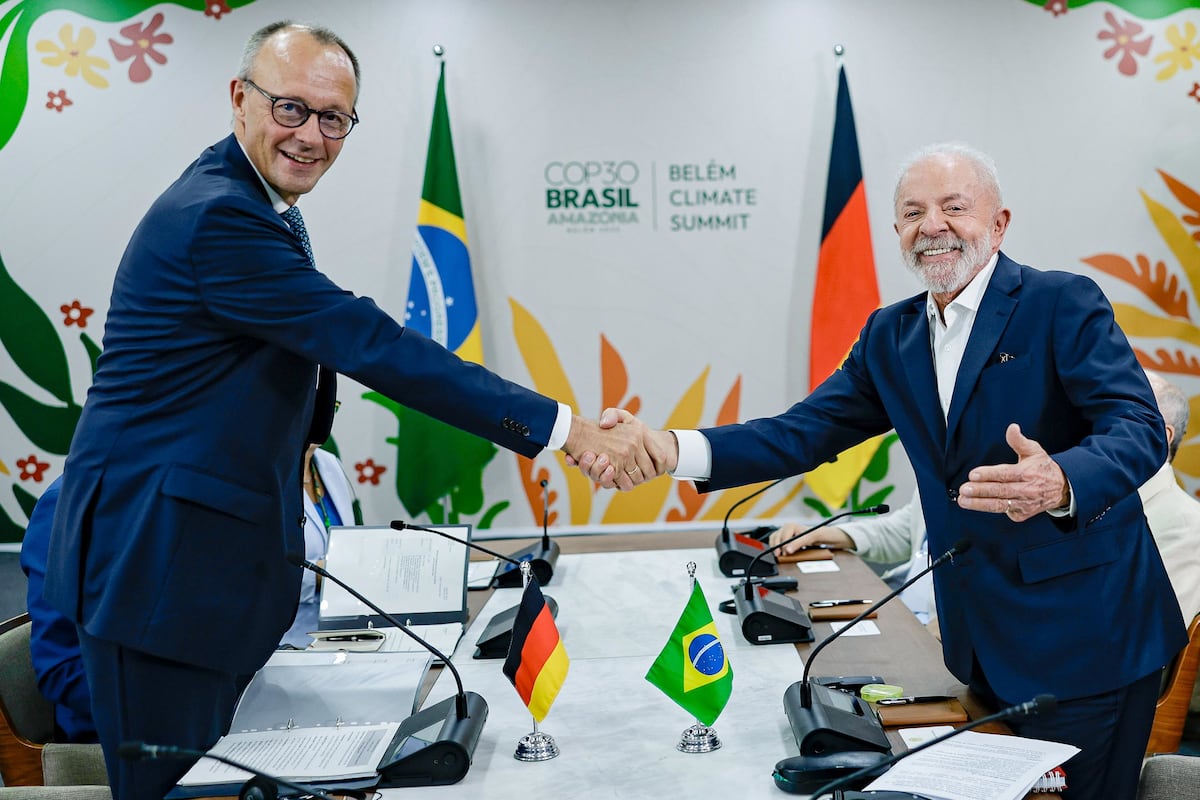
As the COP30 climate conference enters its critical final week in Belém, Brazil, a diplomatic dispute has erupted following remarks by german Chancellor Friedrich Merz questioning the appeal of the Amazonian city. Merz’s comments,made after a pre-COP summit,drew a sharp rebuke from Brazilian President Luiz Inácio Lula da Silva and ignited a national debate over perceived disrespect toward Brazil’s environmental stewardship and cultural richness. The exchange underscores the complex dynamic between global climate efforts and national sovereignty,notably as Brazil seeks to position itself as a leader in rainforest conservation.
Brazilian President Luiz Inácio Lula da Silva has publicly defended his country’s city of Belém after remarks made by German Chancellor Friedrich Merz following a climate summit there sparked controversy. The exchange highlights the delicate balance between international cooperation on climate change and respecting national pride, particularly as Brazil prepares to host the COP30 climate conference.
The dispute began after Merz, speaking at a German trade congress, contrasted Germany favorably with Brazil. According to a transcript released by the German government, Merz recounted asking journalists who accompanied him to Belém, “Who of you would want to stay here?” He continued, “Nobody raised their hand. Everyone was happy that, above all, we could return from that place on Friday night to Saturday to Germany.”
Merz’s comments quickly went viral in Brazil, drawing criticism from across the political spectrum. In response, Berlin attempted to mitigate the fallout, with a government spokesperson telling the Brazilian newspaper Folha de S.Paulo that the Chancellor simply hadn’t had the opportunity “to travel to the limits of the Amazon to get to know the natural beauty of the region better.”
Lula directly addressed Merz’s remarks, offering a spirited defense of Belém. He drew a parallel to a former Berlin mayor who famously declared “Berlin is poor, but sexy,” stating that Merz “should have gone to a bar in Pará, should have danced, should have tasted the gastronomy of Pará, because he would have realized that Berlin offers not even 10% of the quality that the state of Pará and the city of Belém offer.”
The criticism wasn’t limited to the presidential level. Rio de Janeiro’s mayor, Eduardo Paes, reacted with harsh language, reportedly calling Merz a “Nazi” and a “vagabond Hitler puppy” in a now-deleted post on X (formerly Twitter), later describing it as “a rant.”
Lula personally championed holding the COP30 summit in Belém, a city of 1.3 million located at the mouth of the Amazon River, aiming to bring global climate policymakers face-to-face with the realities of the Amazon rainforest. While acknowledging the logistical challenges – including heat, infrastructure limitations, and inflated hotel prices – he sought to make a strong political statement.
Merz’s visit to Belém was part of a presidential summit preceding the COP30, which is now entering its decisive week. Other world leaders in attendance included French President Emmanuel Macron, Spanish Prime Minister Pedro Sánchez, and British Labour leader Keir Starmer. The event was notably snubbed by former U.S. President Donald Trump, as well as the leaders of China, India, and the Pope.
Prior to the recent comments, Merz had already drawn scrutiny from Brazilians for failing to commit specific financial contributions from Germany to a Brazilian-led investment fund designed to finance the protection of tropical forests. Merz had pledged to discuss the matter with his finance minister upon his return to Berlin, stating that the governing coalition was open to providing support. “If Germany says it will be a considerable amount, then it will be considerable,” he said before departing Brazil.
