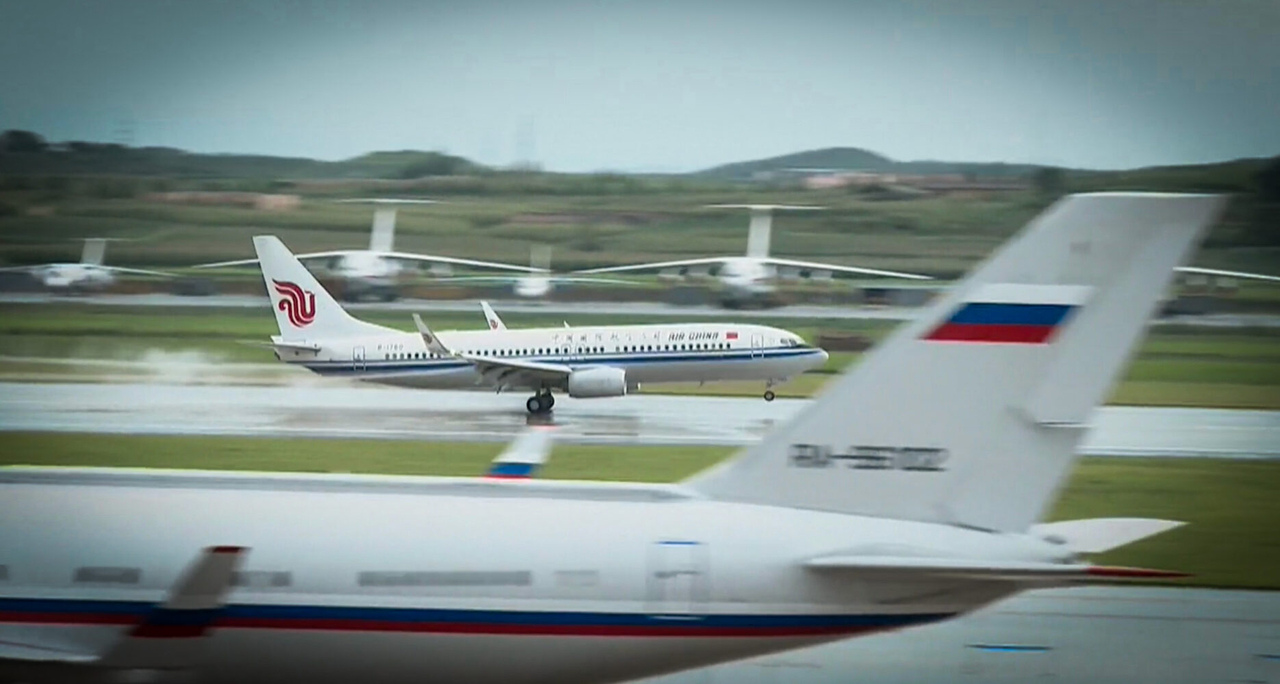
Air China resumed direct passenger flights between Beijing and Pyongyang on March 30, 2026, marking the first such service in six years. While this restoration signals a shift in regional connectivity, systemic barriers to broader international integration remain, as North Korea has yet to authorize the entry of Chinese tourists.
Resumption of Air Links Between Beijing and Pyongyang
On March 30, 2026, Air China officially restarted direct passenger flights connecting Beijing and the North Korean capital of Pyongyang. This development concludes a six-year suspension of service, which the airline originally implemented in 2020 in response to the global coronavirus pandemic. The return of these flights represents a significant adjustment in the diplomatic and logistical relationship between the two nations, following a period of restricted movement.
The resumption of air travel follows an earlier restoration of cross-border infrastructure. North Korea’s state-owned carrier, Air Koryo, had already restarted passenger flight operations between the two countries in 2023. Furthermore, passenger train services between Beijing and Pyongyang were re-established on March 12, 2026. Despite these gains in connectivity, the movement of people remains highly regulated. Pyongyang has not yet opened its borders to Chinese tourists, limiting the immediate economic impact of these transport links.
Diplomatic Perspectives on Regional Exchange
Chinese officials have framed the return of air services as a necessary step for bilateral relations. During a news conference held earlier in March, China’s foreign ministry spokesperson Lin Jian characterized the restoration of flights as a constructive development.
Resuming passenger flights is a positive move that facilitates the friendly exchanges between the two peoples.
China permits the restart of commercial flights between Beijing and Pyongyang | Latest News | WION
Lin Jian, spokesperson for China’s foreign ministry
Observers of regional geopolitics suggest that the restoration of direct flights is likely to increase the volume of travel between China and North Korea. However, the pace of integration remains tied to the internal policy decisions of the North Korean government. While leader Kim Jong Un expressed an intent to prioritize the tourism sector during a congress of the ruling Workers’ Party last month, the country’s actual capacity to facilitate international transit remains constrained by its ongoing border policies.
The diplomatic significance of these air links extends beyond simple transit. By re-establishing a direct channel, both Beijing and Pyongyang have created a mechanism for official travel, diplomatic missions, and the movement of designated personnel that had been largely confined to rail or land routes since the onset of the pandemic. Ministry officials in Beijing have noted that the restoration is consistent with the long-term strategic cooperation agreements between the two nations, though they stopped short of providing a timeline for the expansion of these travel privileges to the general public or commercial tourist groups.
Infrastructure and Economic Context
Air Koryo aircraft at Beijing Capital Airport
The focus on transport links occurs alongside North Korea’s efforts to develop its domestic tourism infrastructure. Last year, the country opened a beach resort in the eastern city of Wonsan, a project intended to serve as a hub for future international visitors. Despite these physical investments, the “mobility gap”—the disparity between theoretical access and practical, open transit—continues to define the current state of regional trade and movement.
The Wonsan project remains a centerpiece of the state’s economic development strategy, reflecting a desire to capture foreign currency through specialized tourism corridors. However, logistical experts point out that the infrastructure at Pyongyang International Airport and the surrounding rail terminals requires sustained operational status to support any influx of visitors. The current phased approach—starting with air, followed by rail, and potentially ending with broader visa access—mirrors the conservative reopening strategy seen in other sectors of the North Korean economy.
While the transport sector is showing signs of recovery from the pandemic-era closures, the broader economic integration of the region remains sensitive to the interplay between national security policies and the desire for tourism-led growth. As of May 17, 2026, the aviation and rail corridors are open for specific categories of travelers, but the transition toward a more open tourism environment remains in a preliminary stage. Future developments will depend on whether Pyongyang moves to lift the current restrictions on Chinese tourists, a step that would be required to fully utilize the newly restored flight and rail networks.
The current limitation on Chinese tourists is not merely a matter of border security but involves a complex set of internal administrative requirements. Travelers currently arriving in Pyongyang via the newly restored Air China flights are subject to rigorous health screenings and travel authorizations mandated by the North Korean State Emergency Anti-Epidemic Headquarters. These protocols, which have remained in effect throughout the post-pandemic period, dictate that all entries must be vetted for essential purposes, effectively excluding leisure travel for the time being.
Industry analysts monitoring the situation from Beijing emphasize that the restoration of the Beijing-Pyongyang route is the most visible indicator of a return to normalcy. However, they caution that the “mobility gap” cited by regional observers is a structural challenge that extends beyond the aviation sector. Integrating North Korea into the broader regional travel network requires not only the physical reopening of borders but also the alignment of customs, immigration, and health protocols that currently act as a bottleneck for international connectivity. The path forward remains contingent on the sustained operation of these flight paths and the eventual relaxation of the strict entry requirements that have defined the country’s border policy for the last six years.
Bio:
John Smith is the World Editor at Headlinez.News, leading the global news desk and overseeing international correspondents. With 15 years of field experience across Europe, the Middle East, and Asia, John has reported from conflict zones, summits, and humanitarian missions. His deep understanding of geopolitical trends and cross-cultural reporting ensures that readers receive accurate, balanced perspectives on world events that shape the global narrative.
Expertise: International reporting, geopolitics, diplomacy, conflict journalism, foreign policy analysis.
Location: London, United Kingdom