
Algeria is significantly bolstering its naval and maritime infrastructure, a strategic shift driven by its geopolitical position and economic interests in the Mediterranean Sea. A new report by the FMES Institute details these developments, outlining significant investments in both civilian projects – including major new port facilities developed with Chinese partnerships – and military capabilities, as Algiers seeks to assert greater control over its coastline and project influence in the region. These moves come amid ongoing regional tensions and a growing focus on securing vital energy export routes.
By Esteban Aguado, Research Fellow at the FMES Institute
Algeria is actively pursuing the development of its maritime capabilities, a strategic move that reflects its defensive posture and aims to project influence in the Mediterranean Sea. This build-up is particularly relevant given ongoing regional dynamics and historical tensions with neighboring countries. The country’s geostrategic location and its complex relationship with France necessitate a careful consideration of its maritime ambitions.
As the largest country in Africa, Algeria boasts 1,200 kilometers of Mediterranean coastline, strategically positioned near the Strait of Gibraltar, a vital shipping lane handling approximately 100,000 vessels annually. Following its war of independence (November 1954 – March 1962) and a decade of internal conflict during the 1990s, as well as more recent political movements like the Hirak (2019 – 2021), Algeria asserts it has achieved a degree of political stability, though economic and social vulnerabilities remain. The nation’s economy remains heavily reliant on fossil fuels, with hydrocarbons accounting for 95% of its exports, primarily transported via subsea pipelines to Spain and Italy, and through its liquefied natural gas (LNG) terminals.
Algeria is currently the second-largest gas supplier to the European Union, holding a 19% market share. The country also faces demographic challenges common to the Maghreb region, with a young population struggling to find employment, with unemployment among those under 30 hovering around 30%, including university graduates.
Figure 1: Algeria, the largest country in Africa (source: FMES).
Historically non-aligned – having hosted the Non-Aligned Movement conference in September 1973 – Algeria now defines itself as “a middle power, producer and exporter of peace, stability and security which it projects in concentric circles to all spaces of sovereignty, security and influence for the benefit of its moral and political, strategic and economic, human, social and civilizational interests.”[1]
Through a presidential decree and in accordance with the United Nations Convention on the Law of the Sea (Montego Bay), Algeria established its Exclusive Economic Zone (EEZ) in the Mediterranean Sea in 2018, nearly four decades after Morocco (1981) and six years after France (2012). This move signifies a growing recognition of the economic and strategic importance of its maritime domain. The newly created zone is believed to contain several hydrocarbon deposits, attracting interest from Western energy companies.[2]
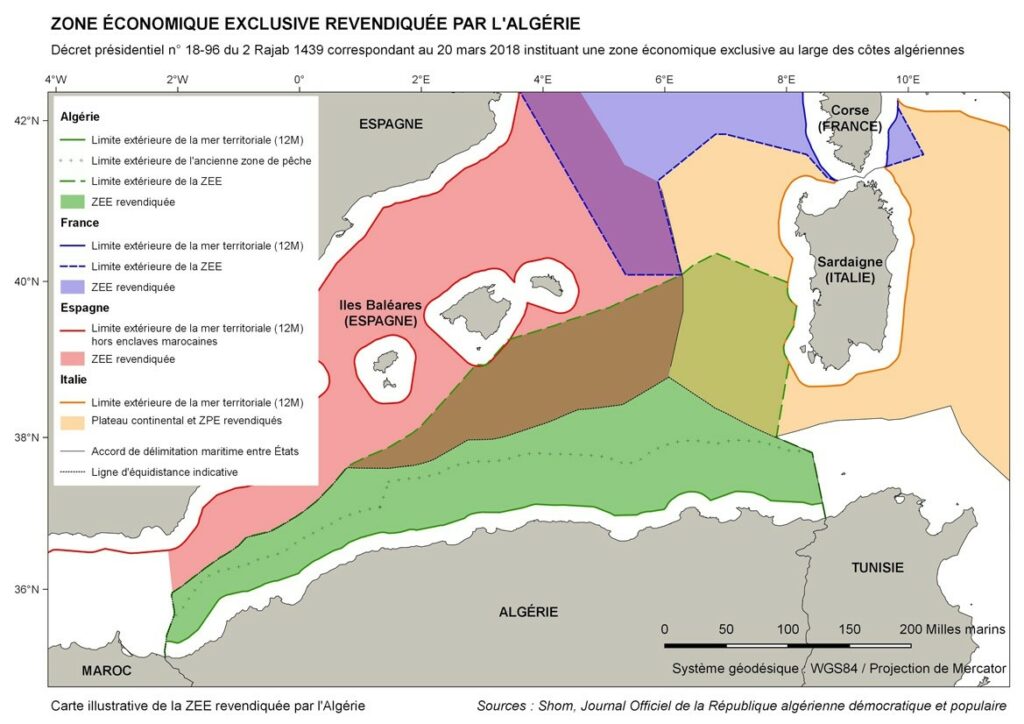
Figure 2: Exclusive Economic Zone claimed by Algeria via the presidential decree of March 20, 2018 (source: SHOM, Official Journal of the Democratic and Popular Republic of Algeria).
However, this assertion of maritime territory has implications for relations with neighboring states like Italy and Spain, whose existing EEZs are affected by Algeria’s decision. As Philippe Dézéraud notes, “the characteristics of the Mediterranean Sea, particularly its small size, lead to the overlap of all EEZs and therefore more or less pronounced disputes… the challenge lies in the imperative conclusion of delimitation agreements between riparian states.”[3] This issue adds to the pre-existing dispute over the delimitation of Moroccan and Algerian waters.[4]
Algeria’s desire to better control its maritime space and address emerging challenges is accompanied by investments in both civilian and military capabilities.
Civilian Ambitions
In 2021, Algeria adopted a National Strategy for the Blue Economy (SNEB), outlining objectives for developing the maritime sector by 2030 while integrating environmental considerations. Supported by the European Union, the strategy aims to diversify state revenue sources and reduce reliance on fossil fuels. The strategy encompasses eleven development axes, ranging from aquaculture to scientific research and the protection of natural heritage and energy.
Complementing this strategy, Algeria is developing its infrastructure and ports through two major projects: El Hamdania, located 80 km from Algiers, and Djen Djen in the east of the country. The El Hamdania project, valued at $4.5 billion, aims to handle 6.5 million containers annually and is being developed in partnership with China as part of the Belt and Road Initiative launched by Chinese President Xi Jinping in 2013. The port will be 49% owned by two Chinese companies, China Harbour Engineering and China State Construction Engineering, which are already involved in port projects in West Africa (Côte d’Ivoire and Cameroon, among others). The goal is to compete with Tanger Med in Morocco and Algeciras in Spain.
The Djen Djen port project aims to become a logistical hub in western Mediterranean and utilize the trans-Saharan route extending to Lagos, Nigeria, to serve and supply six Sahel countries (Algeria, Tunisia, Mali, Niger, Chad, and Nigeria).
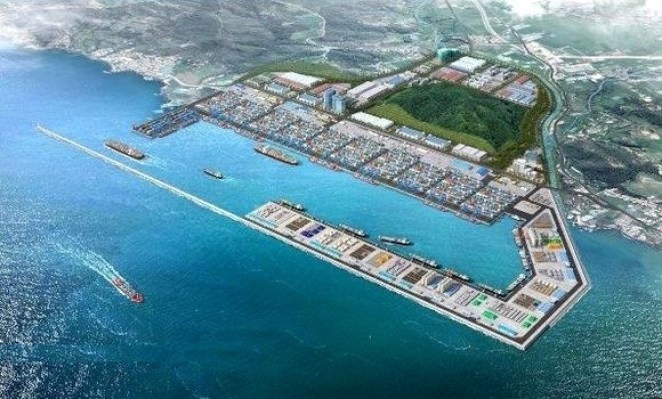
Figure 3: Mockup of the future port of El Hamdania (source: French Observatory of the New Silk Roads).
In addition to these infrastructure projects, Algeria is working to develop its fleet of Algerian-flagged civilian vessels through the National Algerian Navigation Company El Djazaïr (CNAN) and significant investments. These funds are intended for the acquisition of 25 new vessels, primarily bulk carriers, and the creation of new transport routes to West Africa and Poland.
Currently, maritime trade is limited by existing infrastructure, including port congestion and inadequate quay lengths that prevent larger vessels from docking. Poor hinterland connectivity also adds significant logistical costs, accounting for up to 35% of the product cost.
Alongside this civilian development, Algeria’s naval ambitions are perhaps most evident in the military domain.
And for its Naval Forces
The National People’s Army (ANP), created in 1962 after independence, is the heir to the National Liberation Army (ALN). Historically, due to the ALN’s role in the war of independence, the ANP holds a special place in Algeria, both in its prerogatives and its position in society. Despite direct interventions in governance (the cancellation of the 1991 legislative elections, the political transition in 2019) and its significant weight within the state apparatus, the ANP claims to remain subordinate to political power. However, Anthony Cordesman wrote in a 2021 study that “Algeria was more an army with a country than a country with an army.”[6] The 2020 constitutional revision, through its Article 30, clarifies the army’s role in “safeguarding national independence and defending national sovereignty” and “defending the vital and strategic interests of the country.”
With approximately 450,000 personnel, Algeria has the second-largest army in Africa and allocates around 8% of its gross domestic product to defense.[7] The Stockholm International Peace Research Institute (SIPRI) reported a significant increase in military spending, with a 76% rise between 2022 and 2023, representing “the highest level of expenditure ever recorded by Algeria.”[8]
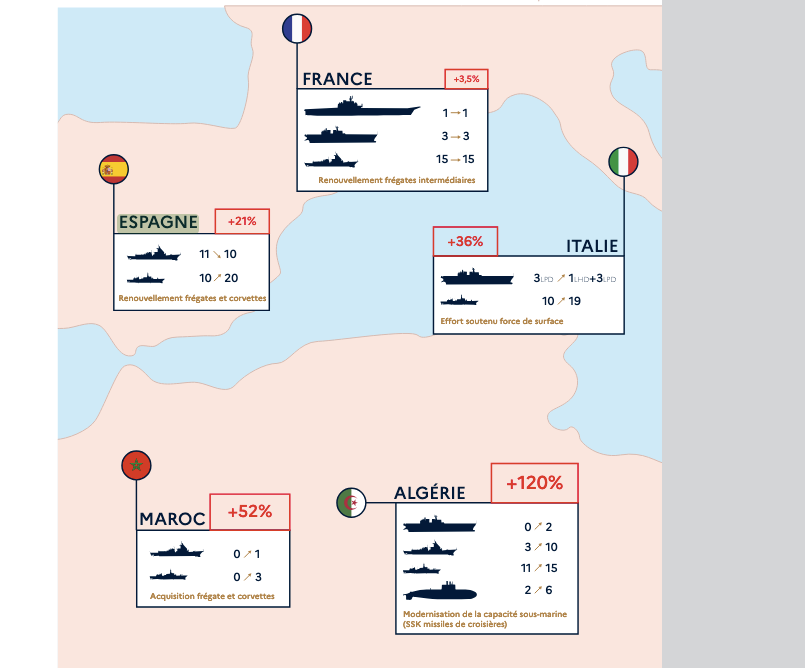
Figure 4: Evolution of the tonnage of navies in Western Mediterranean between 2008 and 2030 (source: CESM).
While there is no publicly accessible white paper outlining threats and strategic objectives, two security elements are particularly prominent for Algiers. First, Morocco, a rival in the Maghreb, is perceived as a “historical” adversary[9] and is sometimes used as justification for certain military investments. This rivalry centers notably on the issue of Western Sahara, where Algeria provides diplomatic and material support to the Polisario Front, risking tensions with other countries. The land border between the two countries, closed since 1994, has been the site of several clashes (the Sand War between September 1963 and February 1964, the Amgala clashes in 1989). Second, the terrorist threat, with various Armed Terrorist Groups (GAT), has materialized in attacks on civilian and military sites.[10]
Within the ANP, the naval forces, officially known as the Algerian Navy, comprise approximately 20,000 sailors. These forces are organized around eight entities (submarine forces, surface forces, naval aviation, coastal defense, marine and commando units, training structures, support structures, and the National Coast Guard Service) and three territorial commands (Western, Central, and Eastern maritime zones). Its assets are concentrated around three naval bases: Mers-el-Kébir, Algiers, and Jilel. During the command change ceremony in January 2021, Major General Benmeddah, commander of the naval forces, prioritized “preserving the availability of the naval battle group,” based on “training competent and professional human resources and providing modern equipment and acquiring developed ships.”[11]
The backbone of the naval forces currently consists of six Kilo-class submarines, five frigates, one amphibious assault ship, and a multitude of corvettes and patrol boats. The fleet includes both modern vessels less than ten years old (Type 636 submarines, Meko A 200 and Adhafer-class frigates) and older units (Type 877 submarines, Koni-class frigates), indicating a transitional period for the naval forces and the consistency of the capacity renewal policy affecting all segments of the armed forces. There is also a desire to develop a high-seas navy with large-tonnage units while maintaining numerous assets for coastal protection.
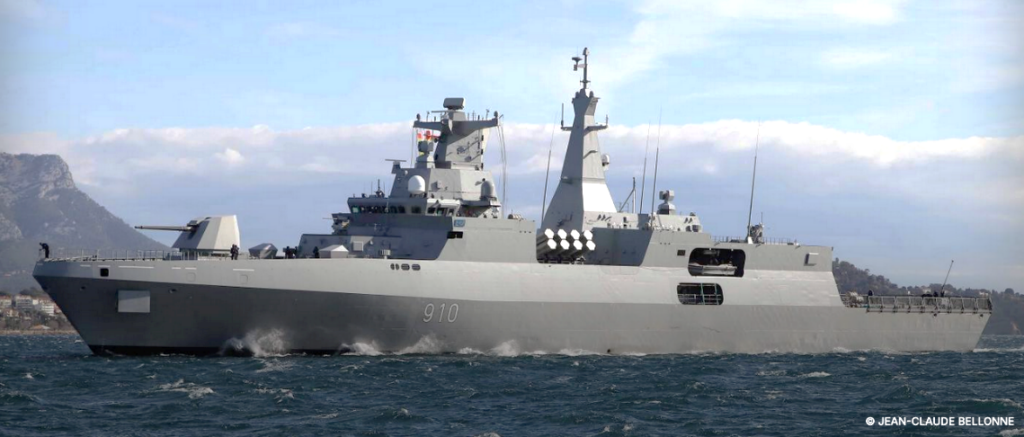
Figure 5: Arrival in Toulon of the Erradii-class Meko-A-200 frigate in 2019 (source: Mer et Marine).
Algeria is currently investing heavily in its naval tools. The tonnage of its navy is expected to grow by 120% between 2008 and 2030, compared to a 21% increase for Spain and a 52% increase for Morocco.[12] This effort allows for a significant gain in capacity, both quantitatively and qualitatively. Notably, as Admiral Vandier, former Chief of Staff of the French Navy, indicated to the Defense Committee in October 2021, Algeria possesses four modern submarines equipped with the ability to strike land targets via Kalibr missiles with a range of 300 km. On land, in the field of coastal defense, significant investments would allow Algiers to have a denial-of-access capability (or at least a solid defense of its coasts) notably with the help of Russian-made S-300 and S-400 mobile air defense systems[13], with a range estimated at 200 and 400 km, and Chinese-made YJ-12B supersonic anti-ship missiles with a range of approximately 500 km.
Ultimately, this capacity development appears primarily defensive, with Algeria seeking to improve the protection of its territory to guard against external military operations similar to the one that struck Libya under Marshal Gaddafi in 2011. While the 2020 constitutional reform, through its Article 31[14], allows for the projection and deployment of Algerian military personnel abroad, this evolution is primarily intended to enable participation in peacekeeping operations. Its acquisitions also serve as a strategic signal to Morocco while consolidating the place and structure of the armed forces within the country.
Like many other countries, Algeria has primarily turned to Russia for its equipment (Algeria is reportedly the second-largest importer of Russian military equipment[15]), but has diversified its supplies in recent years. This includes the new Meko-A-200-class frigates built by TKMS in Germany, the Kalaat Beni Abbes amphibious assault ship derived from the Italian San Giorgio class, and the El-Kasseh-class minehunters built at Intermarine shipyards in Italy. Even despite difficult relations with Paris, 20 patrol boats built by the French manufacturer Ocea have been delivered to the coast guard.
In addition to these foreign acquisitions, Algiers also aims to develop the Algerian naval industry. In March 2024, during a visit to the naval forces command, the Chief of Staff of the Armed Forces, General Chanegriha, set the objective of “developing a local naval industry and building warships with Algerian hands.”[16] To this end, Algiers and Rome discussed in 2022 a cooperation between the Italian Fincantieri shipyards, the leading European shipbuilding company, and the Naval Construction and Repair Establishment (ECRN) based in Mers-el-Kébir. Similarly, five of the six Chinese F15A-class (Type 056) corvettes are to be built locally in Algeria. These projects, like the joint venture formed with Leonardo for AW-139 helicopters, are still struggling to take shape.
Strategic and Military Partnerships All Around
A tenuous link exists between Algeria and Russia, mirroring the relationship in the arms domain. This connection and its importance to Moscow are reflected in the number and frequency of Russian vessel calls at Algerian ports. For the second half of 2024, this includes the calls of the oil tanker Yelnya in Algiers in December, those of the oceanographic research vessel Yantar[17] and the corvette Merkuriy in November, as well as those of the frigate Admiral Gorshkov and the oil tanker Akademik Pashin in July. However, the construction of a Russian naval base is unlikely due to strong Algerian reluctance, despite the uncertain future of the fleet based in Tartus.
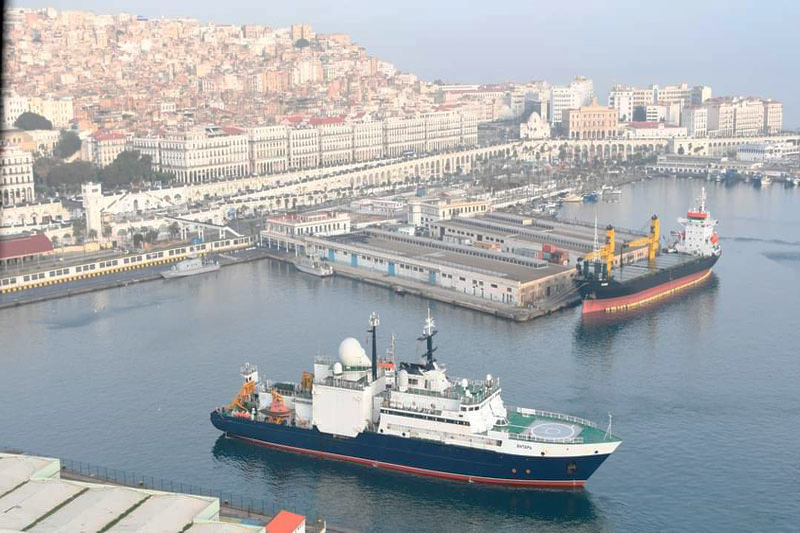
Figure 6: Arrival in Algiers of the Russian vessel Yantar in 2024 (source: Algerian naval forces).
Alongside its ties with Moscow, Algeria has also forged partnerships with Western states. It benefited from US investment after September 11, 2001, as part of the war on terrorism and the Trans-Saharan Counterterrorism Initiative, which also benefited other Sahel countries (Mali, Mauritania, Chad, Niger, Morocco, Senegal, Nigeria, and Tunisia). It joined the Mediterranean Dialogue structure in March 2000, which brings together six other countries and NATO to promote exchanges and “contribute to security and stability throughout the Mediterranean basin.” It thus benefits from training on “asymmetric warfare” (May 2023) or maritime operations (December 2023) and even briefly participated in NATO’s maritime surveillance operation Active Endeavour. Algerian naval forces also participate in exchanges with neighboring nations, including the annual Raïs Hamidou exercise with the French Navy, aimed at developing interoperability, and within the “5+5 Defense” initiative, created in 2004 to foster dialogue between five states on the northern shore of the Mediterranean (Portugal, Spain, France, Italy, and Malta) and five states on the southern shore (Mauritania, Morocco, Algeria, Tunisia, and Libya).
A central country in Western Mediterranean, Algeria is pursuing an ambitious policy to equip itself with a coherent maritime tool, in both the civilian and military domains. Its ambitions, however, may be hampered by the pre-existing context, for example in the port domain vis-à-vis Moroccan and Spanish competition, and by the reactions of certain countries to the development of military capabilities.
[1] Government Action Plan for the Implementation of the President of the Republic’s Program, September 2021.
[2] Exploration agreements have been signed between the Algerian national hydrocarbon company Sonatrach and the Italian group ENI and with the French Total.
[3] Martine Pellen-Blin, Philippe Dézéraud and Gérard Valin, The territorialization of the Mediterranean as the origin of new strategic balances, National Defense Review, July 2019.
[4] Brief Marine No. 184, The navies of the Maghreb, Strategic Studies Center of the Navy, November 2015.
[5] Flavien Bourrat, The Algerian army: a state within a state?, Les champs de Mars, No. 23, winter 2011.
[6] Anthony Cordesman, The Changing Security Dynamics of the MENA Region, Center for Strategic and International Studies, March 2021.
[7] According to data from the Stockholm International Peace Research Institute (SIPRI).
[8] SIPRI press release, April 22, 2024.
[9] Morocco, Algeria: new tensions against a backdrop of power struggles between the two neighbors, Kamal Kajja, Hérodote No. 180.
[10] Notably the hostage-taking at a gas site in In Amenas in 2013, resulting in the deaths of 38 hostages, and the suicide attack against the Cherchell military academy in 2011 with 18 deaths, claimed by Al-Qaeda.
[11] https://algeriesolidaire.net/changement-a-la-tete-du-commandement-des-forces-navales/
[12] Marine Studies, Military naval rearmament in the world, Strategic Studies Center of the Navy, January 2023.
[13] This equipment is said to have been ordered but has not yet been delivered.
[14] “Algeria may, within the framework of respect for and objectives of the United Nations, the African Union and the League of Arab States, participate in peacekeeping.”
[15] Mansouria Mokhefi, Algiers-Moscow: evolution and limits of a privileged relationship, Foreign Policy, September 2015.
[16] https://news.radioalgerie.dz/fr/node/42468
[17] A vessel that has recently made headlines regarding its possible capabilities for action on the seabed.
