

The Mohammed bin Rashid Al Maktoum Solar Park in Dubai, United Arab Emirates, incorporates a flock of 20,000 sheep to manage vegetation growth across the facility. The Dubai Electricity and Water Authority (DEWA) introduced the livestock to maintain the site’s grounds, replacing traditional mechanical mowing methods to reduce costs and environmental impact.
Vegetation management at the Mohammed bin Rashid Al Maktoum Solar Park
The Mohammed bin Rashid Al Maktoum Solar Park serves as a centerpiece of Dubai’s Clean Energy Strategy 2050. As the largest single-site solar park in the world based on the Independent Power Producer (IPP) model, the facility spans a vast desert landscape. Maintaining this site requires constant vegetation control to prevent weeds from interfering with solar panels or creating fire hazards.
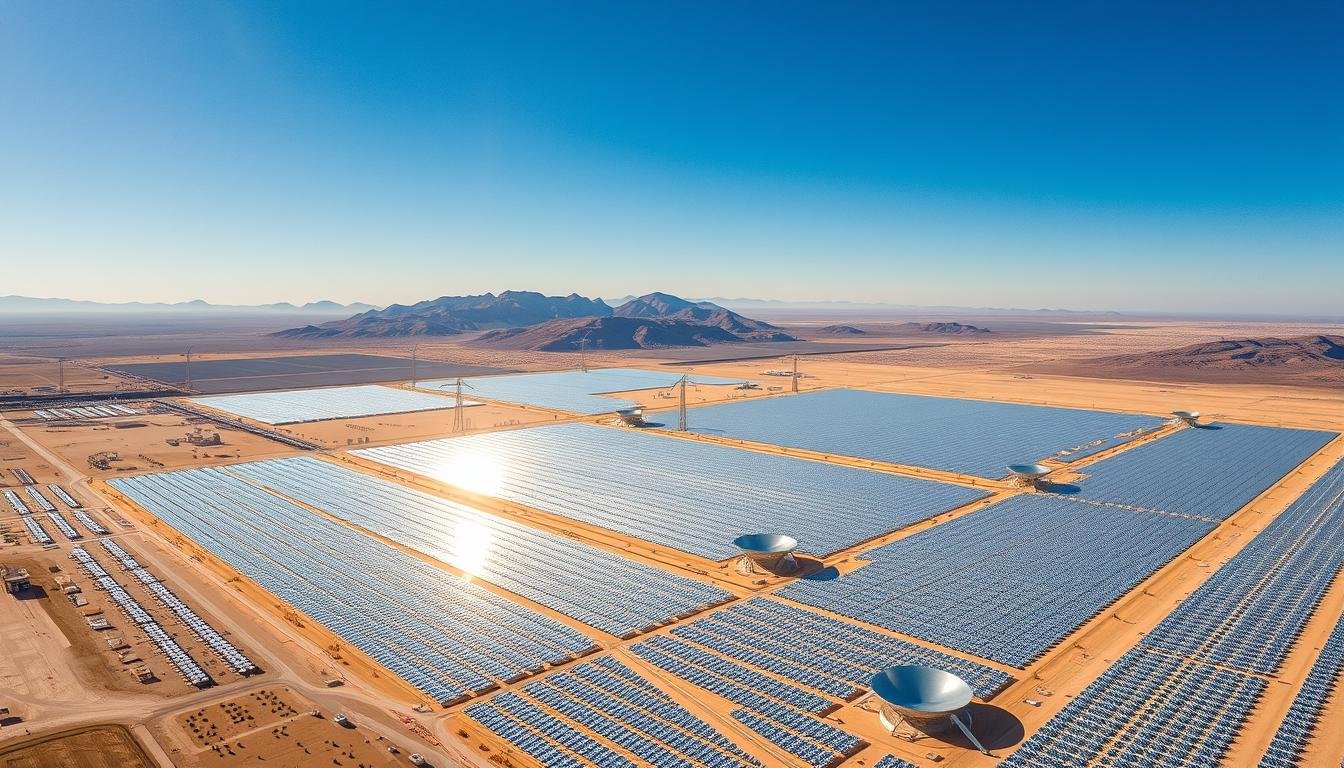
In recent years, the Dubai Electricity and Water Authority (DEWA) shifted its maintenance strategy. Instead of relying exclusively on heavy machinery or manual labor to clear the desert scrub, the authority integrated a large-scale biological solution. According to reports from the Dubai Media Office and official statements from DEWA, the facility utilizes a flock of 20,000 sheep to graze the area.

The operational scale of this park is immense, with the facility projected to reach a capacity of 5,000 megawatts by 2030. Spanning thousands of hectares, the sheer physical footprint makes conventional maintenance—such as the deployment of trucks and mechanical trimmers—logistically demanding. The introduction of livestock allows the facility to manage vast stretches of land that would otherwise require extensive human intervention under extreme heat conditions. By allowing sheep to graze under and around the solar arrays, DEWA reduces the need for fuel-consuming lawnmowers and manual trimming crews. The animals naturally clear the vegetation, which helps mitigate the risk of fires that could damage sensitive electrical infrastructure.
Operational efficiency and sustainability goals
The use of livestock in utility-scale solar projects, often referred to as “agrivoltaics,” has gained traction globally. At the Mohammed bin Rashid Al Maktoum site, the approach is framed by DEWA as a method to support the circular economy. The sheep effectively convert unwanted vegetation into organic fertilizer, which supports the local ecosystem within the park’s boundaries. This natural fertilization process assists in soil health, which is a critical consideration in desert environments where soil stability is often compromised by erosion.
DEWA officials have emphasized that the integration of the sheep flock is part of a broader commitment to sustainable operations. By minimizing the carbon footprint of site maintenance, the authority aligns its daily upkeep with the overarching environmental goals of the solar project itself. This strategy acknowledges that the lifecycle of a solar park involves more than just the energy generation phase; it encompasses the ongoing maintenance, waste management, and site preservation necessary to keep the arrays operating at peak efficiency over their 25-to-30-year operational lifespans.
Comparative approaches to solar site maintenance
While the use of 20,000 sheep is notable for its scale, the practice of using animals for vegetation management is not unique to the United Arab Emirates. Solar operators in the United States and Europe frequently employ sheep or goats to manage ground cover. This practice is often referred to as “solar grazing.” In temperate regions, this is frequently used to manage grass height to prevent shading of the lower edges of solar panels, which can negatively impact energy yield.

However, the desert environment of Dubai presents specific challenges compared to the temperate climates where such practices are more common. In temperate zones, vegetation growth is often rapid and seasonal, driven by rainfall and warmer months. In the desert, the challenge is managing sparse but persistent scrub that can become highly flammable during peak summer temperatures. The implementation of this program highlights a trend in the renewable energy sector where operators are moving away from traditional industrial maintenance. By choosing biological management, DEWA avoids the logistical complications of operating machinery in a high-temperature desert environment where equipment wear and tear is accelerated by sand and heat. Traditional mechanical mowers require frequent filter changes and mechanical servicing due to high dust intake, costs that are significantly reduced through biological management.
The success of the initiative relies on the ability of the sheep to thrive in the desert conditions while effectively clearing the specific types of vegetation native to the region. As of June 2026, the project remains a primary example of how large-scale infrastructure can incorporate natural processes to maintain operational standards while pursuing long-term net-zero goals. Future developments in the park will likely continue to balance the expansion of solar capacity with these sustainable maintenance practices. As the solar park continues to grow, the integration of livestock serves as a benchmark for how utility-scale energy providers can integrate rural, traditional practices into modern, high-tech industrial frameworks to achieve both economic and environmental efficiency.
Find more reporting in our Tech section.
