
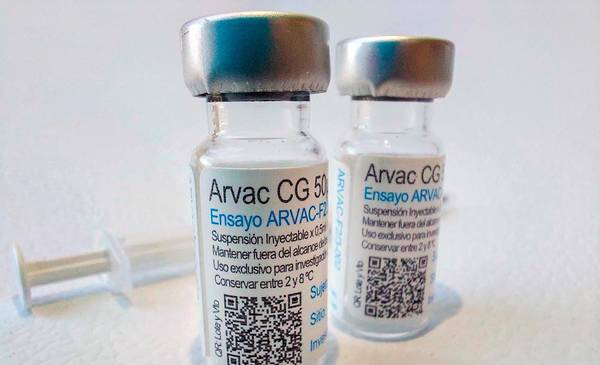
As Argentina faces a renewed rise in COVID-19 cases and ongoing challenges with vaccine access, two provinces are set to receive a donation of ARVAC doses-a vaccine developed domestically amidst budget constraints for the science sector.The provinces of Buenos Aires and formosa will receive the donation as public health officials work to bolster immunity and address emerging variants, though supplies are expected to be limited. The move comes amid reported delays with Pfizer vaccine deliveries and a broader trend of decreasing vaccination rates across the country, raising concerns about a potential resurgence of preventable diseases.
Facing a rise in COVID-19 cases in some regions and a lack of national vaccine supply, the provinces of Buenos Aires and Formosa will receive a donation of ARVAC doses to combat the virus. This comes as public health officials grapple with maintaining immunity levels and addressing emerging variants.
Local researchers had previously noted a shift away from using the domestically developed ARVAC vaccine as a booster, despite its documented effectiveness, due to procurement challenges with Pfizer doses.
Officials with the current administration initially stated that Pfizer vaccines were delayed in customs, hindering distribution. Concerns were also raised by the Argentine Society of Vaccinology and Epidemiology regarding the impending expiration dates of available doses. The situation ultimately led to a renewed focus on Argentina’s own scientific capabilities.
The ARVAC “Cecilia Grierson” vaccine, developed by researchers at the National University of San Martín (UNSAM) and produced by Laboratorios Cassará, has become central to the response, even amidst significant budget cuts to the science sector.
This development coincides with an increase in COVID-19 cases in recent weeks and a broader trend of underinvestment in public health due to economic adjustments and deregulation.
The province of Buenos Aires and Formosa have confirmed they will receive the ARVAC donation, according to reports. The City of Buenos Aires may also benefit, though the Ministry of Health there has not yet responded to inquiries.
Sources in Buenos Aires indicated that the donation will consist of a limited number of doses, intended to support vaccine adherence and implementation, but insufficient to address the country’s overall vaccine shortage resulting from the national government’s distribution issues.
Formosa officials announced that the laboratory agreed to deliver 1,000 doses next week to the province’s Department of Immunizations through the Ministry of Human Development.
Claudia Rodríguez, Director of Epidemiology in Formosa, emphasized that “the type of vaccine makes it an effective, safe vaccine with few adverse effects.” She urged public confidence in ARVAC, noting its demonstrated effectiveness against new variants, even though it wasn’t part of the initial mass vaccination campaigns.
A recent study published in the Vaccines journal, part of the Nature group, demonstrated that the vaccine provides immunity against new strains, including JN.1, KP.3.1.1, and XEC. The research also showed cross-reactivity against SARS-CoV-1, the virus responsible for the 2003 outbreak. The findings could guide future vaccination strategies and provide reassurance about the vaccine’s broad protection.
“We are grateful for the gesture of the national laboratory, but above all, for it being an effective and safe vaccine, fully developed in Argentina, by Argentine researchers and a national laboratory,” Rodríguez stated.
Beyond the challenges with COVID-19 vaccine supply, the current administration has also acknowledged declines in vaccination rates, with experts warning of increases in diseases like hepatitis and tuberculosis. Unusual outbreaks of whooping cough in various provinces, measles in the Buenos Aires metropolitan area, and mumps in Santa Fe have also been reported.
