
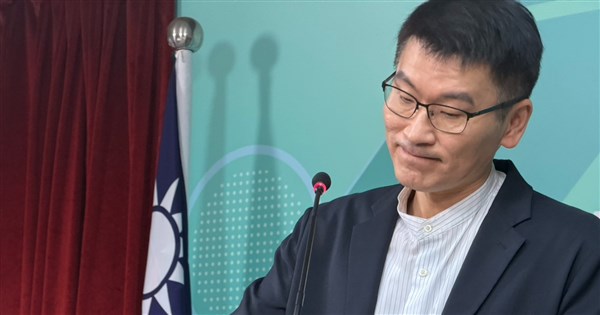
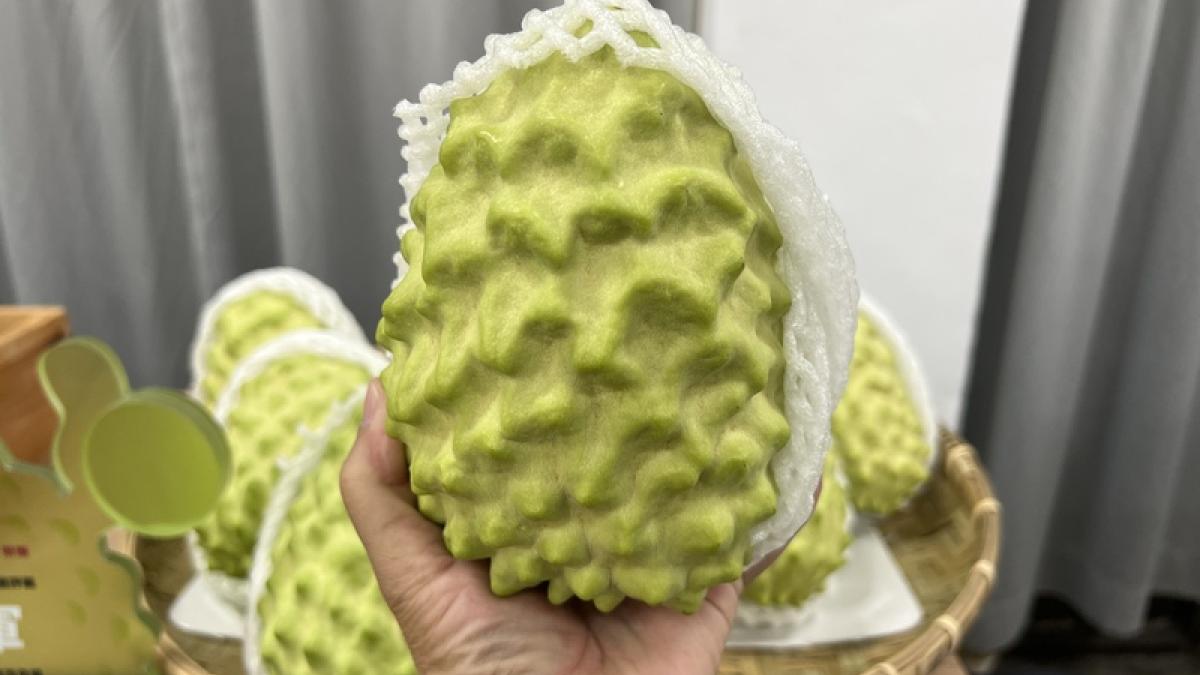
Taiwan’s National Security Council spokesperson Liang Wen-jie’s claim that “Taiwanese people hardly eat pineapple-like shèjiā fruit” has sparked a political firestorm, forcing him to clarify his remarks after they were widely criticized as dismissive of local farmers. In a June 20 statement on social media, Liang acknowledged his original comments were taken out of context, insisting his intent was to highlight the fruit’s low domestic consumption—over 90% of production is exported to China—and the risks of over-reliance on Beijing. But the backlash reveals deeper tensions: between economic pragmatism and national pride, and between officials who see agricultural vulnerability as a security issue and farmers who say their livelihoods are being weaponized.
What Liang Actually Said—and Why It Matters
Liang’s remarks, made during a June 18 press conference, framed shèjiā (pineapple-like fruit) as a product with “almost no domestic market,” with over 90% of output dependent on Chinese buyers—a statement that CNA reported directly. His concern wasn’t just economic; he warned that farmers risked being “trapped” by Beijing, a dynamic he compared to Taiwan’s citrus industry, where domestic sales are strong and export reliance is minimal. “If farmers are long-term hostages to the other side, that binds the government too,” Liang told reporters, according to UDN. The comment echoed broader anxieties about Taiwan’s agricultural sector, where over-dependence on China has left producers vulnerable to political disruptions.

But Liang’s phrasing—”Taiwanese people hardly eat it”—was seized upon by critics as tone-deaf. The Storm.mg outlet noted that Liang’s wife, Lin Chu-yin, a Democratic Progressive Party (DPP) spokesperson, had previously defended Taiwan’s agricultural exports by pointing to the success of àiwén mángguǒ (love apple mangoes) sold in France—a counterpoint Liang’s remarks ignored. “Why are we always talking about China’s ‘generosity’ in buying our fruit?” Lin asked rhetorically in a June 19 post, highlighting the irony of framing Taiwan’s exports as a favor from Beijing.
Liang’s clarification on June 20, posted on the social platform Threads, walked back the original framing. He admitted his comments were “taken out of context” and insisted his goal was to spur domestic consumption—citing fire dragon fruit as a model, with Taiwanese eating an average of 2.5 kilograms per person annually. “If this can help people realize the problem and buy more, that’s a good thing,” Liang wrote. Yet the damage was done: farmers, politicians, and even Taipei Mayor Chiang Wan-an condemned the remarks as politically motivated.
The Backlash: Farmers, Politicians, and the Politics of Food
The controversy has exposed fault lines in Taiwan’s agricultural policy. Taitung County, where shèjiā is a key crop, became ground zero. County Magistrate Rao Qing-ling, who faced disciplinary action for participating in a China-backed forum promoting the fruit, accused the government of hypocrisy. “Why is it okay for Taitung County to be the only one not getting help with trade negotiations?” Rao asked in a June 19 interview with UDN. Her remarks followed a CNA report that the National Security Council had deemed her forum appearance a violation of regulations.
Politicians from both major parties weighed in. DPP lawmaker Chuang Rui-xiong and Mayor Chiang, who called shèjiā “the semiconductor of the fruit world,” framed the issue as one of economic justice. “If the government uses political tools to bully agricultural counties, we’ll vote them out at the polls,” Chiang warned in a June 20 statement. Meanwhile, DPP presidential candidate Lai Ching-te’s campaign team accused the National Security Council of using food security as a political cudgel, according to Storm.mg.
Farmers themselves rejected Liang’s framing. “We’re not asking for handouts,” said Huang Jian-bin, a Taitung lawmaker, in a June 19 press conference reported by UDN. “We just want to sell our fruit.” The agricultural ministry chimed in, acknowledging the risks of over-reliance on China but emphasizing efforts to diversify markets through processing and export expansion. Yet the ministry’s statement, which UDN highlighted, also underscored the structural challenge: shèjiā’s perishability makes it difficult to compete in distant markets without heavy subsidies.
China’s Role: A Market—or a Trap?
Liang’s warnings about China’s influence on Taiwan’s agriculture aren’t without merit. Beijing has used agricultural ties as leverage before, and the recent shèjiā controversy coincides with a China-promoted forum in Xiamen, where Taiwanese products like shèjiā, pomelos, and tea were showcased. Liang told CNA that officials were reviewing the forum’s details to assess potential risks.
The dilemma is stark: China remains Taiwan’s largest buyer for shèjiā, but that dependency creates vulnerabilities. As Liang noted, Taiwan’s citrus industry thrives domestically, with only 3% of output exported—a model he implied shèjiā should emulate. Yet shifting away from China won’t be easy. The fruit’s short shelf life and high shipping costs make it a poor candidate for markets like Europe, where Taiwan’s mangoes succeed thanks to subsidies and niche branding.
Storm.mg’s report included a sharp critique from DPP activist Lin Jia-xin, who questioned the feasibility of Liang’s vision. “How can you compare shèjiā to fire dragon fruit?” Lin asked. “The shipping costs alone to Europe would eat into profits. The government’s talk of ‘diversification’ is all talk—where’s the real support?” The question lingers: Is Liang’s push for domestic consumption a genuine solution, or just another layer of political posturing?
What Happens Next: Farmers, Politics, and the Future of Taiwan’s Fruit
- Market Dependency: Over 90% of shèjiā production goes to China, leaving farmers exposed to political disruptions. The agricultural ministry’s push for processing and new markets is a start, but scaling up will require significant investment.
- Political Weaponization: Liang’s remarks—while well-intentioned—were perceived as dismissive of farmers’ struggles. The backlash suggests officials must tread carefully when discussing agricultural vulnerabilities, lest they be seen as undermining local producers.
- Domestic Consumption: Liang’s call for Taiwanese to eat more shèjiā mirrors past efforts to boost demand for other crops. But without subsidies, marketing campaigns, or infrastructure (like cold-chain networks), such shifts are unlikely.
The next 30 days will be telling. Farmers in Taitung are demanding concrete action—trade negotiations, processing support, and subsidies to compete globally. Politicians, meanwhile, are using the controversy to stoke anti-government sentiment ahead of November’s elections. And Liang? His clarification may have calmed some waters, but the underlying tensions—between economic reality and national pride—remain unresolved.
For now, the shèjiā debate is less about fruit and more about who controls Taiwan’s narrative—and whose livelihoods get sacrificed in the process.
Find more reporting in our News section.
