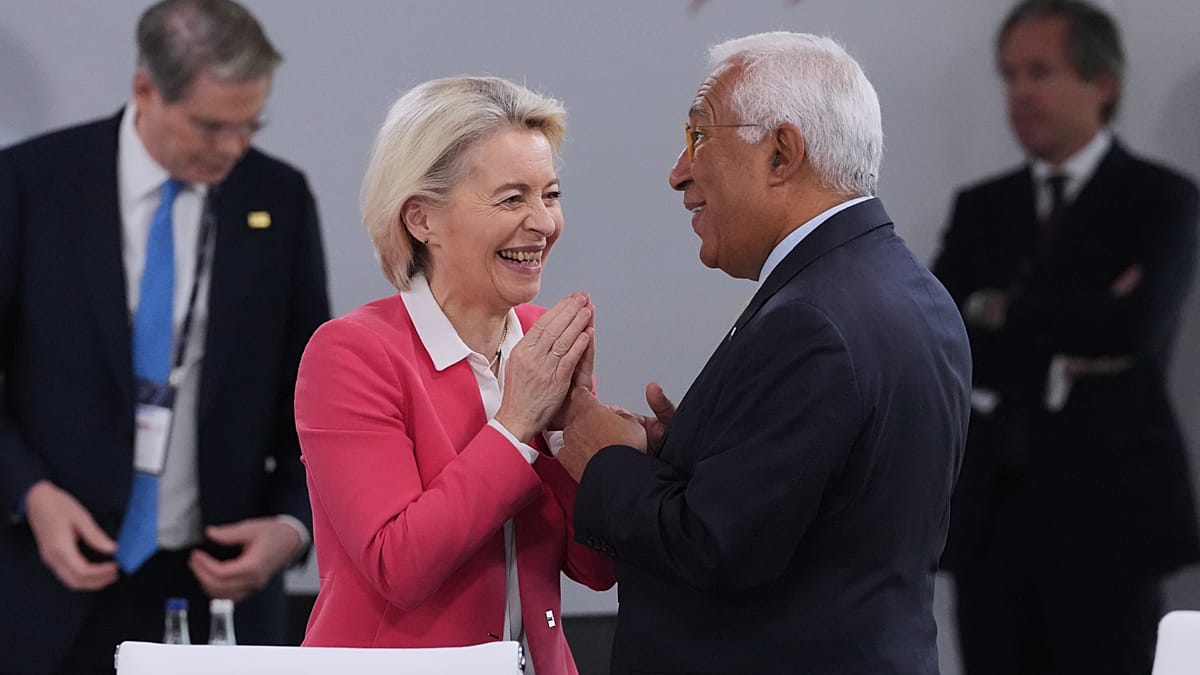
European Union leaders concluded a tense summer summit in Brussels on Friday, June 19, 2026, deeply divided over the bloc’s future diplomatic strategy toward Russia. While the European Commission seeks a mandate for potential peace talks, internal disagreements regarding the EU’s role as a mediator and stalled negotiations over a 2-trillion-euro budget have exposed significant strategic fault lines.
Diplomatic Outreach and the Question of Mediation
The summit was marked by controversy following reports that European Council President Antonio Costa had initiated a private diplomatic channel with the Kremlin. According to AP News, officials confirmed that brief, non-substantive contacts were made in recent weeks to ensure the EU is not sidelined in any eventual war-ending negotiations. Costa reportedly coordinated these moves with a small group of leaders, leaving many other member states to learn of the outreach through media reports.
The initiative has sparked a sharp debate over whether the EU should act as a mediator. Estonian Prime Minister Kristen Michal voiced strong opposition to the bloc adopting such a role.
“The moment the EU — or any individual country — positions itself as a mediator, it inevitably constrains its own ability to take the very actions required to support Ukraine and increase pressure on Russia.”
Kristen Michal, Estonian Prime Minister, via Xinhua
Despite this resistance, European Commission President Ursula von der Leyen defended the need for established channels. As Euronews reported, von der Leyen argued that “Europe must be one of the architects of a just and lasting peace,” noting that while the EU is not currently a mediator, it must be prepared to deliver a unified message when Russia eventually comes to the table.
The institutional framework for such diplomacy is complex. In the EU, the European Council—comprised of heads of state or government—sets the overall political direction, while the European Commission manages external relations and the implementation of policy. Historically, the EU has relied on a mix of sanctions, financial aid, and diplomatic pressure to influence Moscow. However, the current debate highlights a friction point: whether the bloc should prioritize a “neutral” diplomatic posture to facilitate dialogue or maintain its role as an active participant in the conflict’s resolution through continued support for Ukraine.
Budgetary Stagnation and Strategic Divergence
Beyond the immediate friction over Russia, the summit highlighted structural disagreements concerning the next Multiannual Financial Framework (MFF). Member states remain deadlocked over how to allocate the proposed 2-trillion-euro budget, with primary disputes centering on defense spending, green transition initiatives, and agricultural policy. The MFF is the EU’s long-term budget, which dictates spending priorities for seven-year cycles. Disagreements over this budget are common, as member states must balance national interests against the bloc’s collective needs.
Who Said What: Vance, Zelenskyy, Putin & EU Leaders Clash Over Iran, Ukraine & Russia
Analysts suggest these divisions are not merely fiscal but reflect deeper geopolitical rifts. Yan Shaohua, deputy director of Fudan University’s Center for China-Europe Relations, noted that while the bloc maintains a common framework for supporting Ukraine, the transition from military assistance to a potential negotiating phase tests the EU’s cohesion. According to Xinhua, these differences underscore a broader dilemma: EU members lack shared threat perceptions, complicating the bloc’s ability to act as a unified geopolitical actor.
The budgetary gridlock is exacerbated by the economic pressures facing several member states. As the EU attempts to ramp up defense production to meet regional security requirements, governments are simultaneously grappling with the costs of climate-related industrial transitions and the need to protect agricultural sectors from market volatility. These domestic pressures often force leaders to adopt more cautious stances in Brussels, prioritizing national fiscal stability over expansive, centralized EU projects.
The Path Forward for EU-Russia Channels
The Kremlin’s stance remains ambiguous, though officials in Moscow have signaled a willingness to engage if approached. Russian President Vladimir Putin has previously stated that Russia has “never refused contacts with representatives of the European Union in any format,” though he has frequently sought to bypass European institutions to negotiate directly with Washington. This preference for direct engagement with the United States is a long-standing feature of Russian foreign policy, intended to minimize the influence of the EU as a distinct geopolitical bloc.
Photo: AP News
For the EU, the immediate challenge is reconciling the “Coalition of the Willing”—led by France and the United Kingdom—with those states on the eastern flank that demand a policy of isolation and intensified sanctions. While Costa maintains that his diplomatic line is strictly for communication and not formal negotiation, the lack of consensus on the end goal leaves the bloc’s diplomatic influence in a state of flux. The “Coalition of the Willing” often pushes for proactive, independent European initiatives, whereas the eastern members, including Poland and the Baltic states, consistently advocate for a strategy tethered to NATO and a hardline stance against Russian territorial claims.
As the summit concluded, the reality remains that any future peace process will likely require the EU to defend specific interests, necessitating the very diplomatic channels that are currently the subject of intense internal debate. The stakes are significant: a failure to harmonize these diplomatic efforts risks leaving the EU fragmented in the event of a rapid shift in the conflict’s trajectory. Whether the bloc can move beyond these strategic fault lines to present a united front to Moscow remains the central question for the coming months as the European Council prepares for its next session.
Bio:
John Smith is the World Editor at Headlinez.News, leading the global news desk and overseeing international correspondents. With 15 years of field experience across Europe, the Middle East, and Asia, John has reported from conflict zones, summits, and humanitarian missions. His deep understanding of geopolitical trends and cross-cultural reporting ensures that readers receive accurate, balanced perspectives on world events that shape the global narrative.
Expertise: International reporting, geopolitics, diplomacy, conflict journalism, foreign policy analysis.
Location: London, United Kingdom