
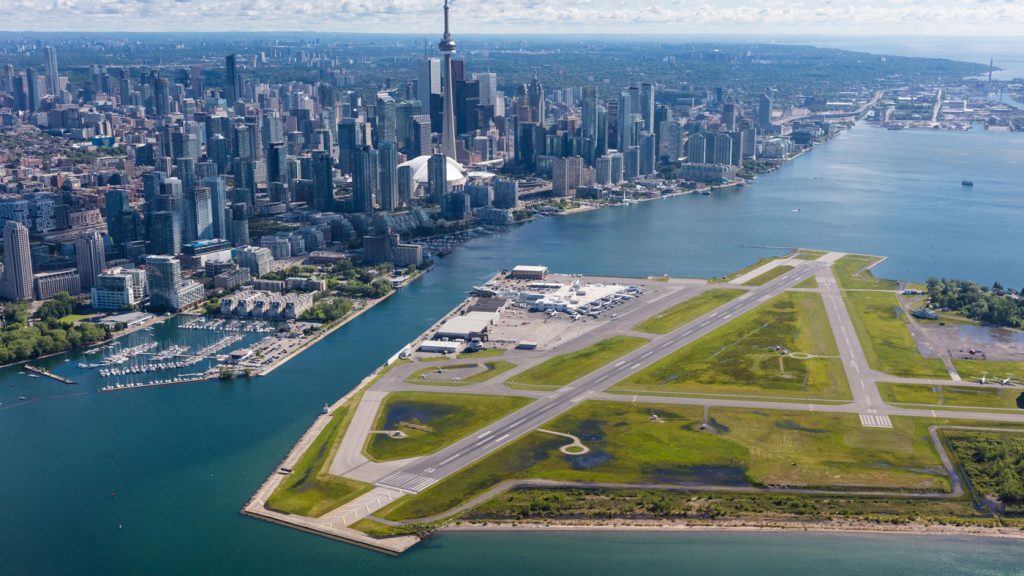
A new city report reveals that Ontario Premier Doug Ford’s push to turn Billy Bishop Toronto City Airport into a jet-capable hub could force 94,000 planned homes—spanning downtown’s waterfront, the Port Lands, and South Etobicoke—into the shadow of flight paths, while slashing building heights and degrading quality of life for tens of thousands of existing residents. The federal government, which must approve the project, has yet to decide whether to greenlight what critics call a reckless land grab benefiting U.S. investors. Meanwhile, Prime Minister Mark Carney has promised consultations this summer—but with no clear plan yet, the clock is ticking on a decision that could reshape Toronto’s skyline and its politics.
The Numbers That Prove This Isn’t Just About Runways
Ford’s vision hinges on a 1.83-kilometre runway extension, requiring artificial peninsulas jutting into Lake Ontario—a project estimated to cost up to $5 billion over 25 years. But the real cost may be social. A city staff report, requested in April by the Planning and Housing Committee, paints a stark picture: 86,000 planned residential units already lie under existing flight paths, and an expanded airport would push that number to 94,000. The affected areas—downtown’s waterfront, the Port Lands, and South Etobicoke—are precisely the zones Toronto is betting on to house its future population growth. The report warns of cascading consequences: limited building heights, degraded air quality, noise pollution that could render balconies unusable, and a 25% increase in residents living under flight paths. For existing homeowners, the impact could mean plummeting property values and the loss of outdoor living space.

“There’s issues of transportation, there’s issues of economics, but there’s issues of neighbourhoods, quality of life, environmental concerns or issues, parks and other elements.”
—Prime Minister Mark Carney, acknowledging the project’s complexities <a href="https://www.cbc.ca/news/canada/toronto/ford-billy-bishop-expansion-carney-undecided-9.
The report’s timing couldn’t be worse. Ford’s government recently seized control of the city’s stake in the airport’s tripartite governance agreement—overruling Toronto Mayor Olivia Chow, who called the move a “land grab” benefiting American investors. The Toronto Port Authority, a federal crown corporation, now shares control with the province and Ottawa, while the airport’s terminal is privately run by Nieuport Aviation, a U.S.-based firm controlled by J.P. Morgan Asset Management. Chow’s frustration is palpable: “I still have not seen a clear plan from the Toronto Port Authority as to what they’re trying to do,” she told reporters, adding that the province should not “give land that would benefit American investors and Wall Street investors.”
Carney’s Consultation Pledge: Too Little, Too Late?
Carney’s promise of a “consultation process” this summer has done little to ease tensions. His remarks—delivered during a news conference on artificial intelligence—were vague on scope and timelines. “We’ll use a process to understand all of that and get the feedback,” he said, according to CityNews Toronto, but offered no specifics. Critics argue the consultations are an afterthought, given that Ford’s government has already unilaterally altered the airport’s governance structure. Liberal MP Chi Nguyen, whose Spadina–Harbourfront riding includes the airport, vowed to block any plan that risks Little Norway Park, Bathurst Quay, or the Toronto Islands. “A decision will not be made without Toronto residents having their voices heard,” she stated, though some constituents have urged her to reject the expansion outright.

The federal government’s role is critical. While Ford claims Ottawa supports the expansion, Carney has repeatedly denied forming an opinion, citing unresolved issues. CP24 reports that the federal government owns 80% of the airport land, alongside the Toronto Port Authority, leaving the city with just 20%. The province’s takeover of the city’s stake—via legislation passed last week—has stripped local officials of their say, raising questions about democratic accountability.
Why Toronto’s Liberal MPs Are Splitting—And What It Means for the Project
Federal Liberal MPs from Toronto are deeply divided. Some, like Judy Sgro (who represents a district near the airport), are openly concerned about traffic and overdevelopment. “The area is already horrendous,” she told reporters, per The Globe and Mail. Others, like Karim Bardeesy, admit they’ve seen no formal plan—only Transport Canada’s mandate for a 150-metre safety zone, which is separate from Ford’s ambitions. “It sounds pretty big to me,” Bardeesy conceded, acknowledging constituent worries. The lack of a unified Liberal front has emboldened Ford, who dismissed concerns as “strictly up to the prime minister” to address.
Opposition parties in Ontario are mobilizing. The NDP and Greens have vowed to challenge the expansion in Ottawa next week, framing it as a betrayal of Toronto’s democratic will. Meanwhile, Ford’s government is pushing ahead with plans to designate the airport a special economic zone, which could override provincial laws to fast-track construction. The stakes couldn’t be higher: if approved, Billy Bishop could handle 10 million passengers annually—five times its current capacity—positioning it as Toronto’s second major airport, akin to Chicago’s O’Hare or New York’s LaGuardia.
The Human Cost: Who Loses When the Runway Grows?
The city report’s findings are damning. An expanded flight path would:
- Limit building heights in high-demand areas, stifling development potential.
- Increase noise pollution, making outdoor spaces like balconies and parks less usable.
- Reduce property values for homes under flight paths, disproportionately affecting lower-income residents.
- Threaten green spaces, including Little Norway Park and the Toronto Islands, which Chow has vowed to protect.
- Create thousands of jobs—but at what cost? Ford argues the expansion will boost safety and economic activity, but critics counter that the benefits are outweighed by the social and environmental toll.
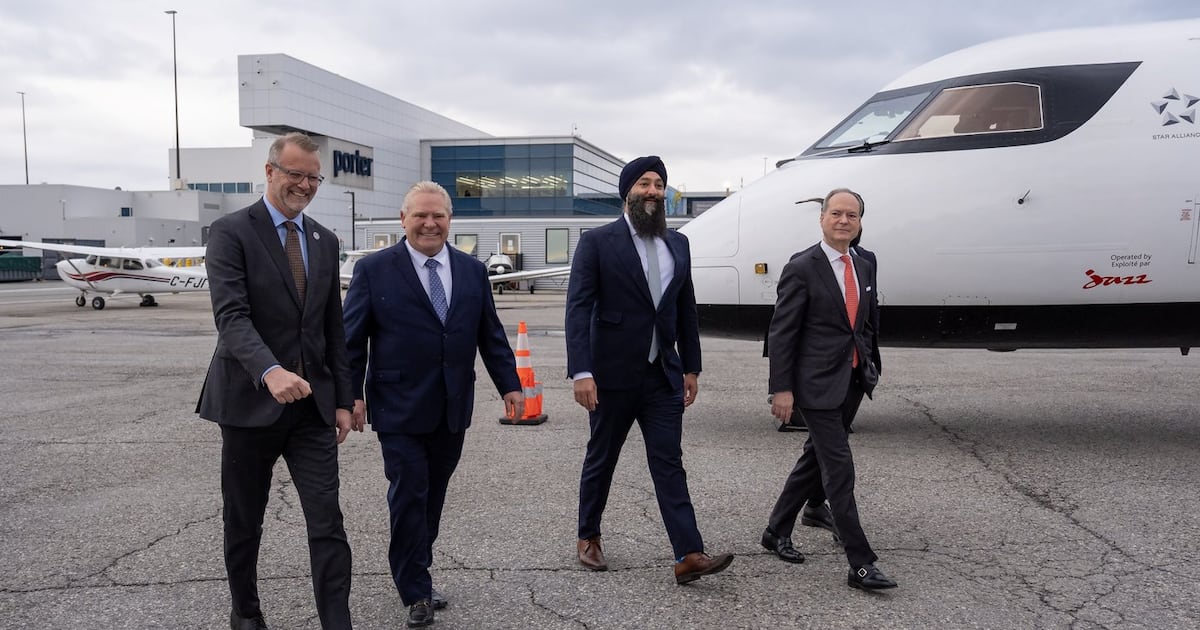
What Happens Next: The Clock Is Ticking
The next 30 days will be critical. Carney’s consultation process must address three key questions:
- Scope: Will it include binding public input, or is it a symbolic gesture?
- Timeline: Will decisions be made before consultations conclude, or will the process shape the outcome?
- Alternatives: Are there less disruptive ways to expand airport capacity, such as improving Pearson’s capacity or enhancing ground transportation links?
The bigger question is whether this project is about Toronto’s future—or about political posturing. Ford has framed the expansion as essential for Toronto’s competitiveness, but the city’s report suggests the human cost may be irreversible. As Carney prepares to consult, one thing is clear: the residents of Toronto’s waterfront, Port Lands, and South Etobicoke are already paying the price for a decision that hasn’t even been made.
What do you think? Should Toronto risk its waterfront for airport expansion? Share your thoughts in the comments.
<!– /wp:paragraph The project's complexities will require a multifaceted approach to mitigate the various consequences and ensure the long-term sustainability of the rapidly growing city.