
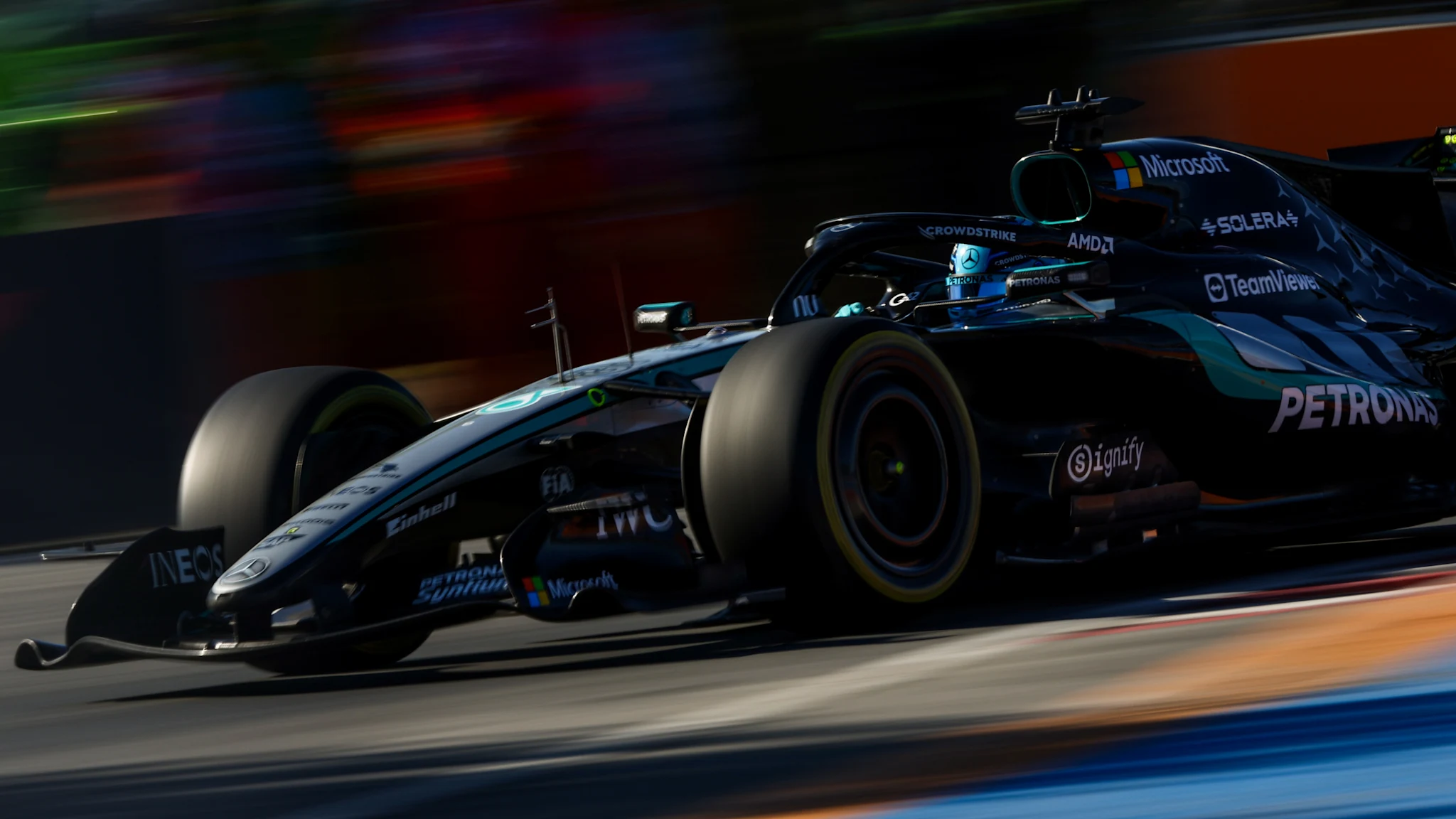
Mercedes driver George Russell secured pole position for the Sprint race in Montreal on May 23, 2026, marking a significant performance shift at the Circuit Gilles Villeneuve. Following a series of podium finishes by his teammate Kimi Antonelli, Russell’s qualifying success signals a potential turnaround in his 2026 championship campaign.
Russell’s Response to a Sophomore Surge
The path to the Canadian Sprint weekend has been anything but comfortable for George Russell. Entering the event, the narrative surrounding the Mercedes garage centered on the rapid ascent of his teammate, Kimi Antonelli. Over the three preceding Grands Prix, the sophomore driver maintained a perfect run of victories, effectively constructing a 20-point cushion in the drivers’ championship standings.

According to reporting by Formula 1, Russell arrived in Montreal operating on the backfoot. The pressure to deliver a corrective result was immediate, as the championship gap began to widen during the European leg of the season. The Circuit Gilles Villeneuve, however, has historically served as a site of strength for the British driver, who delivered a commanding performance at the venue during the 2025 season.
The internal dynamic at Mercedes has shifted noticeably as Antonelli’s form has challenged the team’s traditional hierarchy. With the sophomore driver currently dictating the pace in the standings, Russell’s ability to secure front-row starts has become the primary metric for his retention of leadership status within the team. The Montreal weekend serves as a critical juncture for Russell to demonstrate that his experience remains a decisive factor against Antonelli’s current run of form.
Technical Upgrades and Qualifying Dynamics
The Mercedes team arrived in Canada with a strategic focus on performance recovery, introducing their inaugural in-season upgrade package for the 2026 campaign. Early indications from the track suggested that the modifications resonated well with the car’s handling characteristics. While the Sprint format limited teams to a single practice session, the data gathered proved sufficient for the team to refine their setup.
In the lone practice session, Antonelli initially set the pace, edging out Russell. However, the dynamics shifted during the high-stakes Sprint Qualifying session. Russell managed to navigate the technical requirements of the track to secure the top spot, successfully outpacing his teammate to claim pole position for the upcoming Sprint race. This result serves as a critical indicator that the team’s latest technical developments are providing the necessary platform for Russell to challenge the current order.
The upgrade package, which focuses on aerodynamic efficiency and floor geometry, was designed to address the balance issues that plagued the W17 chassis during the opening rounds. By successfully optimizing these components in the limited time available during Friday’s practice, Russell has managed to find the extra tenths of a second required to neutralize Antonelli’s recent advantage in qualifying trim. The team’s ability to integrate these parts effectively during a Sprint weekend—which offers significantly less setup time than a standard Grand Prix weekend—highlights a renewed efficiency in Mercedes’ engineering operations.
Defining the Possibility of a Championship Reset
The question now facing the paddock is whether this qualifying performance represents a temporary flash of form or the beginning of a sustained championship charge. In the context of the 2026 season, the definition of what Russell can achieve depends on his ability to convert this pole position into a race victory.

For Russell, the circumstances in Montreal have aligned in his favor, but the 20-point deficit remains a difficult hurdle. The Canadian Sprint serves as the immediate testing ground for whether the Mercedes driver can erode the momentum Antonelli has built over the last month. The points structure of the Sprint race, which awards additional championship points to the top eight finishers, provides a vital opportunity for Russell to begin clawing back the deficit before the main Grand Prix on Sunday.
The championship landscape is further complicated by the performance of rival manufacturers. While Mercedes focuses on their internal battle, Ferrari and Red Bull have remained within striking distance during the first half of the season. Russell’s ability to secure the pole position not only places pressure on Antonelli but also forces the hand of his competitors, who must now account for a rejuvenated Mercedes package as they finalize their own race strategies for the weekend.
Looking Ahead: The Stakes in Montreal
The next 48 hours in Montreal will determine the trajectory of the Mercedes internal rivalry. If Russell can maintain his pace through the Sprint and the subsequent Grand Prix, he will significantly alter the championship math heading into the next round of the season. Conversely, should Antonelli reclaim the upper hand, the 20-point gap could prove insurmountable for the remainder of the year.
The performance at Circuit Gilles Villeneuve is not merely about a single weekend; it represents the first true test of the team’s ability to balance the competitive interests of their two drivers while managing the development of their 2026 challenger. All eyes remain on the grid as the team attempts to validate their upgrade path and decide which driver will lead their title efforts through the summer.
The team’s management must now navigate the tactical implications of having two drivers capable of winning. With the championship race tightening, Mercedes faces the logistical challenge of ensuring that neither driver’s individual ambitions compromise the team’s overall standing in the Constructors’ Championship. As Sunday’s Grand Prix approaches, the focus will shift from qualifying speed to race management, tire degradation, and the ability to execute pit strategies under the intense pressure of a direct teammate rivalry.
