
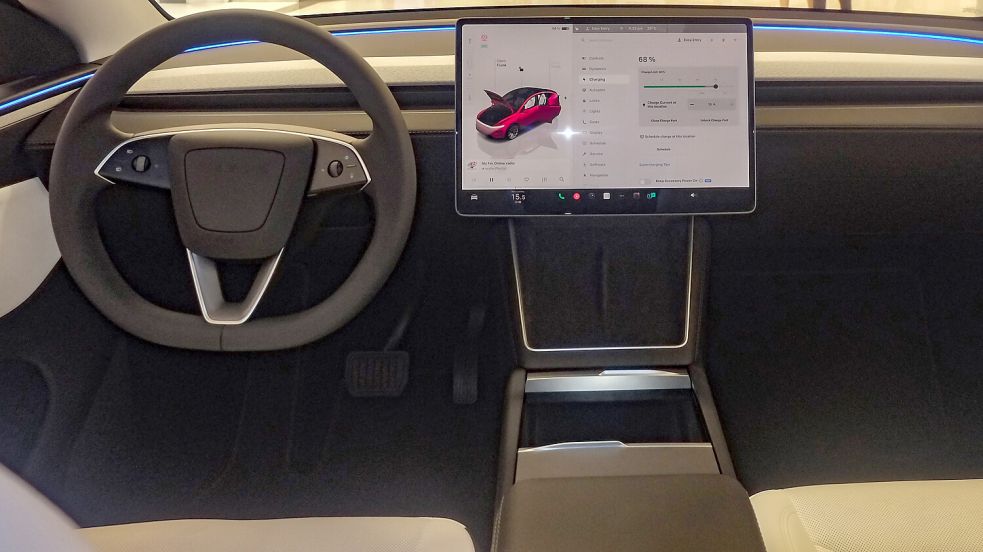
As vehicle technology rapidly evolves, a growing concern is emerging regarding driver distraction caused by complex, touchscreen-based controls. Germany has already begun to address in-car tech distractions with fines adn license points for cell phone use while driving,but a deeper debate is unfolding about the design of vehicle interfaces themselves.experts are now questioning weather the pursuit of digitalization in modern cockpits is compromising road safety, and whether a new standard for minimizing driver distraction is needed.
Dr. Thomas Wagner, a traffic psychologist, believes a “quality seal” for distraction-reducing design solutions in vehicles is worth considering.
Germany – Drivers in Germany are prohibited from holding electronic devices like smartphones or mobile navigation systems while operating a vehicle, according to the country’s road traffic regulations. Violations now carry a minimum fine of 100 euros and a point on a driver’s license. If an accident occurs, penalties increase to 200 euros, two points, and a one-month driving ban. Experts like Stefanie Ritter believe these penalties are justified. “Driving requires understanding, deciding, and reacting correctly – all in real-time, and that demands 100 percent attention,” explains the accident researcher at the testing organization Dekra.
However, this well-founded assertion stands in stark contrast to the continued and increasing digitalization of vehicle cockpits. Easily accessible and operable buttons, knobs, and dials are increasingly being replaced with large, colorful touchscreen displays. “Modern vehicle technology, which is intended to assist drivers, sometimes exacerbates the problem of distraction,” says Dekra spokesperson Wolfgang Sigloch. “In newer models with touch displays, important controls are often hidden within menus.” This has a measurable impact: “Consequently, the duration of ‘blind driving’ – time spent looking away from the road – increases.”
A look inside the classic Beetle cockpit: operation couldn’t be simpler. Photo: Pixabay
The potential for distraction caused by modern technology was highlighted two years ago in a Dekra study involving 80 participants. The study assessed how long it took drivers to complete simple tasks – such as turning on windshield wipers, the rear window heater, the front window defroster, headlights, and fog lights, as well as operating the radio – in two generations of the same car model (model years 2012 and 2022). “These functions must be adjustable using conventional controls with haptic feedback,” commented Dekra traffic psychologist Dr. Thomas Wagner at the time. The majority of participants were confused by the control concept of the newer vehicle. Participants complained about the touchscreen’s response time and the lack of tactile feedback, particularly with sensitive buttons.
Dr. Wagner continues to advocate for the introduction of a “quality seal” for distraction-reducing design solutions. While such a seal doesn’t currently exist, Wolfgang Sigloch notes that “some manufacturers have announced a change in course.” This shift in thinking among automakers may be driven by an announcement from the European New Car Assessment Programme (Euro NCAP), Sigloch speculates: “Euro NCAP has announced that it will deduct points in the assessment of new cars for excessive touchscreen operation.”
For drivers currently operating vehicles with extensive touchscreens and limited physical buttons, accident researcher Stefanie Ritter offers this advice: “When drivers look from the road to the display, they only perceive central information peripherally, such as a child on the roadside, a traffic jam, or a slow-moving vehicle. In an emergency situation, which can occur at any time, an adequate reaction is often impossible because the ‘switch’ costs valuable time.” This underscores the importance of minimizing driver distraction to improve road safety and prevent accidents.
Driver Tips
• Complete all tasks with distraction potential before starting to drive: adjust seat position, interior and exterior mirrors, and radio/audio system, enter destination into navigation system.
• Pair smartphone with hands-free system before starting the journey.
• Even with a hands-free system, avoid discussing difficult or emotionally charged topics on the phone.
• Familiarize yourself with the location of important controls (turn signals, windshield wipers, lights, ventilation and heating, hazard lights) before starting in unfamiliar vehicles.
• When traveling with children, bring snacks and provide entertainment.
• Ask a passenger for assistance (operating the audio system, navigation system).
• Avoid bringing negative emotions into the car.
• Take a break rather than trying to multitask.
