
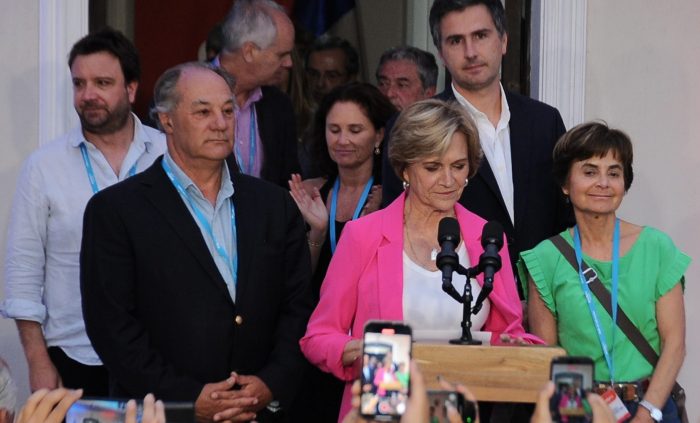
Chile’s center-right coalition, Chile Vamos, is facing an internal crisis following disappointing results in recent elections, prompting a debate over its future strategy and potential realignment. The coalition suffered meaningful losses in parliamentary races and a lackluster presidential showing by Evelyn Matthei, raising questions about its ability to compete with the rising conservative movement lead by José Antonio Kast. Internal divisions are now surfacing, with some leaders openly suggesting a merger with Kast’s forces while others emphasize the need for unity and a return to governing principles, as the coalition grapples with a shifting political landscape and a disconnect with its traditional voter base.Adding to the challenges, Matthei’s post-election conduct has drawn public criticism amid calls for a thorough reassessment of the coalition’s direction.
The Chilean right is grappling with a period of intense self-reflection following a disappointing presidential election and significant losses in recent parliamentary elections. The results have sparked debate within the traditionally center-right coalition, Chile Vamos, over its future direction and whether a shift toward more conservative elements is necessary.
Evelyn Matthei’s fifth-place finish in the presidential race, securing only 12% of the vote, and the coalition’s drop in the Chamber of Deputies – from 53 to 34 seats – have fueled the discussion. The central question is whether the traditional center-right has collapsed in the face of a rising conservative bloc led by José Antonio Kast.
Adding to the turmoil, a video surfaced showing Matthei making an obscene gesture toward a journalist who asked about the sting of her defeat. The incident quickly circulated and drew criticism.
An analysis of the vote tallies reveals further challenges for Chile Vamos. While Kast garnered 1.3 million more votes than his parliamentary coalition, and libertarian candidate Johannes Kaiser received 1.1 million more votes than Matthei’s, Matthei herself secured approximately 550,000 fewer votes than Chile Vamos as a whole. This disparity is interpreted as a disconnect between Matthei and her own voter base, ultimately contributing to the coalition’s setbacks.
“The parties of Chile Vamos received 600,000 more votes than their candidate, meaning they voted for someone else. Leaders empower candidates; candidates don’t empower leaders, they don’t add anything to them,” said Víctor Maldonado, a former deputy director of the Secom.
Cristián Monckeberg, a former president of RN and three-time minister under Sebastián Piñera, suggested a more drastic solution. “What Chile Vamos should do is merge with Kast, since their governing project has not yielded results in recent years.”
“Given the results, the conclusion is clear: Chile Vamos has run its course. Chile Vamos came to power to restore the government alongside Sebastián Piñera, and we had tremendous success, both electorally and politically. But today that cycle is complete. We’ve had two elections where the presidential proposal hasn’t fared well, and we’re now limited to an electoral pact. I believe the parties of Chile Vamos must reflect and strongly support the future government of President Kast, as I believe he will be elected, and from there build a new narrative, agreements with the future government, and design new alliances and political proposals,” Monckeberg declared to El Mostrador.
Manuel José Ossandón, president of the Senate (RN), emphasized the importance of unity and governance. “Today, more than worrying about Chile Vamos, the important thing is how we are going to not only win a presidential election, but how we are going to govern, how we are going to support José Antonio Kast and help him return Chile to normalcy,” he said.
“There’s a lot at stake here, much more than political parties; the future of Chile is on the line. Despite any concerns, I see a candidate who appears well-prepared, confident, and, I believe, open to sharing ideas and spaces in a future government,” Ossandón added.
However, another senator offered a contrasting view. “Kast learned that winning and governing are not the same. They tried it in the Constitutional Council and failed miserably. Now there’s a willingness to join forces because he knows he can’t do it alone.”
A UDI senator criticized Matthei’s campaign strategy. “Who thought it was a good idea to put the leader of the business community in charge of the campaign? What signal does that send? It shows a complete misunderstanding. Now, the problem Kast will face is that they think very differently. Carlos Frontaura is not the same as Cristián Valenzuela or Kaiser. While some are very radical in their positions, others want to impose their issues, and they will have constant conflicts that, if they don’t manage them well, will create problems with their allies.”
Evópoli, where one of its founders authored the book The Liberal Right Does Exist, has declined to comment on its poor showing, winning only one seat in the Chamber of Deputies.
Senator Carlos Kuschel (RN) expressed that he wasn’t surprised by the sector’s defeat. “In my opinion, Chile Vamos did poorly because it is too disconnected from reality. Since Bachelet’s tax reform, we’ve been on the wrong track, moving away from fiscal responsibility, focusing solely on welfare without any focus on growth,” the parliamentarian stated.
Inscríbete en el Newsletter +Política de El Mostrador, súmate a nuestra comunidad para informado/a con noticias precisas, seguimiento detallado de políticas públicas y entrevistas con personajes que influyen.
