
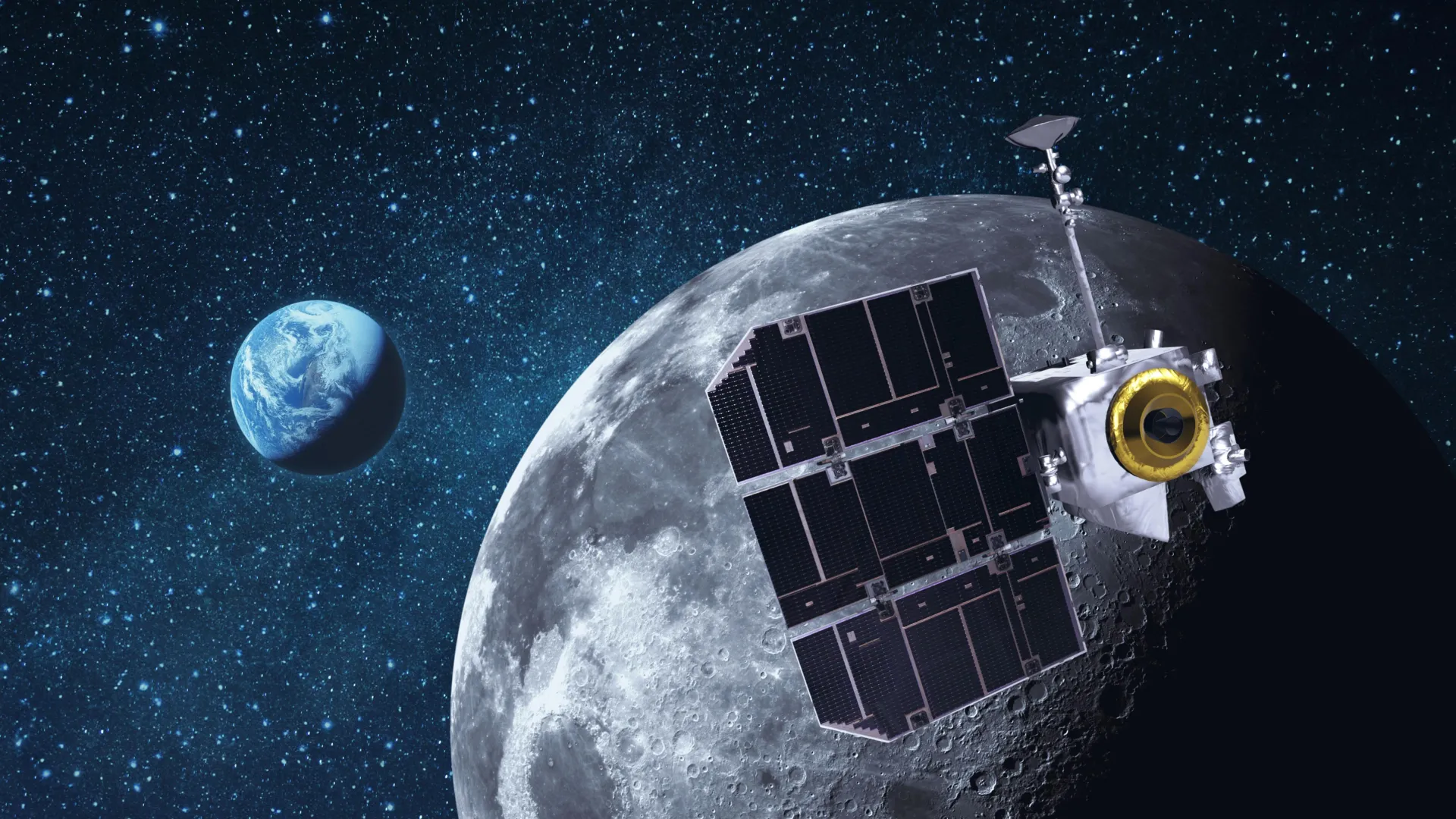
A compact X-ray telescope concept developed by Tokyo Metropolitan University could enable a complete chemical map of the Moon’s surface within two years, according to research published in the Audacy and ScienceDaily reports. The device, designed for satellite deployment, would use X-ray fluorescence imaging to identify elements like oxygen, iron, and sodium, overcoming limitations of previous lunar missions.
Breakthrough Technology: A Compact Telescope for Lunar Surveys
The telescope, weighing less than ten kilograms, is a modified version of an Earth-focused instrument designed to study the magnetosphere. Researchers at Tokyo Metropolitan University, led by Airi Toida and Prof. Yuichiro Ezoe, propose mounting it on a Moon-orbiting satellite to capture X-rays emitted by lunar surface elements during solar flares. “This is a vital breakthrough for understanding its geological evolution,” the Audacy report quotes a press release.
The design addresses challenges like limited sunlight and detector degradation during long missions. “The detector has been tested in significantly more severe radiation environments than lunar orbit, realizing robust, wide-area, high-resolution imaging of the lunar surface over extended mission durations,” the Audacy article states. This resilience could enable mapping even in shadowed polar regions, where solar X-rays are weaker.
Mapping the Moon: Timeframes and Technical Details
Simulations suggest a single telescope could map five key elements—oxygen, iron, magnesium, aluminum, and silicon—across the Moon’s surface in about two years, using a 70 x 70 kilometer grid. A five-by-five array of telescopes, however, could cut the mission time to one year while improving resolution to 30 x 30 kilometers, according to the ScienceDaily article. This array would also allow mapping of sodium, a critical element for understanding lunar volcanic activity.

The team’s models assume 300 solar flares per year, with data collected during intense X-ray emissions. “Detailed modeling of the detector and a realistic satellite mission show that two years would be enough to map five key elements,” the Audacy report explains. The compact design’s scalability—“so compact that it is feasible to have a five-by-five array of them on a single satellite”—highlights its potential for cost-effective, large-scale lunar exploration.
Challenges and Previous Efforts
Despite advances, creating a full lunar map remains difficult. Earlier missions like Apollo and Chandrayaan provided partial data, but gaps persist due to uneven sampling and technical constraints. “Scientists cannot simply collect samples from every part of the Moon,” the ScienceDaily article notes. X-ray fluorescence imaging, while non-invasive, requires sufficient solar radiation, which is scarce near the poles.
The new telescope’s focus on solar flares could mitigate this issue. “A telescope would enable wide area observation of the lunar surface during powerful solar flares,” the Audacy report states. This approach could complement future robotic and human missions, providing a baseline for targeted sample collection.
Implications for Lunar Science
A complete chemical map would revolutionize understanding of the Moon’s formation and evolution. “This could help answer fundamental questions about how the Moon and Earth’s early history are connected,” the ScienceDaily article suggests. Elements like sodium, mapped in two years with the five-by-five array, could reveal insights into lunar volcanic processes and potential water ice deposits.
The technology’s affordability and scalability also raise questions about its role in future space agencies’ plans. NASA’s Artemis program, which aims to return humans to the Moon, could benefit from such data to identify resources for sustained exploration. “This is a critical step toward unlocking the Moon’s hidden chemistry,” the ScienceDaily report concludes.
“Scientists use a technology known as X-ray fluorescence imaging, where detectors directed at the Moon are used to pick up X-rays released by specific elements when they are hit by solar rays,” according to the Audacy article.
