
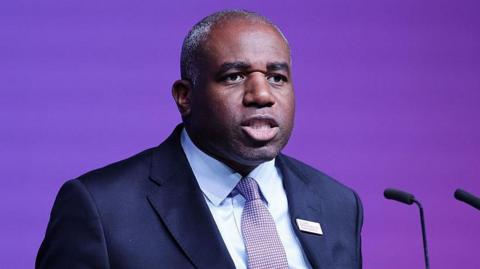
The British government has publicly rebuked U.S. Vice President JD Vance for comments linking immigration and cultural decline to a fatal stabbing in England, escalating a transatlantic diplomatic row over rhetoric on migration. The incident—where an 18-year-old was killed in Southampton in December 2025—sparked outrage after Vance tied the case to broader debates on Western identity, prompting Downing Street to accuse unnamed figures of “poisoning democratic discourse.”
What JD Vance Said—and Why It Provoked London
Vice President Vance’s intervention began after a social media post where he framed the stabbing of Henry Novak—a white British teenager—as evidence of “civilizational decline” fueled by immigration. His comments, posted on X (formerly Twitter) in early June 2026, referenced the case of Vikram Digvijay—a British-Indian man convicted of the murder—without directly naming him. The post drew parallels to broader U.S. political debates, linking the incident to “the erosion of shared values.”
British officials, speaking anonymously to Prabhat Khabar, condemned Vance’s remarks as “dangerous” and part of a pattern of foreign interference in domestic political discourse. A Downing Street spokesperson, without naming Vance, warned that such comments risked “deepening societal divisions” during a period of heightened tensions over migration policy in the UK.
The Case That Sparked the Backlash: What Really Happened in Southampton
The fatal confrontation unfolded in December 2025 when 23-year-old Vikram Digvijay stabbed Henry Novak to death during an altercation in Southampton. Police initially recorded Digvijay’s claim that Novak had racially abused him and attacked first, but bodycam footage later contradicted this. The video showed Novak, visibly injured, gasping, “I’ve been stabbed” before officers restrained him—despite his pleas. Digvijay was later sentenced to life imprisonment in June 2026 after a trial revealed no evidence of racial provocation.
The case had already sparked controversy in the UK, with critics accusing police of mishandling the incident. The release of the bodycam footage in early 2026 reignited public debate, particularly among communities of color who saw it as evidence of systemic biases in law enforcement. Vance’s comments, however, reframed the tragedy as part of a broader narrative about immigration’s impact on Western societies—a framing that British officials rejected outright.
Why This Row Matters: Migration, Media, and Diplomatic Tensions
The exchange highlights a growing rift between the U.S. and UK over how to discuss migration—a topic both countries are grappling with amid rising far-right political movements. While Vance’s remarks were framed as a domestic U.S. political statement, British officials treated them as an intervention in their own sovereignty. The timing is particularly sensitive: the UK is preparing for a national referendum on stricter immigration controls in late 2026, and Prime Minister Rishi Sunak has positioned himself as a bulwark against populist rhetoric.

Analysts note that Vance’s comments align with a broader trend among U.S. politicians—including former President Donald Trump—to link crime and cultural decline to immigration, regardless of evidence. In the UK, where far-right parties like Reform UK have gained traction, such narratives risk amplifying polarization. “This isn’t just about one case,” said a senior UK diplomat, speaking off the record. “It’s about whether foreign leaders can use tragic events to push their own agendas without consequence.”
What Comes Next: Will the UK Respond Further?
As of June 7, 2026, the UK has not taken formal diplomatic action against Vance or the U.S. government, but officials are monitoring the situation closely. Sources suggest that while public rebukes are likely to continue, direct retaliation—such as visa restrictions or trade sanctions—remains unlikely. The focus instead appears to be on managing the narrative, with British media outlets amplifying the government’s warnings against “foreign interference.”
For Vance, the fallout may be limited to domestic politics. His comments have been praised by conservative allies in the U.S. who see them as a bold stance on immigration, but they also risk alienating moderates ahead of the 2028 election. In the UK, however, the damage may be more lasting: by tying a local tragedy to a global debate, Vance’s remarks have given British officials a rare opportunity to push back against what they view as unwelcome meddling in their internal affairs.
The incident also raises questions about how social media accelerates diplomatic crises. Vance’s post went viral within hours, forcing British officials into a reactive stance. With platforms like X increasingly used as tools for real-time political messaging, the line between domestic debate and international incident continues to blur.
A Timeline: From Stabbing to Diplomatic Row
- December 2025: Henry Novak, 18, is stabbed to death in Southampton by Vikram Digvijay, 23.
- January 2026: Police release bodycam footage showing Novak’s final moments, contradicting Digvijay’s claims of racial provocation.
- June 2026: Digvijay is sentenced to life imprisonment. U.S. Vice President JD Vance posts on X, linking the case to broader debates on immigration and cultural decline.
- June 7, 2026: British officials issue a public rebuke of Vance’s comments, accusing unnamed figures of “poisoning democratic discourse.”
The row over Vance’s comments is unlikely to be the last of its kind. As migration remains a contentious issue on both sides of the Atlantic, the risk of missteps—and their diplomatic consequences—will only grow. For now, the UK’s message is clear: while it values transatlantic relations, it will not tolerate foreign leaders using its tragedies as political fodder.
