

A Newly Discovered Biological Signature of Consciousness
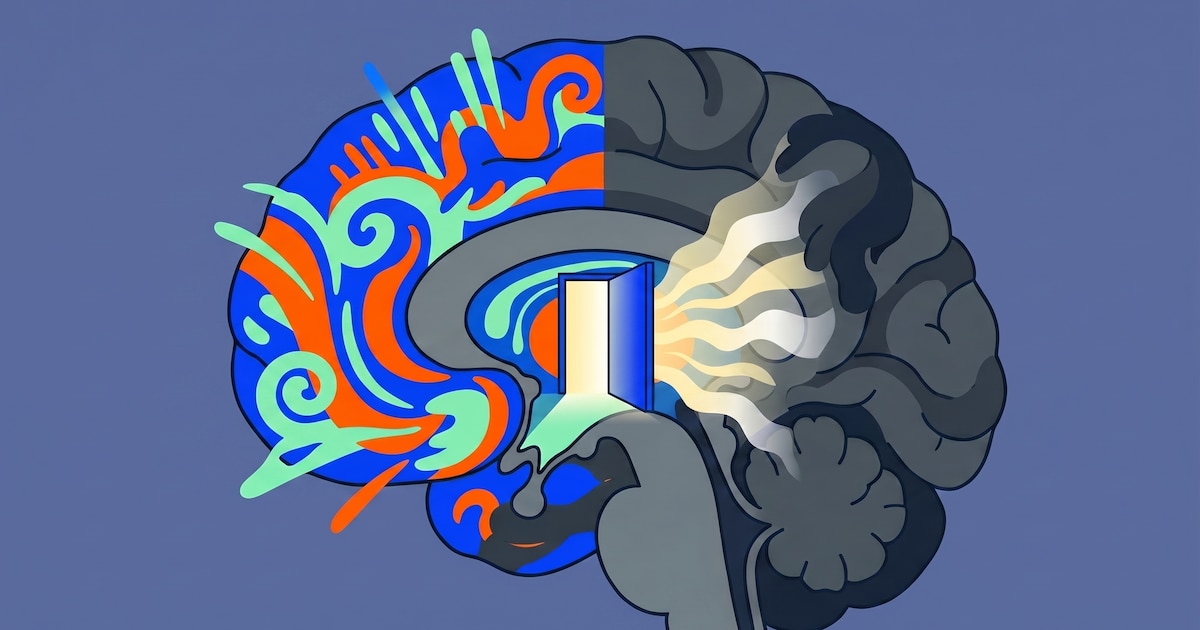
Researchers at the Ludwig-Maximilians-Universität München (LMU) have identified a distinct electrical rhythm in the human thalamus that acts as a biological marker for consciousness. Published in Nature Human Behaviour, the study reveals that this rapid oscillation, occurring between 19 and 45 hertz, is present exclusively during wakefulness and REM sleep.
The human brain’s thalamus has long been understood as a central relay station, managing signals between various cerebral regions. By functioning as a gatekeeper for perception and attention, it plays a critical role in sustaining conscious states. However, pinning down the exact electrical patterns that distinguish wakefulness from deep sleep has remained a significant challenge for neuroscientists.
According to reporting from Infobae, the research team—led by Tobias Staudigl of the LMU Department of Psychology and Elisabeth Kaufmann of the LMU Department of Neurology—identified a specific rapid oscillation in the central thalamus. This pattern, oscillating at a frequency of 19 to 45 hertz, appears specifically during periods of wakefulness and REM sleep, the latter being the phase most closely associated with vivid dreaming and rapid eye movement.

The study, which appeared in the May 2026 issue of Nature Human Behaviour, utilized advanced spectral analysis to isolate these high-frequency signatures. Staudigl and Kaufmann’s team observed that these oscillations are not merely background noise, but are phase-locked to broader cortical rhythms, suggesting a top-down regulatory mechanism. Unlike previous investigations that relied on scalp-level measurements, this study utilized intracranial data to confirm that these rhythms originate within the mediodorsal and intralaminar nuclei of the thalamus. The research indicates that the power of these 19–45 Hz oscillations drops precipitously as subjects transition into N3 stage sleep, providing a measurable “switch” that correlates with the loss of subjective awareness.
Notably, this signature is entirely absent during non-REM sleep. In that phase, the brain’s activity is dominated by slower oscillations, which correlate with a reduced state of consciousness. By identifying this rapid rhythm, the researchers have provided a potential biological marker that could revolutionize how clinicians monitor and categorize states of human consciousness.
Direct Neural Access Through Epilepsy Treatment
The discovery was made possible through a unique clinical opportunity involving patients undergoing deep brain stimulation (DBS) for epilepsy. DBS is a therapeutic technique that modulates neuronal activity through precisely targeted electrical impulses. Because the procedure requires the surgical implantation of electrodes directly into the thalamus to mitigate seizure frequency, it grants researchers rare, direct access to deep-brain electrical activity that is typically inaccessible via standard diagnostic tools.
Conventional methods, such as surface electroencephalograms (EEG), capture brain activity from the scalp. While effective for general monitoring, these tools often fail to resolve the nuanced electrical variations occurring within the thalamus’s deep structures. By utilizing the implanted electrodes of epilepsy patients, the LMU team was able to record neural activity with a level of precision that surface EEGs cannot achieve.
The study cohort consisted of 12 patients monitored over a period of 18 months, with data collection occurring during routine clinical stays at the LMU University Hospital. Researchers employed high-sampling-rate recording systems—capable of capturing data at 2,000 Hz—to ensure that the 19–45 Hz oscillations were not artifacts of electrode impedance or cardiac interference. By comparing these intracranial recordings against synchronized scalp EEG data, the team demonstrated that while global brain states are visible externally, the “conscious signature” of the thalamus is masked by the skull and scalp, explaining why this specific rhythm had eluded detection in traditional cognitive neuroscience literature.
Clinical Implications and Future Neurological Therapies
The implications of this finding extend beyond basic neuroscience. By establishing a clear biological marker for wakefulness and REM sleep, medical professionals may eventually be able to refine the treatment of various neurological conditions. The researchers suggest that this discovery could drive the development of more targeted neurological therapies, potentially improving outcomes for patients with disorders of consciousness or sleep-related pathologies.
In independent commentary, neurophysiologists at the Max Planck Institute for Human Cognitive and Brain Sciences noted that the LMU findings provide a necessary bridge between theoretical models of “thalamocortical loops” and observable clinical data. The team’s findings suggest that future DBS systems could theoretically be programmed to “closed-loop” stimulation, where the device detects the absence of the 19–45 Hz rhythm and applies subtle electrical stimulation to nudge the brain back toward a wakeful or alert state. This is particularly relevant for patients with chronic disorders of consciousness (DOC), where current prognostic tools often rely on subjective behavioral assessments that may not capture latent cognitive capacity.
While the scientific community focuses on these neurological advancements, broader industry trends continue to shape the technological landscape in 2026. As noted by the Microsoft 365 Community, organizations are increasingly focused on debugging and refactoring complex systems in an era defined by rapid AI integration. The convergence of high-level neuroscientific insights and advanced computational monitoring signals a significant shift in how we approach both human biology and digital infrastructure.
For now, the focus remains on validating this thalamic rhythm as a consistent indicator. If the pattern holds true across broader clinical applications, it could provide a standard metric for assessing brain function in patients who are unable to communicate their state of awareness, offering a new window into the complex, rhythmic architecture of the human mind. The LMU team has already secured follow-up funding to expand the study to a larger, more diverse patient population, aiming to determine if the rhythm remains stable across different age groups and neurological profiles, including those with traumatic brain injuries. This ongoing work is slated for publication in late 2027, with the research group currently partnering with data science labs to develop automated classification algorithms that can identify the signature in real-time during surgical monitoring.
