

“The meteor fireball that streaked over New England on May 31, 2026, released energy equivalent to 300 tons of TNT, triggering sonic booms heard across Massachusetts and New Hampshire, according to NASA’s analysis of satellite data and eyewitness reports.”
The Sonic Boom Explained: How a Meteor Became a Community Alarm
A meteor traveling at 75,000 miles per hour fragmented at an altitude of 40 miles over northeastern Massachusetts and southeastern New Hampshire, releasing energy comparable to 300 tons of TNT, NASA confirmed. The explosion, detected by NOAA’s GOES-19 satellite, produced shockwaves that rattled homes and startled pets across the region. “What you hear is the air compression of it moving really fast, creating those pressure waves,” explained Shauna Edson, an astronomy educator for the Smithsonian National Space and Air Museum, via CBS News. The event, occurring at 2:06 p.m. EDT, was marked by “loud booms” reported by residents as far as Rhode Island.
Historical Context: A Cosmic Comparison
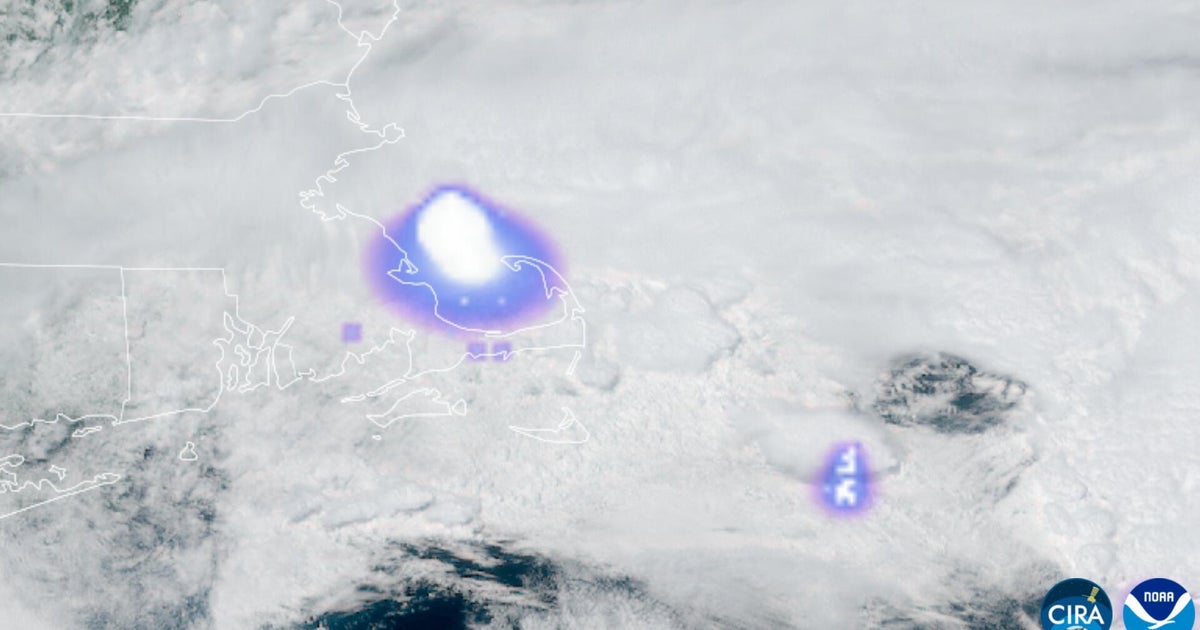
While the New England meteor posed no threat, its explosive power echoed the 2013 Chelyabinsk event in Russia, where a 14-mile-high explosion released 440,000 tons of TNT equivalent, injuring 1,600 people. NASA emphasized that this latest fireball was a “natural object” unrelated to space debris, though the agency noted the rarity of such daytime bolides—exceptionally luminous meteors that explode in the atmosphere. “This fireball was not associated with any currently active meteor shower,” stated Jennifer Dooren, NASA’s deputy news chief, in a statement cited by *Dawn*.
Scientific Verification: From Satellite Imagery to Eyewitness Accounts
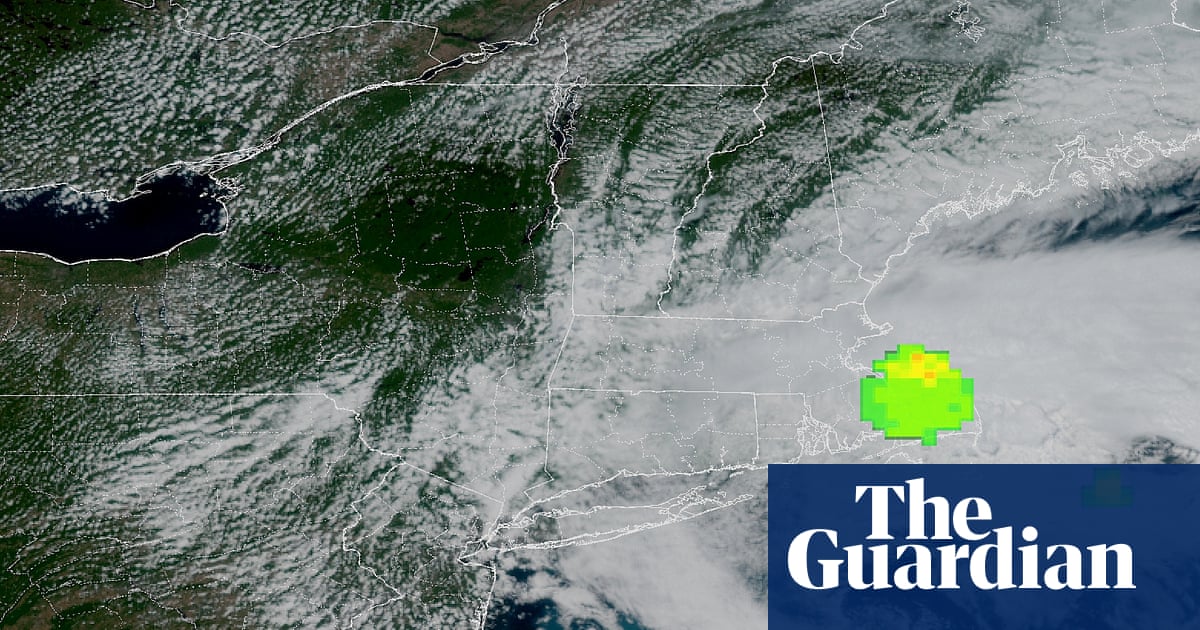
The event’s trajectory was corroborated by multiple sources. NOAA’s lightning data showed a signature consistent with a meteor, while the American Meteor Society received dozens of sightings across the Northeast. NASA’s statement, shared via *The Guardian*, described the meteor’s breakup as “equivalent to about 300 tons of TNT,” a figure reiterated by *The Straits Times*. The agency clarified that most meteors burn up harmlessly, but larger objects can create “brilliant fireballs and booming shock waves.”
Public Reaction: A Region in Shock
Residents described the booms as “powerful enough to shake houses,” with social media flooded by accounts of sudden, unexplained noises. WBZ-TV reported calls from Boston to Ipswich, Rhode Island, detailing the event. “The meteor appears to have fragmented at an altitude of 40 miles over northeast MA and southeast NH,” NASA stated, a detail echoed in *CBS News*. The U.S. Geological Survey noted that unlike earthquakes, sonic booms travel “along a linear path in the atmosphere,” explaining why the noise spread so broadly.
Unanswered Questions: Where Did the Meteor Go?
Despite the extensive data, the meteor’s fate remains uncertain. Edson suggested that if it exploded over the Atlantic, “it would be unlikely that any pieces of it would be found.” The absence of meteorite recoveries contrasts with the 2013 Chelyabinsk incident, where fragments were later recovered. NASA’s analysis focused on the energy released rather than physical remnants, underscoring the challenges of studying such events. “Most meteors burn up harmlessly in the atmosphere,” the agency noted, a sentiment repeated across all five sources.
Technical Details: Speed, Altitude, and Energy

The meteor’s speed of 75,000 mph (120,701 km/h) and altitude of 40 miles (64 km) were consistent across reports. The energy released—300 tons of TNT—was calculated using satellite imagery and atmospheric pressure data. This figure aligns with the “trinitrotoluene” (TNT) metric, a standard for measuring explosive power. The event’s rarity was underscored by *India Today*, which highlighted its classification as a “daytime bolide,” a term describing exceptionally bright meteors visible in daylight.
Implications: A Cosmic Reminder for Earth
While the New England meteor posed no danger, it serves as a stark reminder of Earth’s vulnerability to cosmic objects. NASA’s emphasis on the event’s natural origin—ruling out space debris or satellites—highlights the agency’s ongoing efforts to track near-Earth objects. The incident also underscores the role of public reporting in scientific analysis, with eyewitness accounts and social media data playing a critical role in mapping the meteor’s path.
What’s Next? Monitoring the Skies
Experts like Edson stress the importance of continued surveillance. “If the meteor landed off the coast of Massachusetts, it would be unlikely that any pieces of it would be found,” she noted, a statement that underscores the challenges of studying such phenomena. NASA’s confirmation of the event’s energy and trajectory provides valuable data for future risk assessments. As the agency stated, “unlike earthquakes which occur at discrete locations in the earth, sonic boom events occur along a linear path in the atmosphere,” a distinction that aids in understanding their impact.
“NASA confirmed the meteor’s energy release, while CBS News highlighted the expert explanation of sonic booms. The event’s rarity and scale were emphasized across all sources, from *The Straits Times* to *India Today*.”
“According to *Dawn*, the meteor was traveling at 75,000 mph, a speed consistent with NASA’s findings. The 2013 Chelyabinsk comparison, cited in *Dawn*, provided historical context for the event’s magnitude.”
“The U.S. Geological Survey’s clarification on sonic booms, via *CBS News*, added depth to the scientific explanation. The absence of physical remnants, noted by Edson, highlighted the challenges of studying such events.”
“NASA’s statement, shared by *The Guardian*, reiterated the meteor’s natural origin and energy release. The event’s classification as a daytime bolide, detailed in *India Today*, underscored its rarity and visibility.”
“The combination of satellite data, eyewitness accounts, and expert analysis created a comprehensive picture of the event, as reported by *The Straits Times*, *Dawn*, *The Guardian*, *CBS News*, and *India Today*.”
