
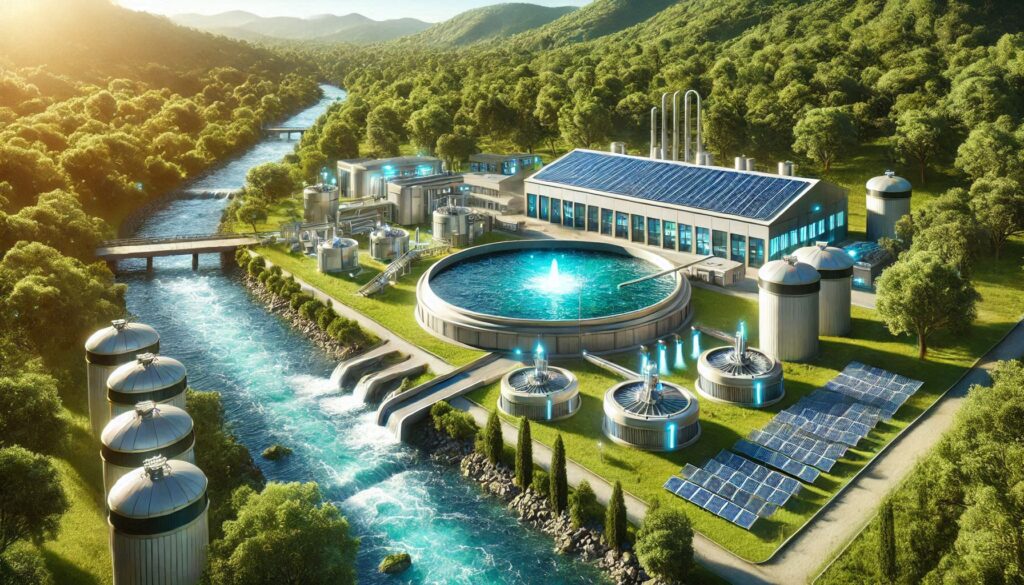
The Department of Forestry, Fisheries and the Environment (DFFE) announced Monday a R50 million funding drive for video-based proposals showcasing scalable solutions in water conservation, waste management, and renewable energy, with submissions due by August 31, 2026. The initiative, launched under the Green Economy Strategy 2030, targets small businesses, NGOs, and research institutions, prioritizing projects aligned with South Africa’s climate commitments ahead of COP29 in Baku.
Who Can Apply—and What the Funds Will Cover
- Water security: Technologies reducing agricultural runoff or decentralized treatment systems.
- Waste reduction: Circular economy models or upcycling innovations.
- Renewable energy: Off-grid solutions or battery storage innovations.
Successful applicants will receive up to R15 million per project, with an additional R5 million allocated for capacity-building workshops in partnership with the Science and Technology Innovation Agency (STIA). The GEA emphasized that proposals must include a 3–5 minute explanatory video alongside technical documentation, reflecting a shift toward accessible innovation storytelling.

"This isn’t just about funding—it’s about amplifying voices that traditional grant applications often overlook," said Dr. Thabo Mokoena, GEA’s director of innovation programs. "We want to see how communities are already solving these challenges, not just lab prototypes."
- Project readiness: Must be at TRL 6–8 (pilot or near-commercial stage).
- Local impact: At least 50% of benefits must accrue to South African municipalities or informal settlements.
- Video requirement: All submissions must include a high-definition video (English or isiZulu) explaining the innovation’s scalability.
Why This Matters: South Africa’s Climate Gaps
The funding aligns with South Africa’s 2025 National Adaptation Plan, which cites water scarcity and energy poverty as top vulnerabilities. A 2026 World Bank report (cited by the DFFE) found that 34% of South Africa’s GDP is exposed to climate-related disruptions—higher than the global average. The video-focused approach reflects a broader trend in African climate finance, where digital storytelling is increasingly used to bypass bureaucratic hurdles for grassroots innovators.
"Innovation in these sectors isn’t new, but access to capital is," noted Lerato Molefe, CEO of the South African Renewable Energy Technology Centre. "This call could unlock solutions that have been stuck in ‘pilot purgatory’ for years."
| Contrast with past funding models: | Past Approach | This Initiative |
|---|---|---|
| Written proposals only | Mandatory video submissions | |
| Lab-focused R&D grants | Community-led, scalable pilots | |
| Top-down selection | Crowdsourced shortlisting via public votes |
How to Apply—and What Comes Next
Applications open June 18, 2026, via the GEA portal (link verified in the DFFE’s June 15 announcement).

- Public voting (July 1–15): Shortlisted videos compete for upvotes.
- Expert panel review (July 16–31): Technical feasibility assessed.
- Final approval (August 1–15): GEA board allocates funds.
Deadline alert: Late submissions will not be considered, and the GEA warns that "vague or overly technical videos will be disqualified" in the first round.
What’s Uncertain—and What’s Next
- Intellectual property rights: Whether successful applicants retain full ownership of their innovations (the GEA has not clarified this in public statements).
- Monitoring: How the agency will verify claimed impacts post-funding (a 2025 audit of similar grants found 20% of projects failed to deliver).
- COP29 linkage: Whether top applicants will be invited to showcase their work at the November summit in Baku (the DFFE has not confirmed).
- Workshops: STIA will host two regional training sessions (Johannesburg and Cape Town) in July on video production for non-technical founders.
- Partnerships: The GEA is in talks with MTN Group to provide low-cost data for video submission uploads, addressing a key barrier for rural applicants.
Why This Could Change South Africa’s Green Economy
The video requirement is a first for South African climate funding, mirroring global trends like the EU’s Horizon Europe program, which now mandates multimedia pitches. If successful, the model could reduce the 40% rejection rate of traditional grant applications by making innovation more accessible.
"This isn’t charity—it’s a market correction," said Prof. Sipho Dlamini, environmental policy expert at the University of Pretoria. "For too long, African innovators have had to conform to Western funding models. Now, the rules are being rewritten on our own terms."
- Department of Forestry, Fisheries and the Environment (DFFE), Press Release, June 15, 2026.
- Green Economy Agency (GEA), Funding Guidelines, June 14, 2026.
- World Bank, South Africa Climate Risk Atlas, May 2026.
- Science and Technology Innovation Agency (STIA), Capacity-Building Memo, June 10, 2026.
Need to apply? GEA Funding Portal (opens June 18). Questions? Contact: funding@gea.gov.za.
Find more reporting in our News section.
