
AUDIO: Effizienz von Mängelmeldern in SH (1 Min)
Stand: 18.02.2026 10:35 Uhr
More and more cities in Schleswig-Holstein are utilizing digital reporting systems for public issues. A recent NDR investigation across twelve municipalities examines how these systems are being used and whether concerns about misuse are justified.
As winter’s impact on infrastructure becomes apparent across Schleswig-Holstein, residents are increasingly turning to digital tools to report issues. Where once citizens had to make phone calls or send emails, many communities now allow reporting via smartphone or computer. The first of these reporting systems were introduced in Schleswig-Holstein around eight years ago, and between 2022 and 2025, the IT-Verbund Schleswig-Holstein (ITV.SH) provided financial support for their implementation.
30 Municipalities Participate
Currently, 30 municipalities encompassing a total of 162 communities utilize the largest provider of these systems. An NDR survey indicates satisfaction with the apps in cities like Neumünster, Rendsburg (Kreis Rendsburg-Eckernförde), and Itzehoe (Kreis Steinburg). Rural areas are also working to implement these digital reporting options, with the Heider Umland (Kreis Dithmarschen) and Eiderstedt (Kreis Nordfriesland) currently in the process of setting them up.
Help for Administration or a Platform for “Do-Gooders”?
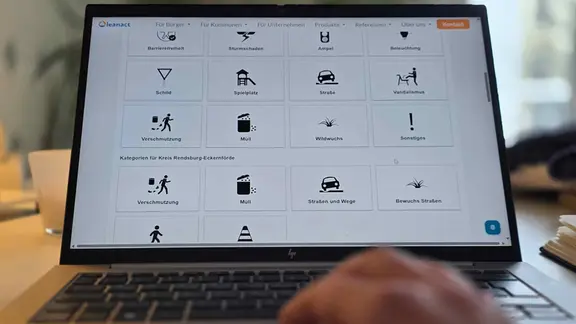
The systems can be accessed via computer, and smartphone.
Recent discussions about so-called “denunciation” have been fueled by the attention surrounding Niclas Matthei, known as the ““Reporting Master”,” who systematically reported parking violations and other offenses across Germany via social media. While he faced criticism, the situation raises the question of whether municipal reporting systems encourage a culture of “snitching” or serve as a valuable bridge between town hall and citizenry.
Feedback from twelve cities in Schleswig-Holstein paints a clear picture. From Flensburg to Lübeck, officials overwhelmingly report that the portals are used responsibly. In Eckernförde (Kreis Rendsburg-Eckernförde), the tool is seen as “active citizen participation,” and in Heide (Kreis Dithmarschen), the city emphasizes that denunciatory use is rare. Reports are also reviewed for privacy concerns before being made public to avoid publicly accusing individuals.
Illegal Dumping is the Top Issue Statewide
Analysis of municipal data reveals clear trends in the types of reports received.
- In Kiel, over 6,000 of the 7,922 total reports in 2025 concerned illegally dumped waste or loose trash.
- In Elmshorn (Kreis Pinneberg), waste-related reports account for more than half of all submissions, representing over 53 percent.
- In Norderstedt (Kreis Segeberg), 361 cases of waste deposits and 129 damaged streetlights were reported in 2025.
Beyond litter, issues related to roadways are also common. In Rendsburg (Kreis Rendsburg-Eckernförde), reports frequently concern waste, road damage, and overgrown vegetation. In Itzehoe (Kreis Steinburg), the range of reports varies from broken playground equipment to abandoned bicycles.

How Quickly are Issues Resolved?
The data reveals that submitting a report doesn’t always guarantee an immediate fix. Resolution times vary depending on the nature of the problem.
- In Heide (Kreis Dithmarschen), it takes an average of 17.5 days from the report to complete resolution, according to the city. Initial review for processing typically occurs within one day.
- Lübeck: Approximately 60 percent of issues are resolved within a week, city officials report.
- Pinneberg (Kreis Pinneberg): Resolution times range from hours for emergencies (such as traffic light failures) to several weeks, according to the administration’s analysis.
- Neumünster: Issues are generally resolved within a week, with immediate attention given to acute tripping hazards, the city reports.
In cities like Flensburg or Elmshorn (Kreis Pinneberg), a specific timeframe cannot be given, as external companies are often contracted for repairs, and their capacity is limited.
How Does a Reporting System Operate?
- Determine Location: Apps typically use GPS to automatically capture the location, while web forms require manual entry of the street address.
- Select Category: Users indicate whether the issue involves a broken streetlight, litter, or a pothole. This helps route the report to the appropriate department (e.g., public works or regulatory enforcement).
- Upload Photo: A picture of the issue helps the administration assess the urgency and required tools in advance.
- Submit: After submission, many systems (such as those in Tönning or Lübeck) allow users to track the current status of the report online.
The Trend is Spreading – Despite Isolated Skepticism
The network of reporting systems is expanding. The Heider Umland (Kreis Dithmarschen) launched a new online form in January 2026. The Eiderstedt (Kreis Nordfriesland) is also planning to introduce a system in 2026. They are opting for a solution without a separate app, integrating it directly into the regional citizen portal. “We wish to connect existing processes,” says Digitalization Manager Silke Homann-Vorderbrück.
Though, not all communities see the need for these digital tools. The municipality of Büsum (Kreis Dithmarschen) confirmed to NDR that it does not currently plan to implement a reporting system. According to Mayor Oliver Kumbartzky (FDP), a direct line to the public works department or administration works perfectly well without an app.
How to Report an Issue
- Determine Location: In apps, the location is usually automatically detected via GPS; in web forms, you enter the street manually.
- Select Category: Choose whether it’s a broken street light, damage, or litter. This helps with internal forwarding to the right department.
- Upload Photo: A photo of the damage helps the administration assess the urgency and the tools needed in advance.
- Submit: After submitting, in many systems (such as in Tönning or Lübeck) you can track the current processing status online.

