
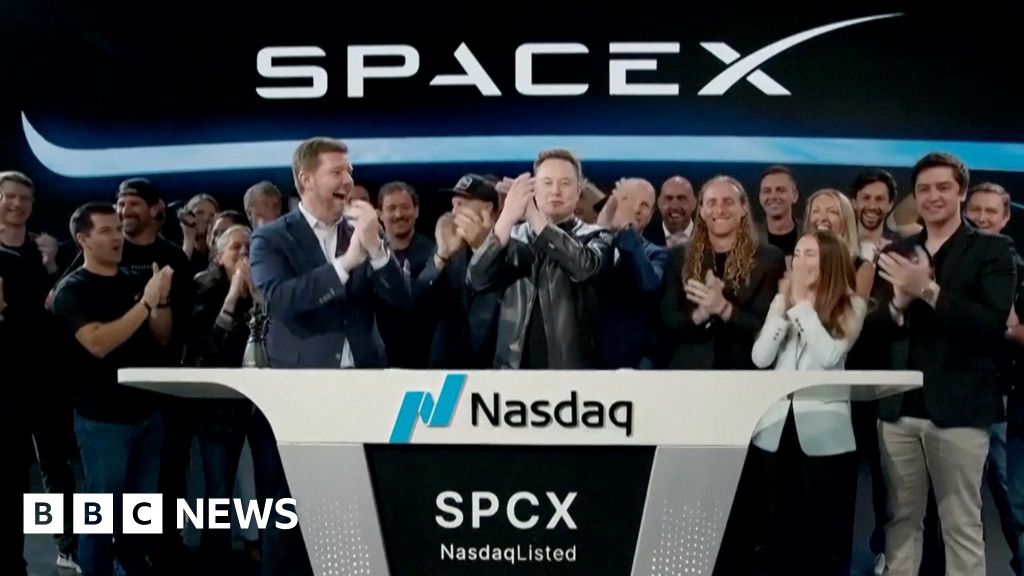
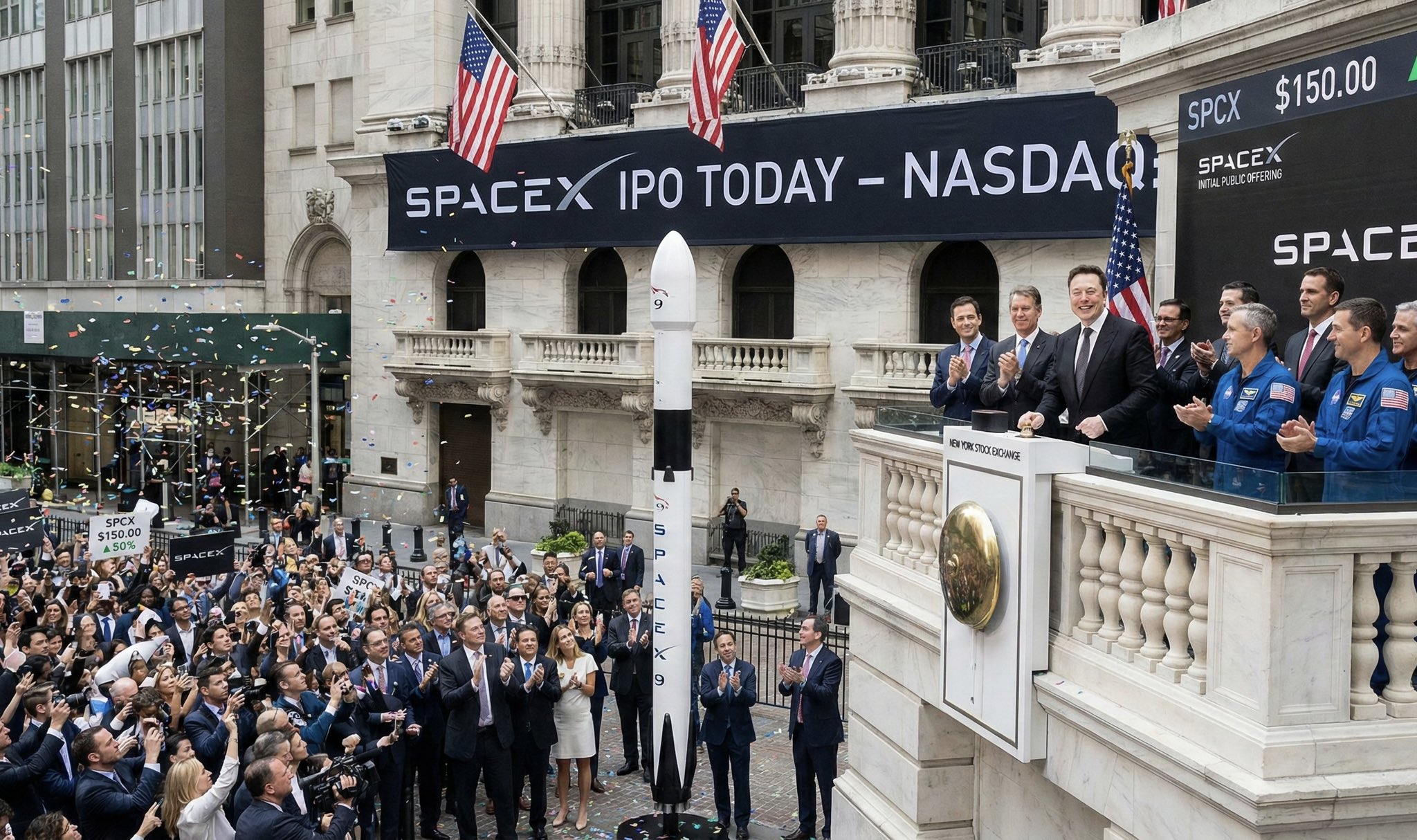
Elon Musk’s SpaceX began trading on the Nasdaq on Friday, June 12, 2026, with the company’s stock priced at $150 per share, giving it a nearly $2 trillion market cap and boosting Musk’s net worth to an estimated $1.1 trillion, according to Forbes. The IPO marked a historic milestone, with Musk himself acknowledging the company’s “less than a 10% chance of succeeding at all” during its early days, as reported by the BBC.
Musk’s Early Doubts and the IPO Milestone
SpaceX founder Elon Musk reflected on the company’s humble beginnings before its public debut, stating, “I gave the company less than a 10% chance of succeeding at all” when it first started. This admission, shared by the BBC, contrasts sharply with the current reality: SpaceX’s IPO is now the largest in history, with the company’s stock valued at $150 per share. The ceremonial trading events took place at Nasdaq headquarters in New York City and SpaceX’s Texas headquarters, celebrating the launch of the world’s first trillionaire’s venture into public markets.

The IPO’s scale underscores the transformative impact of SpaceX’s achievements, from its early rocket launches to its role in advancing space exploration. Forbes notes that the company’s valuation reflects investor confidence in its long-term potential, particularly its work on Starship and Mars colonization efforts. However, the IPO also raises questions about how Musk’s personal wealth—now estimated at $1.1 trillion—will influence his future ventures and the broader tech industry.
Forbes’ Analysis of Musk’s Wealth Growth
Forbes provides a granular breakdown of Musk’s wealth, highlighting his 38% stake in SpaceX, which includes 4.8 billion shares worth $715 billion and 350 million stock options valued at $50 billion. The publication estimates that Musk’s net worth rose by $188 billion to $982 billion on Thursday, June 11, 2026, following the IPO’s pricing at $135 per share. This rapid accumulation of wealth, which saw Musk surpass the $1 trillion mark in just 14 years since his first appearance on the Forbes World’s Billionaires list in 2012, has redefined the boundaries of personal fortune in the digital age.
“Elon Musk’s ascent to a $1 trillion fortune represents a milestone once considered unimaginable, highlighting how rapidly wealth can be created in an increasingly interconnected and technology-driven world,” said Matt Durot, Deputy Editor, Wealth at Forbes. The publication also emphasized its role as a “definitive source for understanding who is creating wealth, how they are creating it, and what it means for the future of business,” a claim reinforced by its 40-year history of tracking global billionaires.
Predictions for the Future of AI and Robotics
In an exclusive interview with Forbes, Musk shared bold predictions about the next five years, stating, “In five years, digital intelligence will exceed the sum of all human intelligence. In five years, there might be at least 100 million humanoid robots.” These remarks, made during the Forbes Innovator 250 Celebration, align with his broader vision of accelerating technological progress. Musk also forecasted that the global economy could double in size within five to seven years, a claim that has sparked both excitement and skepticism among economists and industry analysts.
The implications of Musk’s predictions are profound. If AI and robotics advance as he envisions, they could disrupt labor markets, reshape industries, and redefine human-machine collaboration. However, such rapid innovation also raises ethical and regulatory challenges, particularly around job displacement, data privacy, and the governance of autonomous systems. Forbes’ coverage of these ideas positions Musk as a central figure in the ongoing debate about the future of technology and its societal impact.
Historical Context and the Evolution of Wealth Measurement
Forbes’ analysis of Musk’s wealth journey traces his rise from a 2012 net worth of $2 billion to his current status as the world’s first trillionaire. The publication’s World’s Billionaires List, launched in 1987, has long served as the gold standard for tracking global wealth. Randall Lane, Chief Content Officer at Forbes, emphasized the brand’s unique role in “combining the same depth of historical wealth data, editorial credibility, and global reach,” a claim that underscores its authority in the field.

Musk’s meteoric rise reflects broader trends in the tech sector, where innovation and market speculation have created unprecedented wealth. His journey—from co-founding PayPal to leading SpaceX and Tesla—mirrors the trajectory of other tech moguls, yet his current fortune far exceeds that of any previous billionaire. This shift highlights the growing influence of technology entrepreneurs in shaping the global economy and the increasing reliance on public markets to fuel their ambitions.
What Comes Next for SpaceX and Musk?
The success of SpaceX’s IPO has immediate implications for the company’s operations and Musk’s personal ventures. With a $2 trillion valuation, SpaceX is now one of the most valuable companies in the world, potentially enabling greater investment in its Starship program, satellite internet (Starlink), and Mars colonization projects. However, the company will also face heightened scrutiny from investors and regulators, particularly as it expands into new markets and technologies.
For Musk, the IPO represents both an opportunity and a challenge. While his wealth provides financial flexibility, it also raises questions about how he will allocate resources across his various enterprises, including Tesla, Neuralink, and The Boring Company.
Find more reporting in our Tech section.
