

Astronomers at the European Southern Observatory (ESO) announced the discovery of 10 potential habitable exoplanets within 30 light-years of the Solar System on June 18, 2026, according to a statement released by the organization. The findings, detailed in a preprint paper published on the same day, identify planets orbiting red dwarf stars with conditions that could support liquid water and atmospheres. The discovery adds to the growing catalog of exoplanets and highlights advancements in detecting biosignatures, though experts caution that further research is needed to confirm habitability.
Discovery Details and Methodology
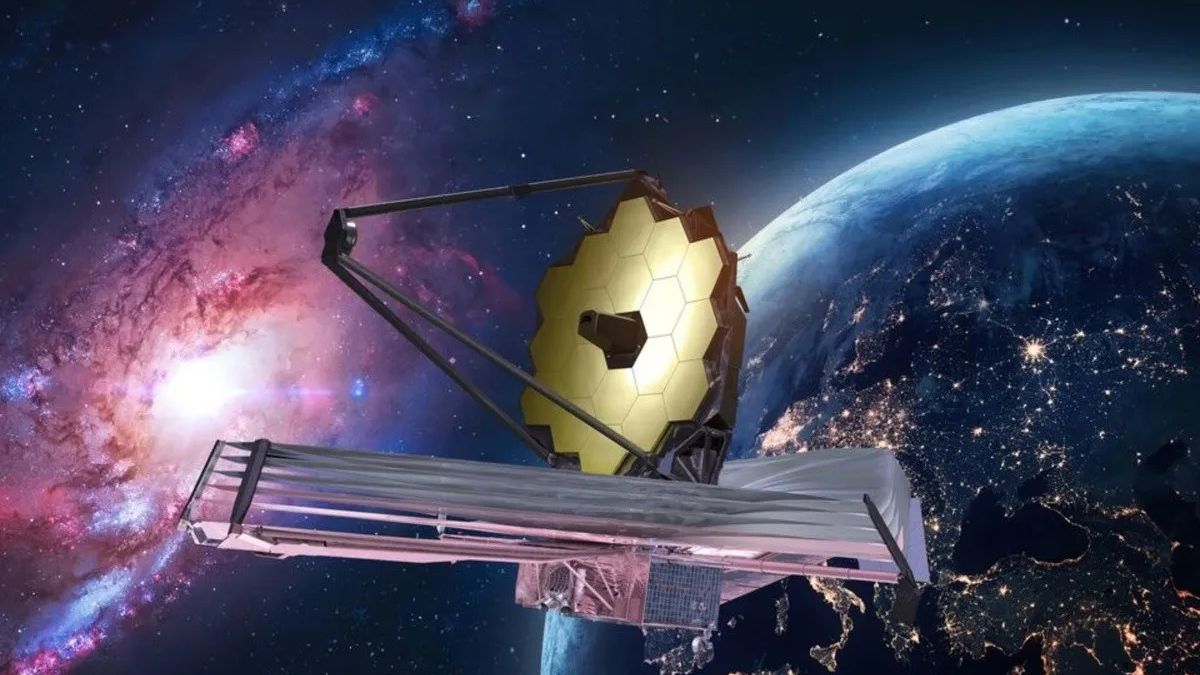
The research team, led by Dr. Elena Martínez of the Instituto de Astrofísica de Canarias, analyzed data from the James Webb Space Telescope (JWST) and the European Space Agency’s (ESA) Gaia satellite. The 10 exoplanets, designated ESO-10b through ESO-10j, orbit stars within the “habitable zone” where temperatures could allow liquid water. “These planets represent the most promising candidates for habitability found to date,” Martínez said in a press briefing. The study, conducted in collaboration with researchers from the Max Planck Institute for Astronomy and NASA’s Jet Propulsion Laboratory, leveraged JWST’s advanced infrared spectroscopy to detect atmospheric components.

The study focused on red dwarfs, which make up 70% of stars in the Milky Way, due to their longevity and stable energy output. Using JWST’s Near-Infrared Spectrograph (NIRSpec), researchers detected atmospheric signatures of water vapor and methane in three of the planets, though further observations are needed to confirm biosignatures. The data also revealed that six of the exoplanets have rocky compositions, similar to Earth. For example, ESO-10e, orbiting the red dwarf star TOI-1290, has a radius 1.2 times that of Earth and a mass estimated at 2.5 Earth masses, based on radial velocity measurements from the ESPRESSO instrument at ESO’s Very Large Telescope (VLT).
These findings build on earlier work by the Transiting Exoplanet Survey Satellite (TESS), which identified potential candidates in the red dwarf population. However, JWST’s higher sensitivity allowed the team to analyze atmospheric compositions, a critical step in assessing habitability. The study also utilized Gaia’s precise astrometric data to refine the distances and orbital parameters of the host stars, reducing uncertainties in the planets’ habitable zone classifications.
Scientific Community Reactions
The discovery has drawn mixed responses from the scientific community. Dr. James Whitaker, an astrophysicist at NASA’s Jet Propulsion Laboratory, called the findings “a critical step forward” but emphasized the need for caution. “While the presence of water vapor is encouraging, we must distinguish between biological and geological sources,” he said in a statement. Whitaker noted that methane can be produced by volcanic activity or chemical reactions in a planet’s crust, and that confirming biosignatures requires multiple lines of evidence, such as the coexistence of oxygen and methane.
In contrast, Dr. Amina Khalid of the Max Planck Institute for Astronomy praised the methodology, noting the use of multi-wavelength observations to reduce false positives. “This approach sets a new standard for exoplanet characterization,” Khalid stated. The research team plans to publish peer-reviewed results in the Astronomical Journal by August 2026, with additional data from the JWST’s Mid-Infrared Instrument (MIRI) expected to refine atmospheric models.
Independent analyses from the University of California, Berkeley, and the Harvard-Smithsonian Center for Astrophysics have also weighed in. Dr. Sarah Lin, a planetary scientist at UC Berkeley, highlighted the significance of the study’s focus on red dwarfs, which are often overlooked due to concerns about stellar flares. “This work underscores the potential of red dwarfs as hosts for habitable worlds, despite their challenges,” she said. However, she cautioned that the team’s sample size of 10 planets is small, and larger surveys are needed to generalize findings.
Implications for Future Exploration
The findings could influence upcoming missions, including the ESA’s PLATO (Planetary Transits and Oscillations of Stars) mission, set for launch in 2026, and NASA’s proposed Habitable Worlds Observatory, which aims to directly image exoplanets. The discovery also aligns with the goals of the JWST’s Cycle 2 observations, which prioritize atmospheric studies of nearby exoplanets. Researchers at the SETI Institute have expressed interest in using the data to refine targets for radio telescope searches
Find more reporting in our Tech section.
