
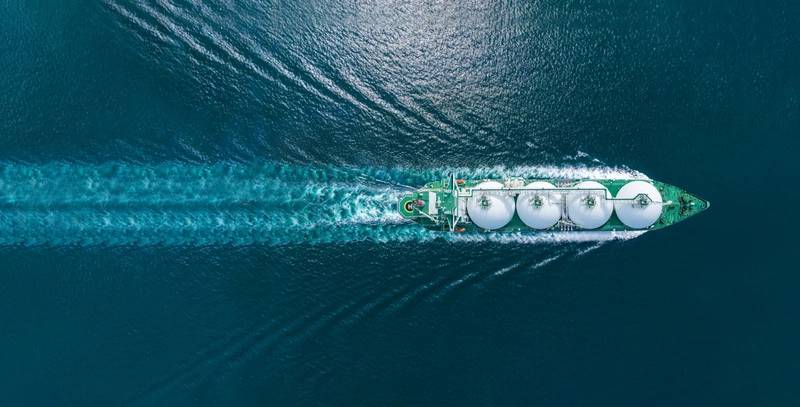
Liquefied natural gas carriers are resuming operations in the Persian Gulf, with vessels from Qatar and the United Arab Emirates completing transits through the Strait of Hormuz. Despite the ongoing regional conflict that began in late February, shipping data from May confirms that several tankers have successfully navigated the chokepoint, often while operating with disabled tracking systems.
ADNOC and the Shift to Dark Transits
The recent movement of liquefied natural gas (LNG) carriers signals a calculated shift in how regional energy producers manage risk in a volatile maritime corridor. According to data from the analytics firm Vortexa, the ADNOC-managed carrier Marigold loaded cargo at the UAE’s Das Island between May 24 and May 25. This departure followed a period of tactical invisibility.
The vessel had previously halted its Automatic Identification System (AIS) transmissions on May 3 before conducting a dark inbound transit of the Strait of Hormuz. This maneuver is part of a larger pattern observed among the Abu Dhabi National Oil Company’s fleet.
"It is the last of a group of four ADNOC-controlled steam carriers, which all turned AIS off, to cross Hormuz westwards to reload. The other three – Mraweh, Al Hamra and Umm Al Ashtan – have already made their subsequent ‘dark’ outbound transits of the chokepoint," Vortexa reported.
While ADNOC declined to comment on specific routing or vessel positioning, citing company policy, the data suggests that these shadow movements have become a necessary operational standard. The transition away from visible tracking reflects the heightened security climate in the Gulf, where the ability to monitor cargo from port to port—once a hallmark of the LNG industry’s reliability—has been sacrificed for the physical safety of crews and vessels.
Qatar’s Strategic Navigation Under Pressure
Qatar, the world’s second-largest LNG exporter, has faced acute economic pressure since the U.S.-Israeli war on Iran disrupted regional shipping lanes in late February. For months, the nation’s massive production facilities and specialized tanker fleet were effectively cut off from international markets.

The situation began to shift in May, as Qatari vessels started navigating the waterway with increased frequency. Ship-tracking data indicates that at least four Qatari-controlled vessels have successfully crossed the strait during the month. These movements, while small compared to pre-war volumes, have provided a crucial lifeline to buyers in India and Bangladesh who were previously forced to purchase supply on the spot market at double the cost of Qatari cargo.
The reality of these crossings remains tense. Mariners recount navigating the corridor in near-total silence, scanning the horizon for patrol boats, drones, and other threats. In one notable instance, the crew of the Al Rayyan tanker documented their transit on social media before silencing their transponders to exit the Persian Gulf.
"When the dream ship becomes reality," the seafarer wrote, according to accounts reported by Bloomberg.
For the vessels following in the wake of others, the presence of a nearby carrier served as a vital safety beacon. However, even these small convoys operate under the constant threat of interception, leading to a reliance on the same evasive tactics typically reserved for the illicit oil trade.
The Broader Impact on Global Trade
The escalation of risk in the Strait of Hormuz has forced a reevaluation of the foundations of global seaborne trade. With approximately one-fifth of the world’s oil and LNG supply normally passing through the chokepoint, the impact of the conflict extends far beyond the immediate region.
"This is a battle for the freedom of navigation," said Michelle Wiese Bockmann, an analyst at the maritime intelligence firm Windward. "You look at all those chokepoints, and all of a sudden the foundation of seaborne international global trade just goes out the window. We are seeing the increase in dark transits and the escalation of risk."

While the recent movements of carriers like the Cy Victorious—which exited the strait on May 30 carrying over 508,000 barrels of fuel oil—suggest a fragile reopening, shipping activity remains severely constrained. Analysts at Vortexa, Kpler, and LSEG note that four additional ballast LNG tankers have recently moved toward the eastern entrance of the strait, where they are currently holding positions.
These vessels, including QatarEnergy-controlled ships such as the Al Areesh, Al Khuwair, and Al Marrouna, moved toward the chokepoint between May 25 and May 27. According to Ashley Sherman, a senior LNG analyst at Vortexa, these holding patterns reflect a market clinging to fluctuating hopes for a broader peace deal or a permanent reopening of the waterway.
Uncertain Outlook for 2026
As of June 2026, the situation remains locked in a state of high-stakes uncertainty. The shift to dark transits has allowed for a limited resumption of trade, but the underlying geopolitical tension shows few signs of abating. For now, the global gas trade is forced to navigate the shadows, balancing the desperate need for energy exports against the reality of a waterway that remains, in many respects, under Iranian control.
The next 30 days will likely reveal whether these tentative, clandestine movements can scale into a more stable flow of energy, or if the current environment of heightened risk will continue to dictate the terms of trade for the remainder of the year. Until a permanent settlement is reached, the "shadow" model of shipping appears to be the only viable path for producers in the Gulf.
