
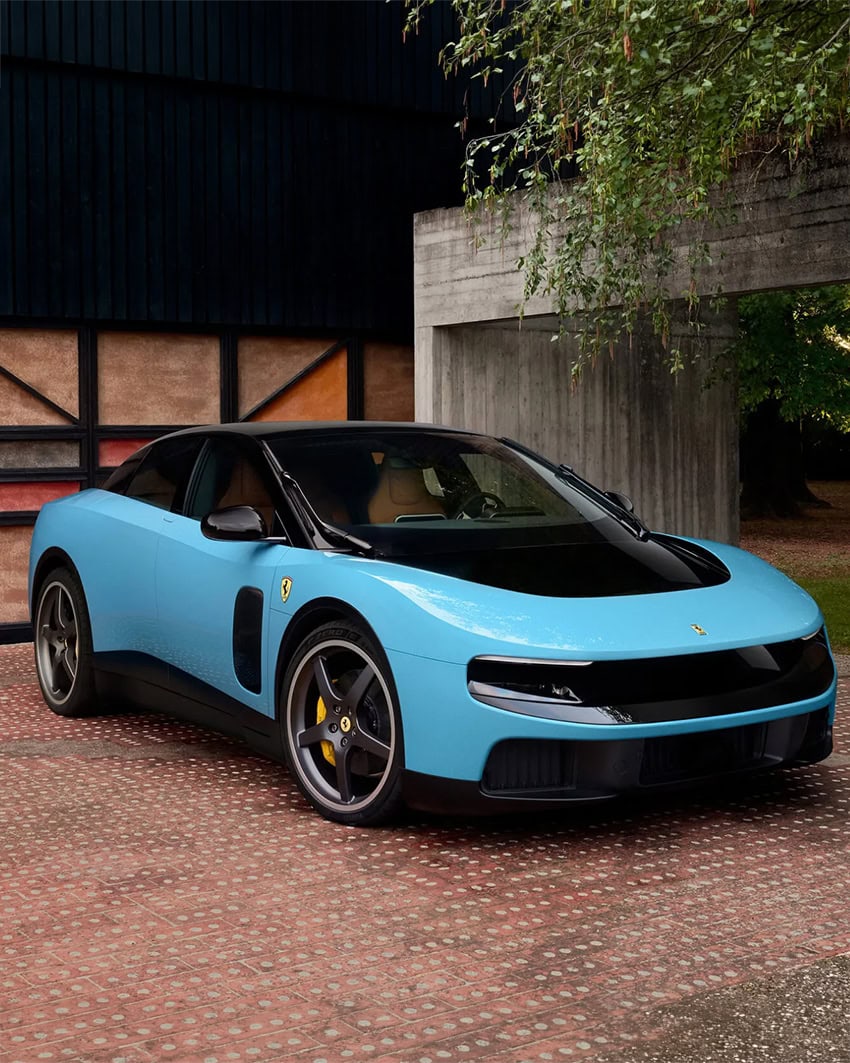
Ferrari officially unveiled the Luce, its first fully electric vehicle, on Wednesday, May 27, 2026. The four-door, five-seat grand tourer, designed in collaboration with Jony Ive’s LoveFrom studio, features an 800-volt architecture and a starting price of 550,000 euros. Deliveries are scheduled to begin in October, marking the brand’s high-stakes entry into the electric market.
A New Architectural Direction for Ferrari
The Ferrari Luce represents a radical departure from the traditional internal combustion heritage of Maranello. Measuring 5,026 mm in length and 1,999 mm in width, the vehicle utilizes a four-motor configuration—one for each wheel—to deliver a total system output exceeding 1,000 horsepower. The integration of an 800-volt battery system with a 122 kWh capacity allows for a WLTP-rated range of approximately 530 kilometers, despite the vehicle’s 2,260 kg curb weight.
Beyond the powertrain, the vehicle’s physical dimensions and layout—including a 597-liter trunk—position it as a practical performance GT. According to HNonline, the model follows the Purosangue as only the second Ferrari to feature rear doors, signaling a shift toward broader usability. However, the design language, heavily influenced by the minimalist aesthetic of Jony Ive, has drawn scrutiny. Critics note that the extensive use of glass and aerodynamically smooth surfaces leans toward a sterile, consumer-electronics aesthetic rather than the aggressive styling traditionally associated with the brand.
Market Strategy and Competitive Positioning
The launch of the Luce comes at a time of industry-wide hesitation regarding electric sports cars. While Ferrari is moving forward with its electrification plans, the company has reportedly postponed the development of a second electric model until at least 2028, reflecting a cautious approach to market demand. Denník N highlights that competitors are similarly recalibrating; Lamborghini has abandoned its own plans for an electric model by 2030, citing a lack of customer interest.
Felipe Munoz, an analyst at Car Industry Analysis, suggested that the Luce is unlikely to be a high-volume sales hit. Instead, the vehicle functions as a strategic demonstration of prestige and technological capability. This is particularly relevant as Chinese manufacturers, such as BYD, continue to innovate in the electric performance space. BYD’s Yangwang U9, for instance, features advanced active hydraulic suspension that allows the car to perform maneuvers described as “skákať a tancovať.”
“skákať a tancovať,” BYD, regarding the capabilities of the Yangwang U9.
The strategic pivot toward the Luce arrives as the broader automotive sector grapples with the transition away from internal combustion engines. Analysts have pointed toward the high capital expenditure required for electric platforms as a primary challenge for legacy luxury manufacturers. By leveraging the LoveFrom studio for the Luce, Ferrari is attempting to differentiate its electric offering through a design-led value proposition, aiming to maintain the high margins associated with its traditional combustion lineup. The 550,000 euro price point places the Luce in a distinct echelon of the electric vehicle market, targeting a customer base that prioritizes brand exclusivity and technological novelty over mass-market utility.
Engineering the Electric Character

A central challenge for Ferrari remains the preservation of the “emotion” that the brand claims is core to its identity. To counter the inherent limitations of electric drivetrains—namely the weight of batteries and the lack of traditional engine acoustics—Ferrari has developed a specialized sound system. This technology is designed to amplify the vibrations of the electric motors, creating a distinct auditory profile that the company insists is a natural evolution of its engineering rather than an artificial simulation.
The integration of this auditory feedback system is intended to maintain the sensory connection between the driver and the vehicle, a hallmark of the Maranello experience. By focusing on the modulation of frequency and intensity, the engineering team aims to replicate the visceral impact of a high-performance combustion engine while operating within the parameters of an electric motor. This approach acknowledges the feedback from long-term brand enthusiasts who have expressed concern regarding the quiet nature of electric propulsion.
Despite these efforts, the internal consensus at Ferrari appears nuanced. Even the company’s chairman, John Elkann, has acknowledged that the Luce departs significantly from the traditional image of a Ferrari sports car. As the company prepares for the October rollout, the primary question remains whether the brand can successfully bridge the gap between its legacy performance enthusiasts and a new generation of buyers, potentially incentivized by shifting global fuel costs.
The logistical rollout in October will be closely monitored by investors and automotive analysts alike. With the Purosangue having demonstrated that the Ferrari brand can successfully extend into new segments, the Luce represents a more fundamental technological shift. The brand’s ability to maintain its pricing power and exclusivity while navigating the complexities of electric vehicle manufacturing will be a key indicator of its long-term viability in an era of tightening environmental regulations and evolving consumer preferences. Whether the Luce will act as a catalyst for future electric development or remain a specialized niche within the company’s portfolio remains a subject of active debate within the industry.
