

Three consortia have submitted formal proposals for the Rota dos Sertões highway concession, a 502-kilometer project connecting Feira de Santana, Bahia, to Salgueiro, Pernambuco. The auction, scheduled for Thursday, May 28, 2026, at the B3 stock exchange in São Paulo, marks a significant infrastructure initiative aimed at regional integration and logistics development.
A Strategic Return to Infrastructure Bidding
The most prominent entry in the upcoming auction is the Consórcio 116 Sertões, which signals the return of the Novonor group—formerly known as Odebrecht—to federal infrastructure bidding. According to Agência iNFRA, the consortium includes the Neo Invest unit, the Portuguese engineering firm Mota-Engil, and the Infra I Fundo de Investimento. This move follows the company’s departure from the road concession sector in the wake of the Lava Jato investigation.
Mota-Engil, which recently secured the concession for the Santos-Guarujá tunnel, plays a central role in this partnership. As reported by Folha de S.Paulo, the Portuguese firm has deep ties to international infrastructure operations, including an equity stake held by the China Communications Construction Company (CCCC). This international backing provides the consortium with significant technical and financial capacity as it seeks to re-establish a footprint in the Brazilian highway market.
Financial Foundations and Competitive Bidding
The Rota dos Sertões project is structured as a 30-year concession contract. The Ministry of Transport estimates a total investment requirement of R$ 4,13 billion for capital expenditures (Capex) and R$ 4,4 billion for operational costs (Opex), according to data cited by A TARDE. The project spans 428,9 kilometers of the BR-116/BA, 65,9 kilometers of the BR-116/PE, and a 7,2-kilometer segment of the BR-324/BA.

The auction process utilizes a competitive bidding structure where the winner is determined by the highest discount offered on the base toll tariff. Current regulations set the base tariff at R$ 0,09505 per kilometer for single-lane stretches and R$ 0,12356 per kilometer for dual-lane segments. The absence of existing tolls on these stretches highlights the project’s potential for immediate revenue generation upon the completion of necessary infrastructure improvements.
A Field of Diverse Competitors
Beyond the Novonor-led partnership, two other groups have formally registered their interest. The Atlas Rodovias consortium features the Yvy Capital fund, established in 2023 by former Minister of Economy Paulo Guedes and former BNDES president Gustavo Montezano. According to CNN Brasil, this group is joined by Infra Brasil Investimento and the Houer group, which specializes in the management of public-private partnerships.
The final proposal comes from the Via dos Sertões consortium, comprised of the Aspen and DMDL groups. While these companies maintain strong operations in civil engineering, heavy machinery leasing, and infrastructure management, this project represents a shift into the direct operation of highway concessions. The diversity of these bidders—ranging from returning industry giants to specialized management funds—reflects the complex landscape of Brazilian infrastructure investment in 2026.
Infrastructure Modernization Goals
The winning bidder will be tasked with substantial physical upgrades to the existing road network. The project mandate includes the duplication of over 108 kilometers of roadway and the construction of five toll plazas located in Feira de Santana, Teofilândia, Quijingue, and Chorrochó in Bahia, and Cabrobó in Pernambuco.
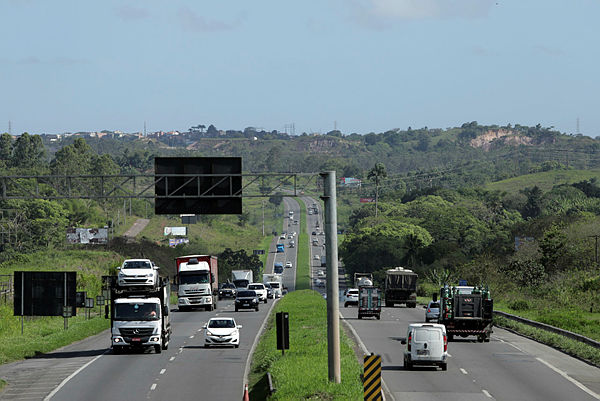
In addition to pavement recovery and capacity expansion, the concessionaire must implement safety improvements, including the construction of pedestrian walkways, additional lanes, and a dedicated bypass in the urban area of Serrinha, Bahia. These works are scheduled to be completed within the first six years of the contract, aiming to improve logistics efficiency for the Northeast region. As market participants prepare for the Thursday session, the outcome will likely serve as a barometer for the appetite of private capital to engage in long-term, large-scale federal highway concessions.
Regulatory Oversight and Project Scope
The National Land Transport Agency (ANTT) serves as the primary regulatory body overseeing the Rota dos Sertões project. According to reporting by Agência iNFRA, the technical requirements established by the agency mandate strict performance targets for the concessionaire. Failure to meet the six-year timeline for the duplication of the 108 kilometers of roadway and the delivery of the five toll plazas could result in contractual penalties. The agency’s oversight is intended to ensure that the transition from a state-managed highway to a private concession results in tangible improvements for regional logistics, particularly for freight traffic moving between the interior of Bahia and Pernambuco.
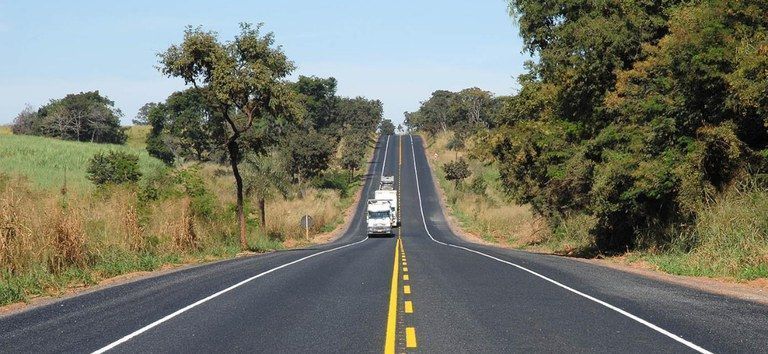
The project is viewed by federal authorities as a critical link in the logistical backbone of the Northeast. By integrating the BR-116 and BR-324 corridors, the government aims to reduce transit times and operational costs for heavy vehicle transport. The involvement of diverse financial actors, including infrastructure-focused funds and international engineering entities, underscores the scale of the investment required to bring these segments up to modern safety and efficiency standards. As the auction proceedings begin at the B3 exchange, observers are tracking the level of discount bids, which will determine both the final toll rates for users and the profitability margins for the participating consortia.
The competitive nature of the bidding, with three distinct groups vying for the concession, reflects a sustained interest in the Brazilian highway sector. Market analysts cited by Folha de S.Paulo have noted that the inclusion of large-scale infrastructure projects in the federal auction pipeline is a key indicator of the government’s current strategy to leverage private capital for long-term road maintenance and capacity expansion. The Rota dos Sertões represents a significant test case for this strategy, balancing the financial interests of private investors with the public necessity of maintaining a robust and safe road network across the designated states.
