

GKN Aerospace, a global aerospace technology company, faces a crisis at its California facility where a leaking chemical tank threatens to spill or explode, prompting mass evacuations.
GKN Aerospace’s Role in the Aerospace Industry
GKN Aerospace, identified in a Fox News report as the operator of the facility in question, specializes in producing engine structures and aerocomponents for commercial and military aircraft. The company’s website describes it as a “global technology leader,” though direct operational details about the California site are not publicly available. The facility in question is linked to the storage of methyl methacrylate (MMA), a volatile chemical used in aerospace manufacturing.
The Crisis at the California Facility
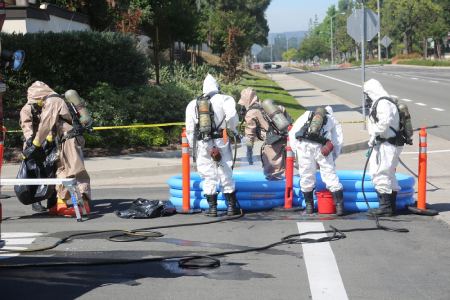
On May 21, 2026, authorities discovered a leak from a 34,000-gallon storage tank containing MMA at the GKN Aerospace site in Garden Grove, California. Firefighters initiated cooling measures, but the situation escalated, leading to urgent evacuation orders for thousands of residents. Orange County Fire Authority officials warned of two potential outcomes: the tank could rupture, releasing 6,000 to 7,000 gallons of toxic chemicals into the surrounding area, or it could undergo “thermal runaway,” causing an explosion that might trigger a chain reaction with nearby tanks.
Evacuation and Emergency Response
By May 22, 2026, schools in Garden Grove were closed, and thousands of residents were evacuated as emergency crews worked to mitigate the risk. Incident Commander Craig Covey of the Orange County Fire Division stated that the tank “unable to be secured and mitigated,” emphasizing the severity of the crisis. Local media reported that crews were “working around the clock” to stabilize the situation, though no immediate resolution was in sight.
Company Background and Broader Context
While GKN Aerospace’s website highlights its role in aerospace innovation, the company’s automotive division, GKN Automotive, is separately noted as a leader in drive systems for global automakers. However, the California facility’s specific operations and risk management protocols remain unclear. The incident underscores the challenges of handling hazardous materials in industrial settings, particularly when storage infrastructure ages or malfunctions.
Implications for Safety and Regulation
The crisis has raised questions about chemical storage practices and emergency preparedness in aerospace manufacturing. Officials described the situation as “actively in crisis,” with no clear timeline for resolution. The incident also highlights the potential for industrial accidents to impact nearby communities, as seen in the evacuation of Garden Grove.

What Comes Next
As of May 23, 2026, authorities have not confirmed whether the tank has been stabilized. The focus remains on preventing a catastrophic release of chemicals, with local agencies coordinating with federal emergency response teams. The long-term environmental and economic consequences of the incident remain uncertain.
The GKN Aerospace facility’s crisis serves as a stark reminder of the risks associated with industrial chemical storage and the critical importance of robust safety measures in high-risk sectors.
