
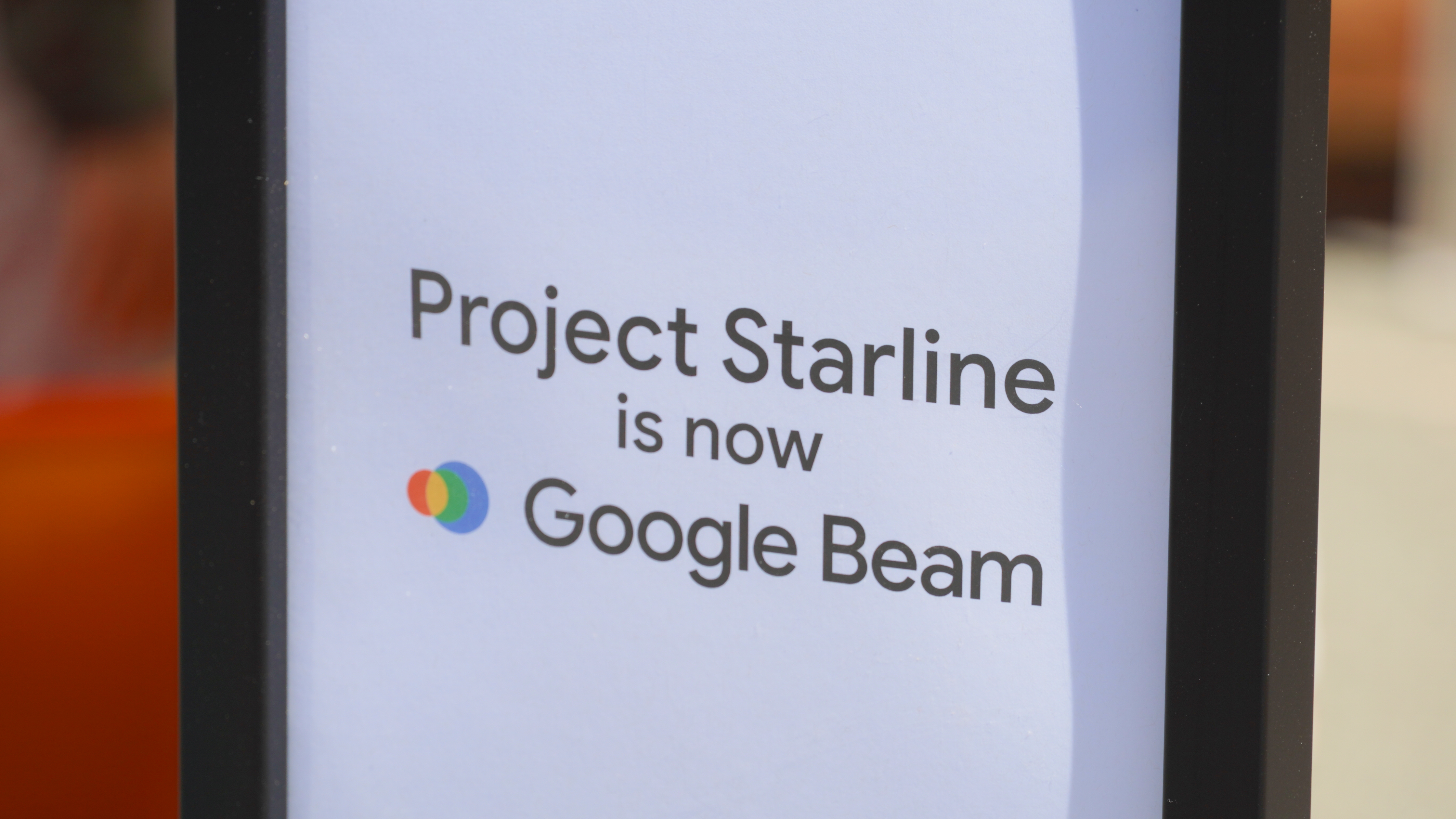
Tired of flat, impersonal video calls? Google Beam, formerly Project starline, is reinventing remote dialogue with its groundbreaking 3D technology, promising a more immersive adn natural connection. This article explores how Google Beam is poised to revolutionize virtual interactions for businesses and beyond, offering a glimpse into the future of truly engaging remote collaboration.
Google Beam: Peering into the Future of Remote Communication
Table of Contents
Google’s “Beam,” formerly known as Project Starline, is poised to revolutionize how we connect remotely. This innovative 3D communication platform, developed in collaboration wiht HP, promises a more immersive and natural experience than conventional video calls. While still in its early stages, Beam hints at exciting future trends in remote collaboration and virtual interactions.
The “Magic Window” Effect: Beyond the flat Screen
The core of Beam’s appeal lies in its ability to create a 3D portrayal of the person on the other end.This is achieved through a combination of advanced hardware and sophisticated software.Multiple cameras capture the person from various angles,and AI algorithms stitch these views together in real-time.The display then uses a lenticular lens to refract light, creating the illusion of depth.
This “magic window” effect eliminates the awkwardness often associated with remote meetings. the feeling of presence is significantly enhanced, making conversations more engaging and natural. Imagine being able to reach out and “grab” an object presented by someone on the other end – that’s the level of immersion Beam aims to achieve.
AI-Powered Enhancements: The Brains Behind the Beauty
The latest iteration of Beam leverages AI to further enhance the user experience. An AI volumetric video model plays a crucial role in combining the multiple camera views, creating a seamless 3D representation.head tracking technology accurately recreates your movements, adding to the realism of the interaction.
This AI-driven approach is a key trend in the evolution of communication technologies. As AI becomes more sophisticated, we can expect even more realistic and interactive virtual experiences.This includes improved facial expressions, more natural body language, and the ability to interact with virtual objects in a more intuitive way.
Enterprise Applications: The Initial Target Market
Beam is initially targeted at enterprise customers, suggesting its high cost and complexity. the technology’s potential for business applications is meaningful. Imagine the possibilities for:
- Remote Collaboration: Teams in different locations can collaborate more effectively, sharing ideas and working together as if they were in the same room.
- Training and Education: Beam could provide immersive training experiences,allowing trainees to interact with virtual instructors and simulations.
- Customer Service: Businesses could use Beam to offer more personalized and engaging customer service interactions.
The enterprise market is a logical starting point, as businesses are often willing to invest in cutting-edge technologies that can improve productivity and collaboration. As the technology matures and costs decrease, we can expect to see beam-like systems become more accessible to a wider audience.
The Future: beyond One-on-one
One of the current limitations of Beam is its focus on one-on-one interactions.However, the potential for future advancement is vast. Imagine:
- Group Video Calls: Beam could be scaled to support group video calls, allowing multiple participants to interact in a shared virtual space.
- Integration with AR/VR: Beam could be integrated with augmented reality (AR) and virtual reality (VR) technologies, creating even more immersive and interactive experiences.
- Holographic Projections: The technology could evolve to project holographic representations of peopel, allowing for truly “in-person” interactions from anywhere in the world.
The future of remote communication is likely to be characterized by increased realism, interactivity, and immersion.Beam is a significant step in this direction, and its evolution will undoubtedly shape how we connect and collaborate in the years to come.
FAQ: Your Questions About Google Beam Answered
What is Google Beam?
Google Beam is a 3D communication platform that aims to create a more immersive and natural remote communication experience.
How does Beam work?
Beam uses multiple cameras to capture a 3D representation of a person, which is then displayed using a lenticular lens to create a 3D effect.
Who is Beam for?
Beam is currently targeted at enterprise customers, but it may become more accessible to a wider audience in the future.
What are the benefits of using Beam?
Beam offers a more engaging and natural communication experience, eliminating the awkwardness often associated with traditional video calls.
what are the limitations of Beam?
Currently, Beam is primarily designed for one-on-one meetings. It is not yet designed for group calls.
