

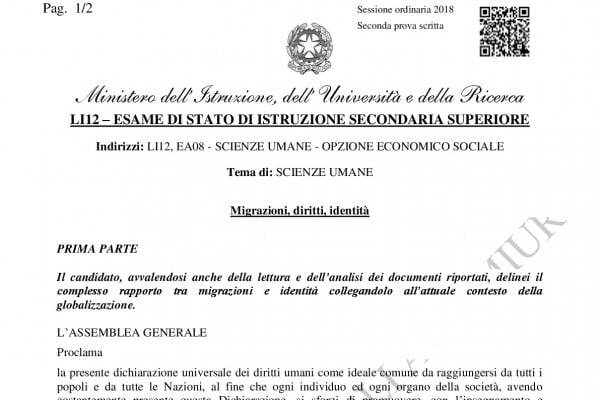
Italy’s Ministry of Education has released the official tracce—the exam topics—for the seconda prova of the 2026 Maturità (high school diploma) for students in the Liceo delle Scienze Umane (Humanities track), marking a shift toward interdisciplinary analysis over rote memorization. According to the ministry’s June 19 announcement, this year’s papers emphasize artificial intelligence in historical analysis and ethical dilemmas in digital citizenship, reflecting broader curriculum updates tied to Italy’s 2025 Piano Nazionale per la Formazione Digitale. The full tracce—three thematic clusters and two essay prompts—were published on the MIUR (Ministry of Education) portal at 10:00 AM local time, with educators noting a heavier emphasis on source criticism than in prior years.
Exam Structure and Student Requirements for the 2026 Humanities Track
- Compare two historical sources (e.g., a 19th-century political pamphlet and a 2026 AI-generated summary of the same event) and evaluate their reliability.
- Design a digital citizenship campaign addressing misinformation, using data from the Istituto Nazionale di Statistica (ISTAT) on youth media habits.
- Debate the ethical limits of AI in education, citing a 2025 European Commission guideline on algorithmic bias.
“The shift is deliberate,” said Prof. Elena Rossi, chair of the Maturità curriculum committee at the University of Bologna. “We’re testing not just knowledge, but how students engage with information—especially in an era where deepfakes and AI tools are reshaping research.” Rossi noted that while the tracce avoid outright bans on AI assistance, they require students to disclose any tool used in their analysis, a first for Italy’s exams.
The ministry’s official guidelines clarify that no single ‘correct’ answer exists for the essay prompts, but students must justify their reasoning with verifiable evidence—a departure from past exams where memorized interpretations carried more weight.
Key Policy Changes in Grading and Source Materials for 2026
| Element | 2025 Seconda Prova | 2026 Seconda Prova |
|---|---|---|
| Primary Focus | Literary analysis + historical context | Interdisciplinary synthesis (AI, ethics, data) |
| Source Types | Print texts only | Mixed media: AI summaries, ISTAT datasets, archival docs |
| AI Rules | Unmentioned | Disclosure required; no outright ban |
| Grading Weight | 40% interpretation, 60% structure | 50% critical thinking, 50% evidence-based argument |
| Example Topic | Dante’s Divine Comedy | “Can AI rewrite history? Analyze a deepfake of a 19th-century speech.” |
Why it matters: Italy’s exams now mirror OECD’s 2024 PISA framework, which prioritizes “digital literacy” over traditional humanities skills. “This isn’t just about preparing students for university,” said Dr. Marco Bianchi, a digital education policy advisor at the Università Cattolica del Sacro Cuore. “It’s about preparing them for a world where even historians will use AI to cross-reference sources.”
Criticism and Implementation Challenges for the New AI-Integrated Curriculum
Not all educators welcome the changes. Associazione Italiana dei Docenti di Lettere (AIDL) criticized the tracce for overloading students with technical demands, arguing that only 38% of Italian high schools have dedicated AI training programs. “We’re asking students to evaluate AI outputs without teaching them how to spot bias,” said AIDL spokesperson Luca Moretti in a June 18 statement. “This is a curriculum gap, not a skill gap.”
The ministry counters that sample responses and teacher training materials—published alongside the tracce—address these concerns. “The exam reflects real-world challenges,” a ministry spokesperson told reporters. “If students can’t analyze AI-generated content now, they won’t be able to in their careers.”
Timeline for the 2026 Exam and Preparation Recommendations
- June 20–21, 2026: Seconda prova administered nationwide (digital submission required for data-driven prompts).
- July 5: Preliminary results posted on the MIUR portal; appeals deadline begins July 10.
- July 15: Final Maturità scores released.
Student tip: Educators recommend practicing with the ministry’s sample AI-generated sources (available here) to familiarize themselves with the new format. “The exam isn’t testing AI use—it’s testing how you think about it,” said Rossi. “Treat the prompts like a debate, not a memory test.”
Broader Implications of Italy’s Digital Education Reform
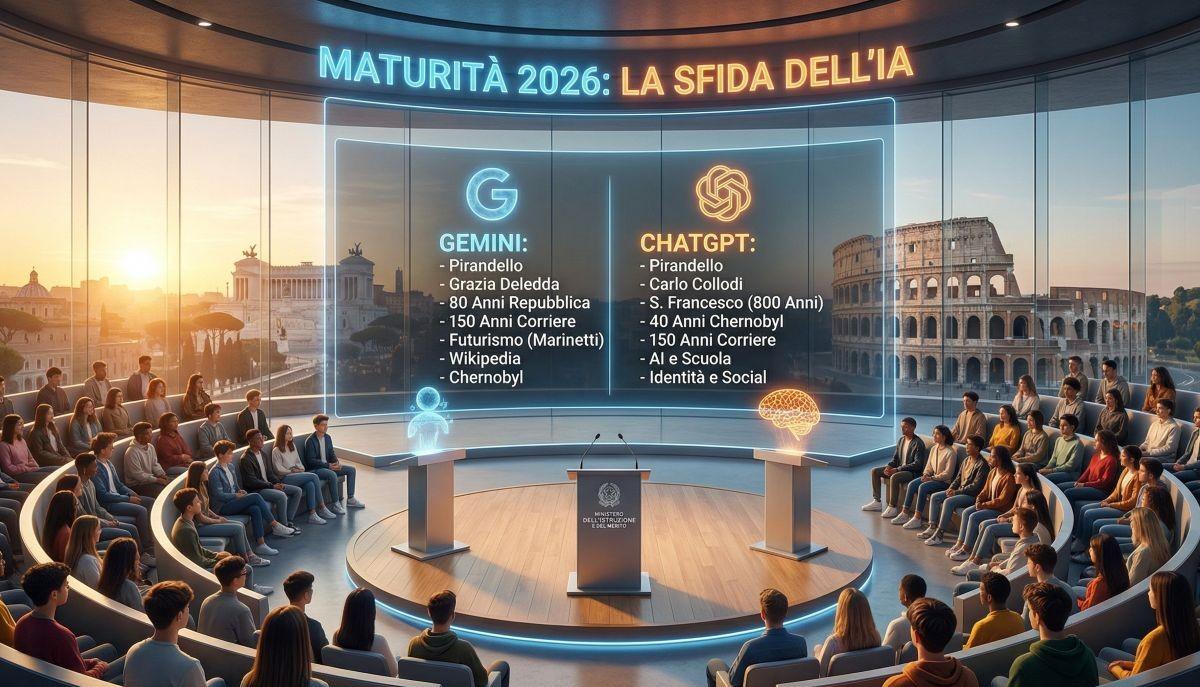
Italy’s 2026 seconda prova is the most ambitious test yet of its 2023 Legge per la Scuola Digitale, which mandates tech integration in national exams. While other EU countries (e.g., Finland, Estonia) have long used digital assessments, Italy’s approach is notable for its explicit focus on AI literacy—a response to the 2024 EU AI Act and growing concerns over deepfake disinformation.
“This is a litmus test,” said Bianchi. “If students perform well, it validates the shift. If not, it’ll force a reckoning about how we teach digital skills in schools.” With over 500,000 students taking the Maturità this year, the results will shape Italy’s education policy for years to come.
- Ministry of Education (MIUR) official tracce release (June 19, 2026)
- Interview with Prof. Elena Rossi, University of Bologna (June 18, 2026)
- AIDL statement on curriculum concerns (June 18, 2026)
- ISTAT youth media habits report (2025)
- European Commission AI bias guidelines (2025)
The exam’s outcomes will also reveal whether Italy’s rapid digital transformation has equipped young learners with the critical thinking needed to navigate an increasingly complex information landscape.
Find more reporting in our Tech section.
