

Honor is pushing the boundaries of smartphone technology with a working prototype of its ambitious “Robot Phone,” revealed after initial appearances as a digital concept [[1]]. The device features a physically moving camera module, signaling a important investment in mechanical integration alongside the company’s broader AI strategy, known as the Alpha Plan [[3]]. While still a proof-of-concept with an anticipated 2026 arrival, the Robot Phone highlights a growing trend of manufacturers exploring radical design changes to differentiate in a competitive market [[2]].
Honor has unveiled a working prototype of its “Robot Phone,” a device previously showcased only as a digital concept. The physical model, demonstrated at an internal event, features a distinctive camera unit capable of mechanical movement.
The prototype confirms Honor’s intention to integrate mechanical components into smartphones to allow for flexible camera positioning. The camera module is circular in design and can tilt and rotate, seemingly controlled by precise micromotors. The design evokes a miniature gimbal or an artificial eye capable of independently tracking people or objects. According to the company, this technology aims to enable functions such as facial recognition, enhanced selfies, and real-time object tracking – features not currently available in any smartphone on the market.
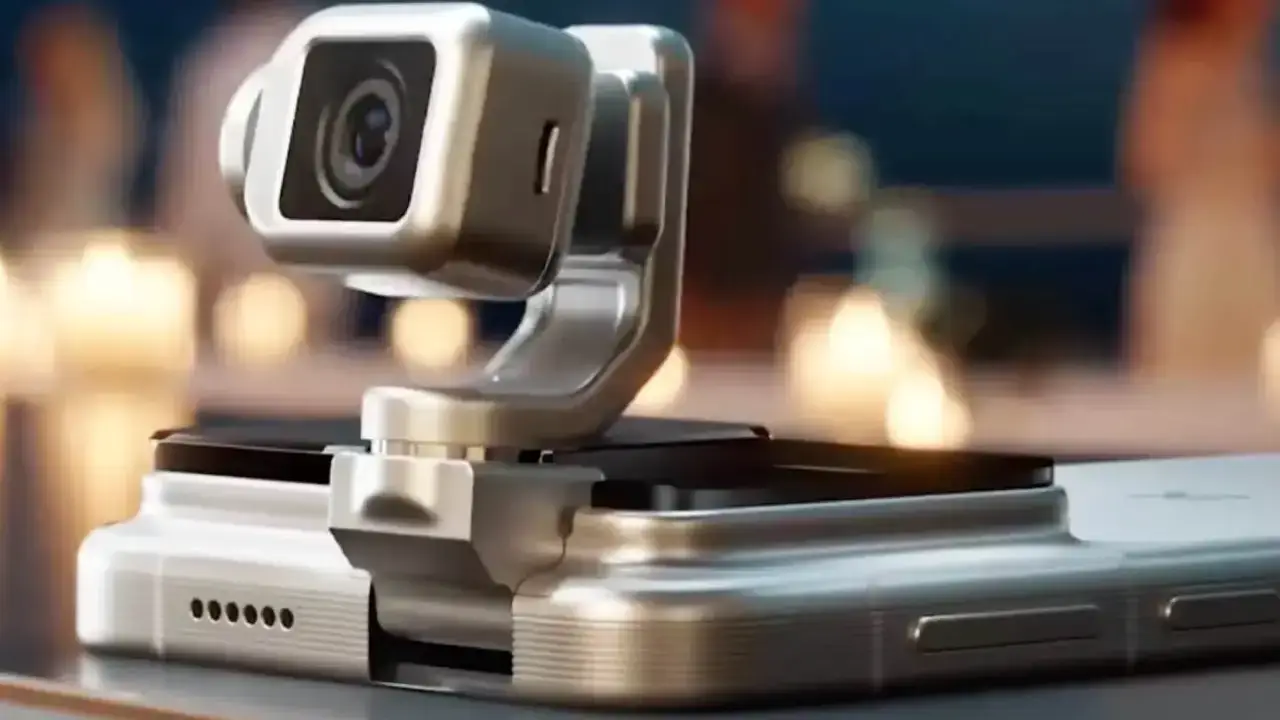
Despite the visible hardware, the demonstration remains a proof-of-concept. While Honor showcased the moving camera unit in action, it did not integrate it with functional software. This has led to some skepticism within the tech community. The company initially announced the Robot Phone would arrive in 2026, but there is currently no official specification sheet or concrete indication of mass production.
Whether the device will ultimately reach consumers remains uncertain. The complex mechanics could prove costly and prone to failure, and its durability in everyday use is yet to be determined. Some observers suggest Honor may initially position the concept as a technology demonstration, similar to rollable or transparent displays from other manufacturers that never saw widespread release. This approach allows companies to explore innovative designs and gauge market interest without committing to full-scale production.
Honor’s Robot Phone demonstrates that smartphone design continues to push boundaries, exploring new ways to integrate mechanical movement into a compact form factor. The potential for dynamic camera systems could represent a significant shift in mobile photography and videography. Whether this prototype evolves into a commercially available product will likely become clear in 2026.
ALPHA PLAN: the Strategy Behind the Concept
The ROBOT PHONE is positioned as a milestone within HONOR’s ALPHA PLAN – a strategic realignment that aims to transform the company from a pure smartphone manufacturer into a provider of a global AI-powered device ecosystem. The plan envisions a gradual integration of agent AI into daily life, strengthening open ecosystems, and ultimately developing devices with greater autonomy.
