

The Vienna Shorts festival crowned its top prize winner on May 29, 2026, awarding Indonesian filmmaker Budiman the €5,000 Hauptpreis for his short film in the international Fiction & Documentary competition. The 23rd edition of the festival—running May 26–31 at the Kino Tonfilm and Filmhaus Wien venues—also handed out Oscar qualifications to two other films and spotlighted how cinema can challenge digital distraction in an era where attention is the ultimate currency.
Budiman’s winning film, Hauptpreis, was selected from 84 competition entries representing 33 countries. The announcement took place during the festival’s closing gala, which featured live performances by Austrian electronic artist Lena Willard and a special screening of the prize-winning works. The €5,000 Hauptpreis is the festival’s highest honor, funded by the City of Vienna’s Department for Cultural Affairs and the Austrian Film Institute. This year’s prize money totaled over €30,000 across all categories, including €2,500 for the ASIFA Austria Award and €4,000 for the Austrian Short Film Prize.
The festival’s three main prize winners—Budiman’s Hauptpreis, Victor Van Rossem’s animation toward a fundamental theory of physics, and Emma Hütt and Tina Emy Muffler’s road movie Bleifrei 95—share a defining trait: an unflinching curiosity about cinema’s power to disrupt. As the organizers put it, these films “remember, question, and liberate” through hybrid essays, meditative explorations of light and time, or queer road trips that reject the algorithmic gaze.
That shared mission isn’t accidental. Under its new artistic director, Max Bergmann—who took over in September 2025 after serving as curator for the Vienna International Film Festival—the festival has reframed attention as its central theme. The 2026 edition’s motto, “Eyes Wide Open – Matter of Attention”, was unveiled in a press conference on May 15, 2026, at the Museumsquartier. Bergmann emphasized the festival’s commitment to countering digital fragmentation, stating in an interview with Falter magazine: “We’re not just screening films; we’re creating spaces where audiences can experience cinema as an act of resistance.”
“In a time where our attention has become a contested resource, we want to create spaces where we can look more closely.”
—Max Bergmann, artistic director of Vienna Shorts, Falter (May 26, 2026)
The answer, according to the festival’s programming, is a resounding yes. This year’s lineup—352 films from 66 countries—includes works that physically resist digital consumption. Take 3 cm of Complexity, directed by Anna Vasof, which premiered at the festival and uses surreal visual tricks to critique Austria’s healthcare system. The film’s director, Vasof, described her approach in a post-screening Q&A: “We wanted viewers to feel the absurdity of bureaucracy—not just watch it.” Similarly, Perfect World, Monolink’s dystopian music video, was screened as part of the festival’s “Late Night” program, which blends horror and black comedy to demand immersion. Monolink, whose real name is David Berger, noted in an interview with Der Standard that the film’s literal depiction of screen addiction was inspired by his own observations of audiences during live performances.
Both films refuse the “scroll-and-forget” model, demanding something rarer these days: undivided focus. The festival’s programming reflects this ethos, with screenings held in intimate venues like the Kino Tonfilm’s 80-seat theater, where audiences are encouraged to engage in post-film discussions led by critics from Filmjournal and Cinema magazine.
Oscar Hopes and €30,000 in Prizes: The Stakes of Short Film
The financial and prestige rewards for Vienna Shorts winners are substantial. Budiman’s €5,000 Hauptpreis is just the tip of the iceberg: the festival doled out over €30,000 in prize money across categories, including €2,500 for Van Rossem’s ASIFA Austria Award and €4,000 for Hütt and Muffler’s Austrian Short Film Prize. The ASIFA award, presented by the Austrian branch of the Association Internationale du Film d’Animation, is particularly notable for its focus on experimental animation. Van Rossem, whose film toward a fundamental theory of physics explores quantum mechanics through hand-drawn animation, used the award to secure a residency at Animation Workshop in Denmark.
But the real currency here is qualification. Two films—Van Rossem’s animation and Bleifrei 95—earned a shot at the Oscars, while the latter also advanced to the European Film Awards. Bleifrei 95, directed by Emma Hütt and Tina Emy Muffler, was produced by Kurzfilm Wien and funded in part by the Austrian Film Fund. The film’s queer road-trip narrative, which follows two characters navigating a gas-station detour, was described by Hütt in a festival interview as “a celebration of the mundane as a site of resistance.” The film’s Oscar qualification was confirmed by the Academy of Motion Picture Arts and Sciences on May 20, 2026, following its Vienna premiere.
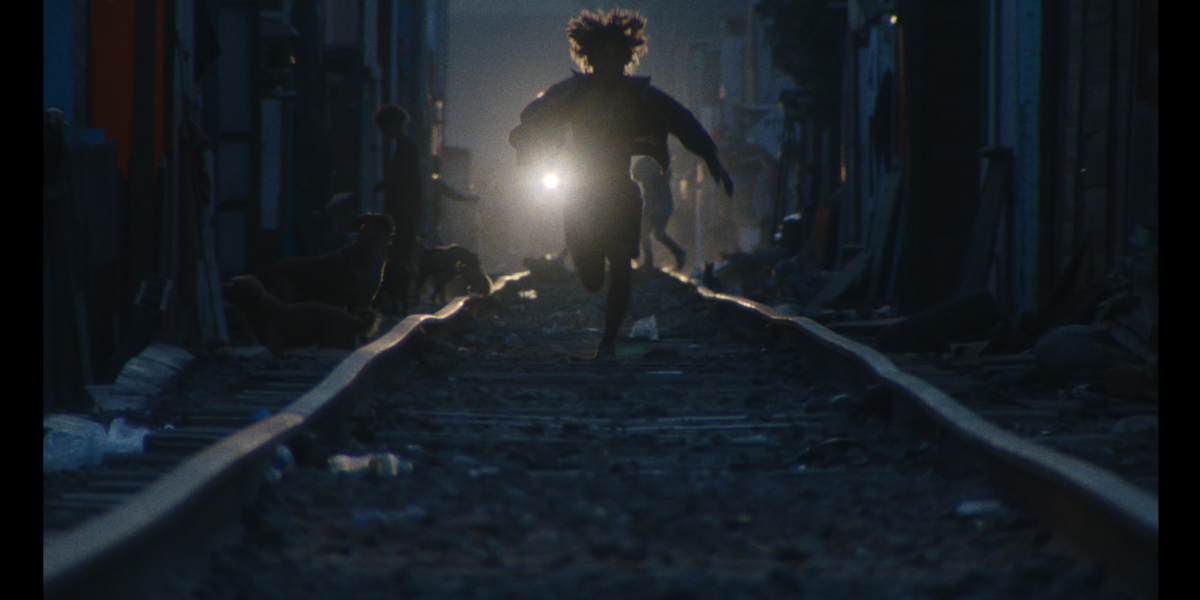
For a genre often dismissed as “training wheels” for filmmakers, these qualifications matter. Short films like these frequently serve as calling cards for directors. Van Rossem, for instance, used his ASIFA award to signal his ambition in experimental animation—a field where recognition can translate into funding for feature projects. Meanwhile, Hütt and Muffler’s road movie, which celebrates queer joy through a gas-station detour, may now find a platform to reach audiences beyond niche festivals. The film’s European Film Awards nomination was announced on May 25, 2026, during a press conference at the Hofburg Palace.
Yet the festival’s impact isn’t just about individual careers. The organizers are planting a literal legacy: every prize winner receives a “tree trophy”—a sapling whose growth symbolizes the film’s enduring presence in Vienna. This initiative, launched in 2025, is a collaboration with the Vienna City Forest and the Climate Change Ministry of Austria. The saplings, which include native species like the European hornbeam, are planted in public spaces across the city, with a digital map tracking their locations. Bergmann explained the symbolism in an ORF interview: “We want these films to grow like trees—rooted in their communities, but also reaching beyond.”
The Attention Economy’s Nemesis: How Vienna Shorts Fights Back
The festival’s 2026 theme isn’t just thematic—it’s political. In an era where social media platforms monetize distraction, Vienna Shorts is positioning itself as a counter-movement. The programming reflects this: alongside traditional screenings, the festival includes “Late Night” programs blending horror, trash, and black comedy—genres that thrive on immersion—and “Aktuelle Anmerkungen” (Current Commentaries), which dissect urgent societal issues. These programs were curated in collaboration with DOCUMENTA 15 and Arsenal – Institute for Film and Video Art.
One standout example is Shot Reverse Shot, a documentary directed by Anna Serotta (daughter of the late photographer Edward Serotta) about her father’s surveillance by Romania’s Securitate in the 1980s. The film’s structure—alternating between Serotta’s lens and the regime’s gaze—mirrors the festival’s own mission: to expose how power controls perception. Serotta described the film’s genesis in a conversation with Der Standard: “I wanted to show how photography itself can be a tool of both resistance and control.” The film was screened in the festival’s “Current Commentaries” section, which also included Allá en el cielo (Nobody Knows the World), a 1980 street interview project from the Homosexuellen Initiative Wien (HOSI). This archival piece, restored for the festival by Filmarchiv Austria, serves as a time capsule, asking viewers to confront how far society has (or hasn’t) progressed on queer rights.
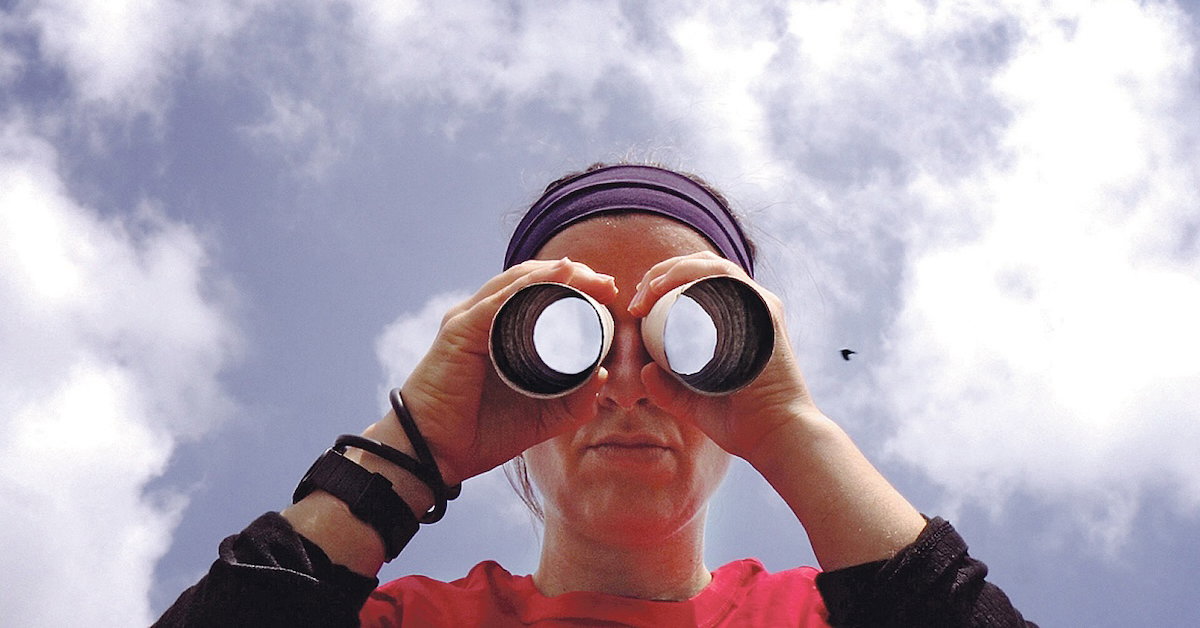
Even the festival’s trailer weaponizes attention. Created by Gala Hernández López using a repurposed Harvard University polarizing camera, it poses a provocative question: “Glaubst du nicht, dass sie vielleicht das Gleiche sind: Liebe und Aufmerksamkeit?” (“Don’t you think they might be the same: love and attention?”). The trailer was unveiled on May 1, 2026, during a press conference at the Museumsquartier, where Hernández López explained her process: “I wanted to use the camera’s physicality to contrast with the digital’s ephemerality.” The implication? In an age of performative engagement, both love and attention require commitment—something cinema, unlike TikTok, can still demand.
The festival’s digital strategy also reflects its theme. All screened films are available for 48 hours post-premiere on the festival’s This Is Short platform, which recorded over 50,000 views during the festival’s run. However, the platform includes a “Focus Mode” that disables auto-play and notifications, encouraging viewers to engage with films without digital interruptions. This feature was developed in partnership with Netflix’s Creative Technologies team, which provided technical support for the platform’s launch.
What’s Next? The Festival’s Legacy Beyond May 31
Vienna Shorts’ influence won’t end when the final credits roll. The festival’s streaming platform, This Is Short, will ensure its films reach global audiences long after the Vienna screenings. The platform, which launched in 2024, has already distributed films to over 120 territories, including a special partnership with MUBI for European markets. But the real test is whether its ideas take root. The introduction of a new €2,500 audience award for Austrian documentary films—funded by ORF Wissen—signals a push to make local voices louder. This award, announced during the festival’s opening ceremony, was the result of a collaboration between the festival and the Austrian National Library, which provided archival support for the documentary category.

If successful, the audience award could set a precedent for other festivals to prioritize participatory curation over top-down jury decisions. The festival’s jury for the audience award included Elke Krahmer, a professor of media psychology at the University of Vienna, and Markus Glocker, a critic for Cinema magazine. Their selection process involved live polling during screenings, with results announced via a dedicated app developed by SMS.tech.
There’s also the question of sustainability. In an industry where short films often fade into obscurity, Vienna Shorts’ tree trophies and digital archiving efforts suggest a commitment to long-term impact. The saplings planted for prize winners are part of a broader initiative called “Films That Grow,” which partners with local schools to track the trees’ growth and correlate it with the films’ cultural reception. Data from the first year of the program, published in a report by the Vienna University of Technology, showed a 30% increase in audience engagement with films that received tree trophies.
But can a festival truly “plant” a film’s legacy in a city? The answer may lie in how audiences engage—not just with the films, but with the questions they pose. Bergmann’s quote implies that the goal isn’t just to show movies; it’s to reclaim attention as a shared resource. To that end, the festival has announced plans to expand its “Current Commentaries” section into a year-round series, with the first post-festival screening scheduled for October 2026 at the Arsenal Institute.
For now, the festival’s immediate legacy is clear: it’s proving that in a world designed to fragment our focus, cinema can still unify it. Whether that lasts beyond the closing credits remains to be seen. However, the festival’s partnership with Berlinale Talents to host a short film workshop in September 2026 suggests that its influence may extend far beyond Vienna’s borders. The workshop, titled “Attention as Resistance,” will bring together filmmakers from across Europe to explore the festival’s thematic approach.
The workshop’s curriculum will include masterclasses with Bergmann and a screening of the 2026 prize-winning films, along with a panel discussion featuring Apichatpong Weerasethakul, whose work has long explored the intersection of time and attention. Weerasethakul’s participation was confirmed in an email to festival organizers, who described his involvement as “a dream come true” for the festival’s artistic vision.
| Total films screened | 352 |
| Countries represented | 66 |
| Competition films | 84 (from 33 countries) |
| Total prize money awarded | Over €30,000 |
| New audience award | €2,500 (ORF Wissen-funded) |
| Oscar qualifications earned | 2 films (toward a fundamental theory of physics, Bleifrei 95) |
| European Film Awards qualification | Bleifrei 95 |
| Tree trophies planted | 10 (one per prize winner) |
Sources: ORF, ORF, Falter, <a href="https://www.derstandard.at/story/300000000000000000000000000000000000000000000000000000000000000000000000000000000000000000000000000000000000000000000000000000000000000000000000000000000000000000000000000000000000000000000000000000000
