

Rex Heuermann, a New York architect, was sentenced to three consecutive life sentences plus 100 years on June 17, 2026, after pleading guilty to murdering seven women and admitting to an eighth killing. The sentencing concludes a decade-long investigation into human remains discovered along Long Island’s Gilgo Beach beginning in 2011.
The Path to a Life Sentence
The sentencing in Riverhead, New York, marks the definitive end to a mystery that haunted Long Island for fifteen years. Rex Heuermann, 62, appeared in Suffolk County Court to receive his punishment for the murders of seven women: Melissa Barthelemy, Valerie Mack, Jessica Taylor, Megan Waterman, Amber Lynn Costello, Maureen Brainard-Barnes, and Sandra Costilla, as reported by the Sydney Morning Herald.

During the proceedings, Heuermann admitted to the crimes, telling the court, “I am responsible.” When asked by Judge Timothy Mazzei if he felt any remorse, Heuermann nodded and mouthing “yes,” though the judge remained unconvinced, describing him as a “despicable man” and a “coward.” Beyond the seven murder charges, Heuermann confessed to killing Karen Vergata, whose remains were discovered in 1996, though he was not formally charged for that specific death.
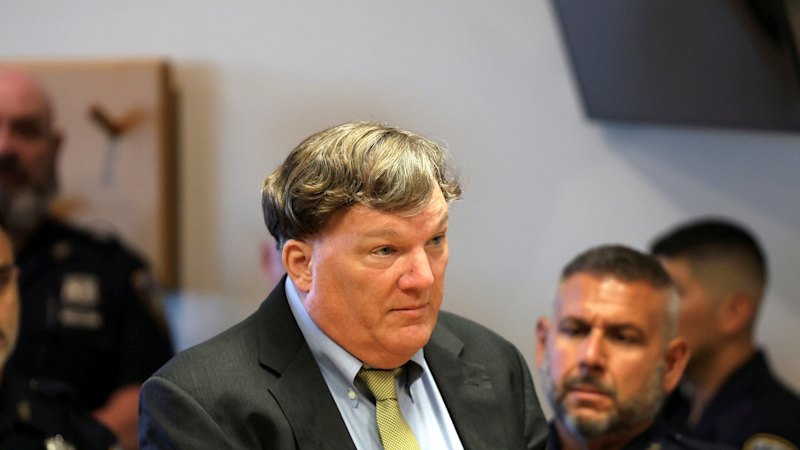
The legal process leading to this sentencing involved a massive multi-agency effort. The task force, which included the Suffolk County Police Department, the New York State Police, and the Federal Bureau of Investigation (FBI), utilized advancements in forensic technology, including genetic genealogy, to bridge the gap between initial discovery and the eventual identification of Heuermann. The prosecution’s case relied heavily on digital evidence, including cellular site data and search history logs, which were pivotal in establishing a timeline that linked the defendant to the locations where the victims were last seen.
Confrontation and Emotional Impact in Court
The courtroom proceedings were defined by the raw testimony of victims’ relatives, who confronted the killer directly. Jasmine Robinson, a cousin of Jessica Taylor, stated, “A million years isn’t enough,” while Amanda Funderburg, the sister of Melissa Barthelemy, told the defendant, “I hope you suffer.” According to the Sydney Morning Herald, Funderburg recounted receiving taunting phone calls from Heuermann shortly after her sister disappeared, when Funderburg was only 15 years old.
The emotional toll on families was compounded by the duration of the search for justice. Liliana Waterman, who was three years old when her mother, Megan Waterman, vanished, noted that the sentencing allows her mother to finally rest in peace. For many families, the resolution of the case provides a sense of finality to a chapter of their lives marked by uncertainty. The court gallery was filled with relatives of the victims, many of whom have spent years advocating for continued investigations into the Ocean Parkway findings, often putting pressure on local officials to dedicate more resources to cold case files.
Origins of the Investigation
The case began in May 2010 with the disappearance of 23-year-old Shannan Gilbert. As detailed by ABC News, Gilbert was working as an escort in New York City and had been dropped off at a home in the gated community of Oak Beach by her driver, Michael Pak. After a frantic altercation with a client, Gilbert fled the house into the night.
Her final moments remain a subject of investigation, but her disappearance served as the catalyst for a massive search effort. In December 2010, Suffolk County Police Officer John Mallia and his K-9 unit discovered human remains along Ocean Parkway while searching for Gilbert. By 2011, authorities had located 11 sets of remains in the area, including nine women, one man, and one child. The geographic concentration of these discoveries led investigators to classify the area as a dumping ground, a realization that shocked the local community and drew national attention to the safety of sex workers and the complexities of missing persons cases.
The discovery of the remains triggered significant institutional friction, leading to public disagreements between the Suffolk County Police Department and the Suffolk County District Attorney’s office at the time, which delayed initial progress. It was not until the formation of a unified task force years later that the investigation gained the momentum necessary to identify suspects. The case highlights the challenges inherent in investigating serial crimes that occur over prolonged periods and across different jurisdictional boundaries.
Lingering Questions and Unidentified Victims
While the sentencing of Heuermann provides closure for eight of the victims’ families, the investigation into the Gilgo Beach remains is not entirely complete. ABC News reports that in late 2025, another individual was arrested for the murder of 26-year-old Tanya Jackson and her two-year-old daughter, Tatiana Dykes. Despite these developments, one set of remains discovered in the 2011 search remains unidentified.
The case of Shannan Gilbert herself remains distinct from the crimes to which Heuermann pleaded guilty. The discovery of the bodies along the isolated stretch of Ocean Parkway transformed the investigation into one of the most significant true-crime sagas in New York history, spawning numerous books and documentaries. The broader significance of the Gilgo Beach case lies in its role as a turning point for how law enforcement agencies approach the investigation of unidentified remains and the protection of vulnerable populations. The case remains a focal point for criminal justice reform advocates who argue that cases involving marginalized victims frequently face systemic neglect.
With Heuermann now facing life in prison without the possibility of parole, the legal proceedings for his identified victims have concluded. However, the Suffolk County Police Department continues to maintain an open case file for the remaining unidentified remains, utilizing evolving DNA technology in hopes of providing families with answers. The sentencing serves as both a final judgment for the defendant and a reminder of the incomplete nature of the broader investigation into the victims found along the parkway.
Find more reporting in our World section.
