
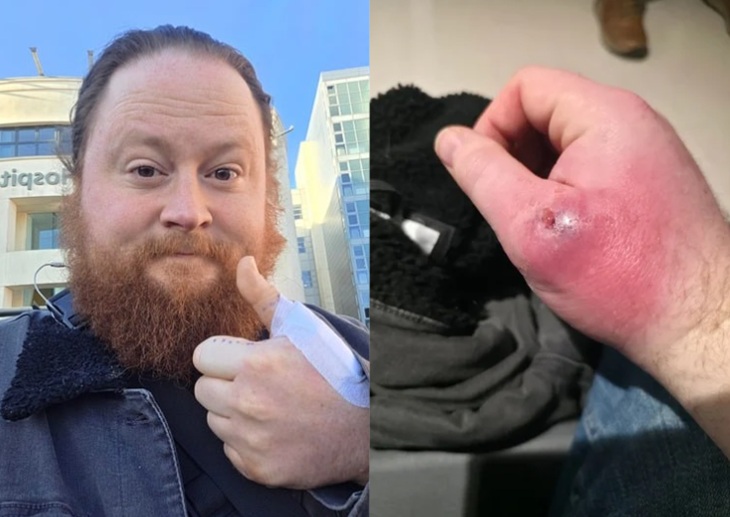
A man in the United Kingdom nearly lost his hand to tissue necrosis after initially dismissing a seemingly minor bug bite. The case highlights the importance of seeking medical attention for even small wounds, as infections can escalate rapidly.
Chris Keegan, 40, of Coventry, England, noticed a small mark on his hand that appeared as if pricked by a needle. He initially didn’t suppose it was cause for concern, according to reports from The Sun and Daum.
When the area became red, Keegan visited a pharmacy, where the pharmacist suspected a spider bite and prescribed antibiotics. However, his condition worsened, becoming swollen and turning purple, prompting him to seek emergency medical care. “My hand became so swollen it was almost about to burst,” Keegan said.
Medical professionals determined that surgery was necessary to remove the necrotic tissue before the infection spread further. Keegan spent five days in the hospital undergoing multiple procedures, and the surgical site required six stitches to close.
Doctors suspected a bite from a speckled bush-cricket, but couldn’t confirm the source. They also couldn’t determine whether the necrosis was directly caused by the insect’s venom or by a bacterial infection entering the wound. They emphasized that if Keegan had ignored the inflammation for much longer, he could have faced amputation of his thumb or hand, or even developed sepsis.
Tissue Necrosis Often Linked to Secondary Infection, Not Venom
The development of necrosis following an insect bite is often attributed to a severe infection that develops *after* the bite, rather than the venom itself. This represents particularly true in cases involving speckled bush-crickets, where secondary bacterial infections can occur and, in some instances, prove resistant to antibiotics.
The skin barrier is compromised by the bite, making it easier for bacteria to enter the body. If the infection spreads beyond the skin and into deeper soft tissues, it can lead to decreased blood flow, inflammation, pus formation, and tissue death.
Once tissue has died or an abscess has formed, antibiotics alone are often insufficient. Incision, drainage, and surgical debridement are typically required.
However, speckled bush-crickets are not common in South Korea. They are primarily found in Europe, particularly in the United Kingdom and Ireland. Even as hundreds of spider species inhabit South Korea, extremely few pose a significant threat to humans.
What to Do If You Suspect a Spider Bite
Most spider bites cause only minor inflammation and swelling that resolves quickly. However, it’s important to be aware of the potential for infection or a toxic reaction and to take basic first aid measures while monitoring symptoms.
The first step after a suspected insect bite is to thoroughly clean the wound with soap and clean water. Disinfect the area to help prevent bacterial infection. Swelling and pain may occur as part of the inflammatory response. Applying a cold compress for 10-15 minutes can help reduce these symptoms. Be sure to wrap the ice pack in a cloth to protect the skin. Repeat this several times a day. Avoid scratching or squeezing the bite, as this can worsen inflammation and increase the risk of infection.
Seek medical attention if you experience any of the following: increasing swelling or pain, discoloration around the bite (purple or black), persistent pus, fever, chills, nausea, muscle cramps, or difficulty breathing. Children, the elderly, and individuals with weakened immune systems should seek prompt medical care.
If possible, taking a photograph of the spider or safely capturing it can be helpful for medical professionals to identify the species and assess the potential toxicity. However, avoid attempting to catch the spider if it puts you at risk of being bitten again.
