
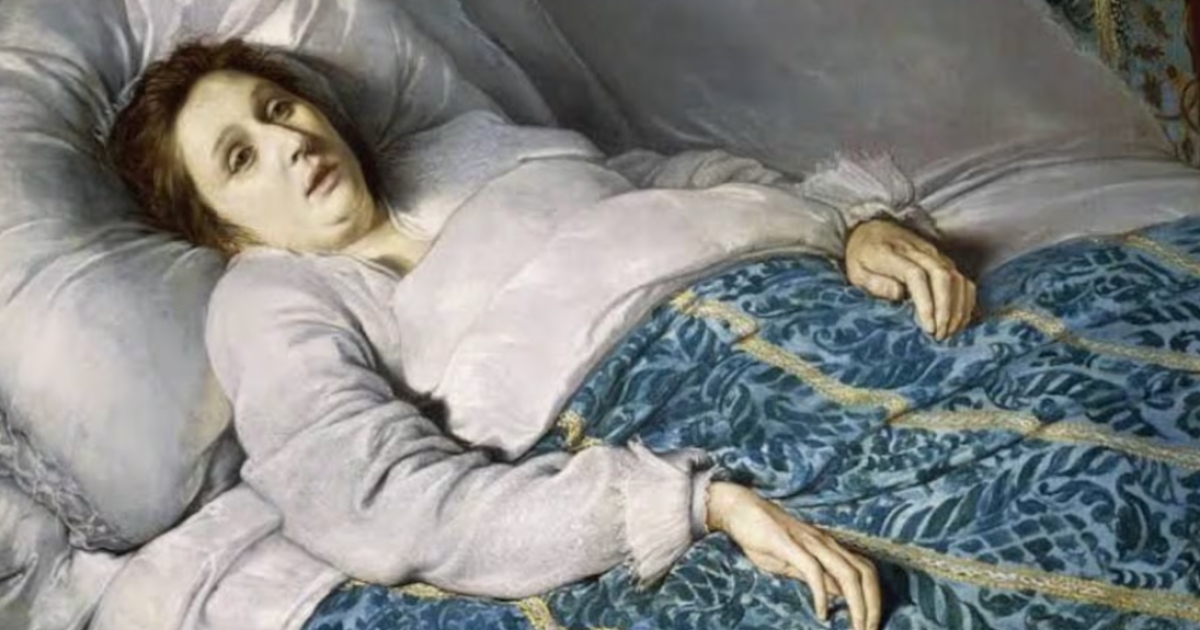
A mysterious disease that plunged millions into a sleep-like state and killed an estimated half-million people remains one of medicine’s greatest unsolved puzzles more than a century after its first recorded cases. New outbreaks in the Democratic Republic of the Congo—where over 50 deaths have been linked to an unidentified illness since January—have reignited scientific urgency, as researchers scramble to determine whether history might repeat itself.
What the Sources Agree On: Two Mysteries, One Century Apart
Two distinct but equally baffling health crises dominate current reporting: the historic lethargic encephalitis (or “sleeping sickness”) epidemic of 1917–1930, and the recent surge of fatal cases in Congo’s Bikoro region. The Gazzetta del Popolo frames the older outbreak as a global catastrophe—one that left 500,000 dead and left scientists with no definitive cause. Meanwhile, Lifo.gr reports that Congo’s current wave has already claimed 53 lives since January, with 419 confirmed cases and no identified pathogen.
The two diseases share eerie parallels: both struck rapidly, both caused severe neurological symptoms (including coma-like states), and both resisted classification. Yet their timelines and suspected origins diverge sharply. The 1917–1930 epidemic coincided with the Spanish flu pandemic, while Congo’s outbreak began in January 2026 with three children dying after consuming a bat—suggesting a zoonotic link. The World Health Organization’s Africa office confirmed the Congo cases but ruled out Ebola, Marburg, and other hemorrhagic fevers, leaving researchers to speculate about viral vectors or autoimmune triggers.
Congo’s Outbreak: The Timeline and the Bat Connection
The first Congo cases emerged in Bikoro on January 21, 2026, when three children died after eating a bat. Within 48 hours of symptom onset, all three succumbed to what local doctors described as a hemorrhagic fever-like illness. By February 9, a second cluster appeared in Bomate, spreading alarm among health officials. The WHO’s Africa regional director, Dr. Matshidiso Moeti, stated in a February 14 briefing that “this is not Ebola, but it’s not something we’ve seen before either.”
- January 21, 2026: First cases reported in Bikoro after bat consumption. Three children die within 48 hours.
- February 9, 2026: Second cluster identified in Bomate. Total cases rise to 419 with 53 fatalities.
- February 14, 2026: WHO rules out Ebola, Marburg, and other known hemorrhagic fevers. Samples sent to Kinshasa for further testing.
- June 15, 2026: No confirmed cause, but bat exposure remains the leading theory.
What makes this outbreak particularly alarming is the speed of transmission. Unlike Ebola—which typically requires direct contact with bodily fluids—the Congo disease appears to spread through airborne or environmental exposure, according to preliminary reports from the Bikoro hospital’s medical director, Dr. Serge Engalembato. “We’re seeing cases among people who never touched the victims,” he told reporters. The WHO’s Africa office has since dispatched a rapid-response team to investigate potential links to other zoonotic diseases, including Lassa fever and Crimean-Congo hemorrhagic fever.
The 1917–1930 Epidemic: Why It Still Haunts Medicine
The earlier epidemic, documented by Austrian neurologist Constantin von Economo in 1917, struck across Europe, the U.S., and beyond. Symptoms ranged from extreme lethargy and paralysis to hyperactivity and psychosis. Some victims entered comas that lasted for months or years; others died within weeks. The disease’s erratic progression—sometimes improving, then suddenly worsening—confounded doctors, who struggled to classify it as either infectious or neurological.

| Feature | 1917–1930 Epidemic | 2026 Congo Outbreak |
|---|---|---|
| Primary Symptoms | Neurological (coma, paralysis, psychosis) | Hemorrhagic fever (bleeding, rapid organ failure) |
| Suspected Vector | Unknown (possibly post-flu autoimmune response) | Bat consumption (zoonotic transmission) |
| Mortality Rate | ~500,000 deaths globally (1917–1930) | 53 deaths among 419 cases (as of June 2026) |
| Current Status | No confirmed cause; theories include viral, autoimmune, or toxin exposure | Active investigation; bat link under scrutiny |
The Gazzetta del Popolo notes that von Economo’s original case studies described patients who “awakened from their lethargy only to find their bodies paralyzed”—a condition that left some bedridden for life. Modern researchers, including those at the Italian National Institute of Neurology, have speculated that the disease might have been triggered by an unidentified strain of herpes simplex virus or an autoimmune reaction to the 1918 flu. However, no definitive evidence has emerged.
Why This Matters: The Zoonotic Threat and Historical Parallels
The Congo outbreak’s bat connection is not an isolated anomaly. The WHO’s 2022 report on zoonotic diseases warned that Africa’s consumption of bushmeat—particularly bats, rodents, and primates—has increased by over 60% in the past decade, raising the risk of viral spillover. “We’re seeing a perfect storm of deforestation, wildlife trade, and climate change creating new opportunities for pathogens to jump species,” said Dr. Maria Van Kerkhove, the WHO’s technical lead on emerging diseases, in a January 2026 interview with Sky News.
Historically, such spillovers have led to pandemics. The 1918 flu, which killed an estimated 50 million, may have originated in birds before mutating in pigs and jumping to humans. Similarly, SARS-CoV-2 likely emerged from bats in China before spreading globally. The Congo cases, while not yet pandemic, serve as a stark reminder of how quickly an unidentified pathogen can escalate.
What makes the current situation even more urgent is the lack of diagnostic tools. Unlike Ebola—where rapid tests exist—the Congo disease has no known biomarker. “We’re flying blind,” admitted Dr. Engalembato. “If this turns out to be a novel virus, we don’t even have antibodies to test for it.” The WHO has urged Congo’s government to implement strict contact tracing and quarantine measures, but logistical challenges in rural areas complicate efforts.
What Happens Next: The Race to Identify the Pathogen
As of June 15, 2026, the Congo outbreak remains under investigation, with samples from 13 cases sent to Kinshasa’s National Institute of Biomedical Research. Early results ruled out malaria, Ebola, and Marburg, but a subset tested positive for Plasmodium falciparum—the parasite responsible for severe malaria. However, officials stress that these cases represent only a fraction of the total, and the majority remain unexplained.
The WHO’s Africa office has deployed a mobile lab to Bikoro to sequence viral genomes from affected patients. If a new pathogen is identified, the organization will work with Congo’s Ministry of Health to develop rapid diagnostic tests and, if necessary, a vaccine. In the meantime, public health officials are advising against consuming raw bushmeat and urging communities to report any unusual illnesses.
For now, the parallels between the 1917–1930 epidemic and today’s Congo cases raise unsettling questions. Could lethargic encephalitis re-emerge? Is Congo’s outbreak a one-off event, or the first sign of a broader zoonotic threat? The answers may hinge on whether researchers can isolate the pathogen before it spreads further. One thing is certain: history has shown that when medicine fails to solve a mystery, the disease often wins.
For readers seeking updates, the WHO’s Africa regional office provides real-time case tracking at who.int/afro. Local health authorities in Congo urge anyone experiencing fever, bleeding, or neurological symptoms to seek immediate medical attention.
Find more reporting in our Health section.
