

Meta Launches Horizon TV App for Quest Headsets, Mimicking Smart TV Experience
Meta today unveiled Horizon TV, a new application for its Meta Quest headsets designed to replicate the user interface and content discovery experience of a traditional smart TV.
The app, previewed last month at Meta Connect, features content recommendations and deep-linking into streaming services like Amazon, Pluto, and Peacock, alongside app icons for YouTube, Spotify, and DAZN. Disney Plus and ESPN are slated to launch on the platform soon, though notable omissions include Netflix, Hulu, and HBO. This move signals Meta’s broader effort to attract a wider audience to virtual reality beyond gaming, and potentially monetize the VR experience through advertising.
Meta Reality Labs director of entertainment content Sarah Malkin explained the design philosophy behind Horizon TV, stating, “We absolutely have taken inspiration from the navigation systems that have come before. We want customers to feel a sense of familiarity.” The app currently lacks options for renting or purchasing movies, or directly subscribing to video services, but Meta indicated these features are under consideration. The company aims to support existing entertainment industry business models, according to Malkin. Mark Zuckerberg first predicted the obsolescence of traditional TVs in favor of AR/VR wearables back in 2017, envisioning a future where a digital TV could be accessed for as little as $1 – a vision Horizon TV represents a step towards realizing. You can learn more about the evolving landscape of virtual reality market size on Statista.
Currently, Horizon TV does not offer ad-supported linear streaming channels. Meta officials stated they have no immediate announcements regarding these features but are actively exploring them. The launch of Horizon TV could reshape how consumers engage with streaming content, potentially offering a more immersive viewing experience, but also inheriting the fragmentation issues of the current streaming landscape – a challenge discussed in detail by The Verge.
Hi there! My name is Janko Roettgers, and this is Lowpass. This week: Meta’s new Horizon TV app, and Netflix’s Spotify partnership.
Big hero images highlighting select TV shows and movies, a row of app icons, a bunch of additional content recommendations: At first glance, Meta’s new Horizon TV app looks a lot like the homescreen of your typical smart TV. Something Samsung, Google, or Amazon would ship on their devices.
Except Horizon TV isn’t running on a TV or streaming stick, but on the company’s Meta Quest headsets. Unveiled at Meta Connect last month, the app is a big part of Meta’s push to attract older, less gaming-focused audiences to VR — a push that also includes a partnership with James Cameron, and investments into sports, and other types of leanback entertainment content.
Re-creating the smart TV experience in virtual reality also represents a monetization opportunity for Meta, which has for some time now tried to figure out how to bring advertising to VR. However, the approach also means that Meta is inheriting some of the very problems smart TV platform operators have struggled with for a long time. And if consumers do warm up to watching more content with their headsets, they’re bound to realize that even in VR, you can’t escape the collateral damage of the streaming wars.
Meta finally built Zuck’s TV app
In 2017, Mark Zuckerberg made headlines when he predicted that AR and VR wearables would eventually make traditional TVs obsolete. “Instead of a $500 TV sitting in front of us, what’s to keep us from one day having it be a $1 app,” he told The New York Times at the time, suggesting that a digital TV, beamed into your living room with a headset or glasses, may one day be just as good, if not better, than the real thing.
Eight years later, Meta launched its closest attempt yet to make that vision come true: Horizon TV, the latest revamp of the Quest’s native video app, does look a lot like your typical smart TV screen. That’s no accident: “We absolutely have taken inspiration from the navigation systems that have come before,” says Meta Reality Labs director of entertainment content Sarah Malkin. “We want customers to feel a sense of familiarity.”
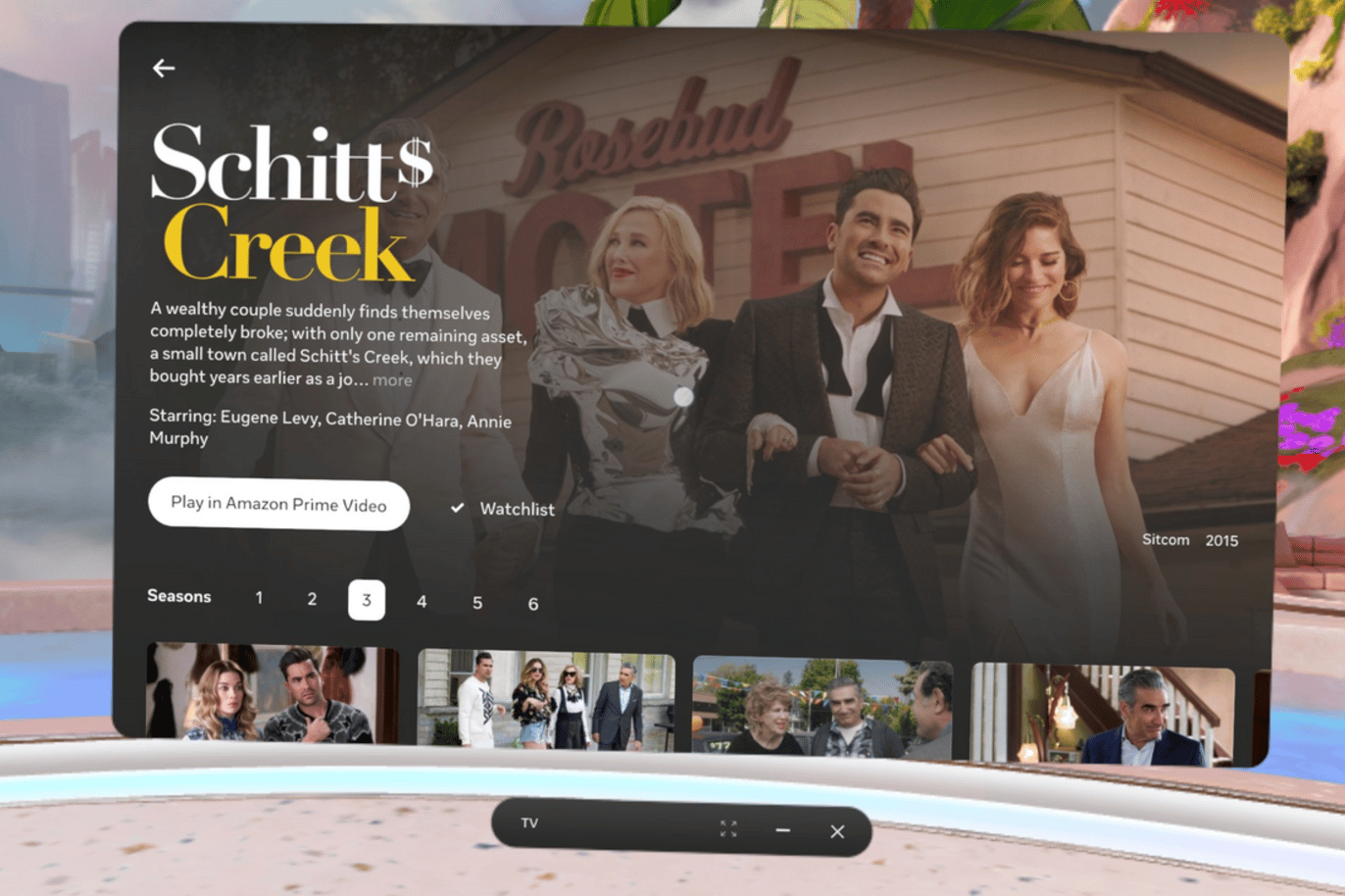
Like many smart TV UIs these days, Horizon TV is what’s known among streaming insiders as content-forward. Instead of just listing a bunch of app icons, it deep-links directly into these apps and features content recommendations for individual shows, movies, and livestreams.
Most of the content featured in the Horizon TV app is sourced from just a handful of partners, including Amazon, Pluto, and Peacock. There are also app icons for YouTube, Spotify, and DAZN, among others; Disney Plus and ESPN are supposed to launch on Horizon TV soon. Netflix, Hulu, and HBO are notably missing, as are a bunch of free video services like Tubi and The Roku Channel. There are also no ad-supported linear streaming channels yet, and no option to rent or purchase movies or directly subscribe to video services within the Horizon TV app.
Not yet, anyway. Malkin tells me Meta doesn’t have anything to announce on that front, but the company is definitely looking at such features. “Our goals are really to support and provide additional outlets for the existing business models of the entertainment industry to thrive,” Malkin says.
