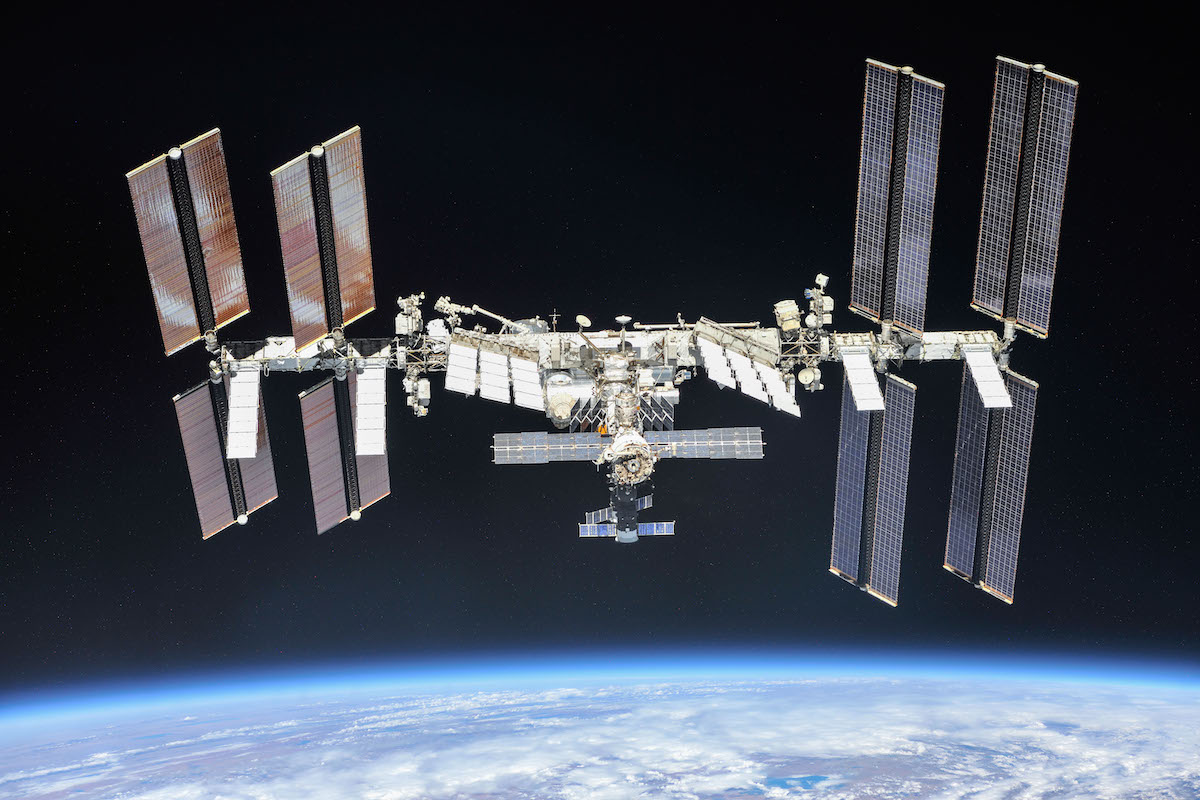
In a remarkable display of resilience, moss has survived prolonged exposure to the harsh habitat of outer space. Recent experiments aboard the International Space Station revealed that moss spores not only survived 283 days on the station’s exterior, but continued to thrive, with over 80% returning alive and capable of germination. This discovery, detailed in new research from Hokkaido University, offers potential insights into the adaptability of life and could inform future long-duration space missions.
International Space Station
Moss survived 283 days on the exterior of the International Space Station in a recent experiment, and a mathematical model estimates it could potentially survive up to 15 years in the harsh conditions of space.
Before humans arrived, mosses had already conquered some of Earth’s most inhospitable environments. They cling to the peaks of the Himalayas, spread across the Antarctic ice, and colonize recent volcanic lava flows. These ancient plants, among the first to migrate from water to land approximately 500 million years ago, have survived multiple mass extinction events thanks to their remarkable resilience. This resilience is now being explored for potential applications in space exploration and long-duration missions.
Tomomichi Fujita, a researcher at Hokkaido University, wondered if this resilience extended beyond Earth’s atmosphere. He launched moss into the ultimate extreme environment: the vacuum of space.
Space is spectacularly hostile to life. A vacuum would cause human blood to boil. Cosmic radiation penetrates unprotected cells. Temperatures swing wildly between extremes. Unfiltered solar ultraviolet light relentlessly breaks down organic molecules. Most organisms, including humans, would die within seconds of exposure.
The experiment, sending moss to space, was deceptively simple. In March 2022, hundreds of moss sporophytes – tiny capsules containing reproductive spores – were launched to the International Space Station aboard a Cygnus cargo spacecraft. Astronauts attached the samples to the station’s exterior, exposing them fully to space for 283 days before their return to Earth in January 2023. There was no protection, no shielding, just moss against the universe.
The moss didn’t just survive; it thrived. Over 80% of the spores returned alive, and all but 11% of those survivors successfully germinated in the lab, growing into healthy new moss plants. Chlorophyll levels remained nearly normal, with only a modest 20% reduction in a photosensitive compound – a change that didn’t affect the spores’ overall health.
Prior to the orbital launch, Fujita’s team conducted extensive ground tests using terrestrial rock moss, a species well-studied for its genetics and development. They subjected young moss, specialized stress-response stem cells, and sporophytes to simulated space conditions. The young moss died quickly. The stem cells fared better, but still experienced high mortality. Sporophytes proved remarkably resistant, demonstrating a radiation tolerance approximately 1000 times greater than other parts of the moss.
This protective advantage comes from the structure surrounding the spore, which acts as a physical barrier and chemical shield, absorbing harmful radiation before it reaches the vulnerable genetic material inside. This adaptation likely allowed bryophytes – the plant group that includes mosses – to colonize land 500 million years ago and survive subsequent extinction events.
Using data from the mission, the researchers built a mathematical model predicting these spores could survive for approximately 5600 days in space, or around 15 years, though they emphasize this remains a rough estimate requiring further data.