
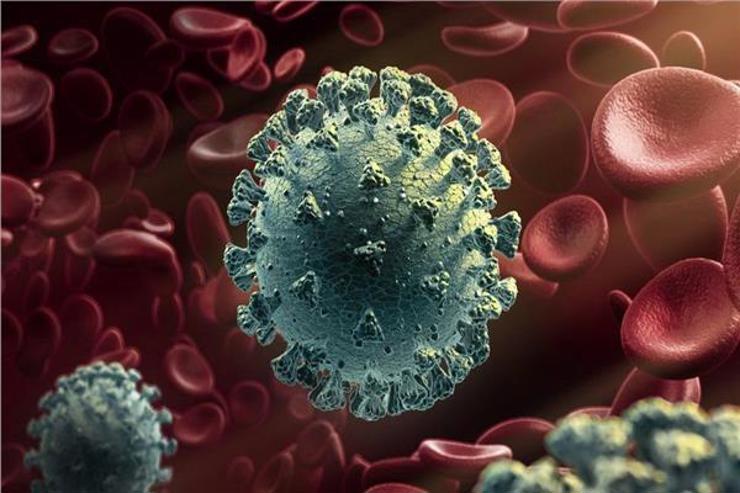
Global health authorities are closely tracking a new variant of the COVID-19 virus, dubbed “Nimbus” (NB.1.8.1), as it spreads across Asia, North America, and Europe. While the variant’s emergence prompts increased surveillance – a routine practise given the virus’s ability to evolve – current assessments from the World Health Institution indicate it does not pose a greater threat of severe illness than previous strains. The variant first appeared in May 2025 and is now prompting a closer look at infection symptoms and vaccine effectiveness.
ظهور متحوّر كورونا الجديد “نيمبوس” يثير المتابعة العالمية
ظهور متحوّر كورونا الجديد “نيمبوس” يثير المتابعة العالمية
Global health officials are closely monitoring a new variant of the SARS-CoV-2 virus, known as NB.1.8.1, or informally as “Nimbus.” While the pandemic has significantly subsided since its peak, the emergence of any new strain warrants attention due to the virus’s ongoing ability to evolve. The World Health Organization (WHO), along with several leading research centers, began tracking the new variant in May 2025, but currently, there are no indications it poses a greater threat or causes more severe illness than previous variants.
The increasing prevalence of “Nimbus” across multiple countries in a relatively short period is a key reason for the heightened surveillance. First detected in Asia in early 2025, it has since been identified in North America and Europe. A report from the National Institute for Communicable Diseases (NICD) in South Africa indicates that the proportion of the variant found in genetic sequencing rose from approximately 2% in March 2025 to over 10% by late April, demonstrating a faster rate of spread compared to other variants that took longer to reach similar levels.
Genetically, “Nimbus” is a descendant of the Omicron variant, but it carries a collection of new mutations in the “spike” protein – the part of the virus responsible for attaching to human cells. Scientific reports suggest that some of these mutations may give it a relatively higher ability to spread or to evade some of the immunity gained from prior vaccinations or infections. However, the WHO emphasizes that these changes do not currently pose a significant risk to public health and there is no evidence it causes more severe illness than previous strains.
Regarding symptoms, medical sources report that most infections linked to NB.1.8.1 are very similar to those of traditional Omicron, including a mild fever, runny nose, cough, and general fatigue. However, a number of patients have reported a distinct and intense sore throat described as “burning” or feeling “like something sharp is scratching the throat,” a symptom that has particularly caught the attention of physicians due to its frequent occurrence among those infected with this variant. Some cases have also been reported with gastrointestinal issues like vomiting or diarrhea, but these are not widespread.
Health centers in Europe and the United States have observed a gradual increase in “Nimbus” infections, but rates remain within expected ranges and do not signal a new wave of the pandemic. The WHO also reports that current vaccines continue to provide strong protection against severe illness, even if their effectiveness against mild or moderate infection has slightly decreased – a natural and expected phenomenon given the virus’s continued evolution.
Reports from several news outlets indicate that the variant has not yet been detected in some Middle Eastern countries, including Egypt, according to health officials. Nevertheless, health authorities recommend staying up-to-date with vaccine boosters and following basic preventative measures, especially for those most vulnerable to complications, such as the elderly and individuals with chronic illnesses.
While the WHO is currently monitoring the variant, it has not been classified as a “Variant of Concern” or a “Variant of Interest,” reflecting a relatively reassuring initial assessment. The organization stresses that genetic evolution of the virus is expected and normal, and monitoring new variants is a routine part of disease surveillance, not necessarily an indication of a return to a global crisis.
Experts point out that the world is now better prepared than it was in the early years of the pandemic. Laboratories are capable of rapidly analyzing genetic sequences, and vaccine companies have established frameworks for modifying vaccines if needed. Healthcare systems also have significant experience managing COVID-19 cases, which reduces the likelihood of unexpected and large-scale impacts.
Despite the widespread media coverage and discussion on social platforms, current data does not suggest a serious health threat from “Nimbus.” Continued monitoring remains essential, as the situation could change as more information becomes available in the coming weeks. However, it’s safe to say that the new variant does not warrant panic, but rather a continued degree of caution and adherence to public health guidelines.

