

North Korea declared on June 14, 2026, that its status as a nuclear-armed state is irreversible, effectively closing the door on any future denuclearization negotiations. This statement, issued via state media, follows recent trilateral discussions between the United States, South Korea, and Japan aimed at strengthening regional security and nuclear deterrence.
Pyongyang’s Rejection of Denuclearization
The North Korean Foreign Ministry, through the state-run KCNA, issued a definitive rejection of further discourse regarding the country’s nuclear status. Officials stated that cooperation between the U.S. and its partners to pressure the regime will not alter the nation’s position.

"Những tuyên bố của Mỹ và các đối tác chống lại Triều Tiên, cũng như sự hợp tác nhằm đe dọa hạt nhân nước này, sẽ không bao giờ làm thay đổi vị thế không thể đảo ngược của Triều Tiên với tư cách là quốc gia sở hữu vũ khí hạt nhân." KCNA, via state media.
This stance mirrors earlier rhetoric from Kim Yo-jong, the sister of leader Kim Jong-un, who described the nuclear policy as an "đường lối không có đường lùi" (a path of no return) earlier this month, according to Vietnam.vn. The development signals an end to the diplomatic hopes that characterized the 2019 era, when summits between Washington and Pyongyang eventually stalled without a formal agreement.
Trilateral Security Meetings and Regional Tensions
The hardening of Pyongyang’s position follows a series of high-level meetings among allied nations. Officials from the U.S. and South Korea met in Seoul on June 11 to bolster the Nuclear Consultative Group (NCG), a body established following the 2023 Washington Declaration. Dantri reports that these discussions focused on real-time information sharing, crisis protocols, and coordinated strategic responses to North Korea’s expanding weapon capabilities.

Concurrently, a separate trilateral meeting took place in Tokyo on June 12 involving South Korea, the U.S., and Japan. According to Thanh Nien, the participants expressed "quan ngại sâu sắc" (deep concern) regarding North Korea’s nuclear and missile programs. The three nations also pledged to address military cooperation between Moscow and Pyongyang, citing concerns over cyber activities and regional instability.
U.S. Arms Sales and the “Export of Conflict”
North Korea has specifically pointed to recent U.S. arms exports as a primary justification for its military buildup. On June 13, the North Korean Foreign Ministry condemned a U.S. move to approve the sale of advanced air-to-air missiles and related equipment to South Korea, valued at nearly $300 million.
"Việc xuất khẩu vũ khí của Mỹ là xuất khẩu xung đột." Foreign Ministry Official, via state media.
Pyongyang maintains that such sales force the country to "tăng cường một cách có hệ thống" (systematically strengthen) its self-defense capabilities to maintain a regional balance of power. This narrative suggests that the regime views the current diplomatic pressure not as a path to dialogue, but as a direct provocation necessitating further nuclear development.
Political Context in South Korea
In Seoul, President Lee Jae-myung has navigated a complex domestic and international environment. In a recent interview with The Economist, reported by Yonhap, the President acknowledged that global conflicts, such as the tension between the U.S. and Iran, have made the prospect of North Korean denuclearization increasingly unlikely. Despite this, he reaffirmed South Korea’s commitment to non-proliferation, noting that a domestic nuclear arsenal is "không mong muốn và không thực tế" (undesirable and impractical) for his nation.
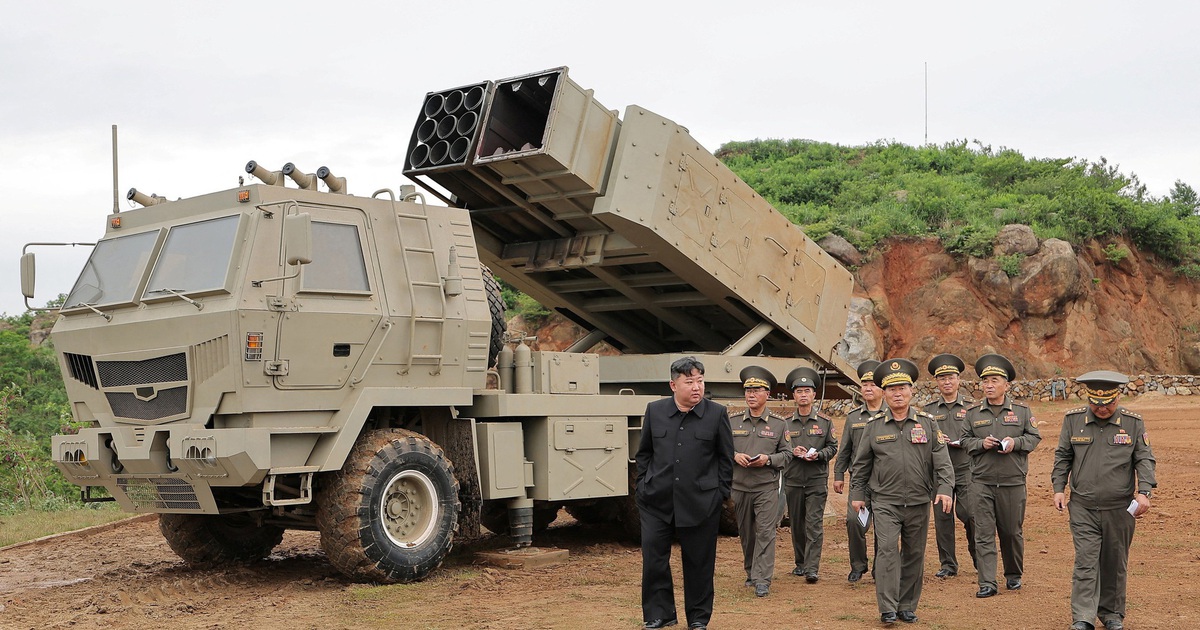
The administration in Seoul continues to balance these security challenges while managing domestic economic pressures, including debates over the profitability of major tech firms like Samsung and SK hynix. As of mid-June 2026, the diplomatic landscape remains deadlocked, with North Korea doubling down on its nuclear identity while the U.S. and its allies shift toward deeper integrated deterrence.
Find more reporting in our World section.
