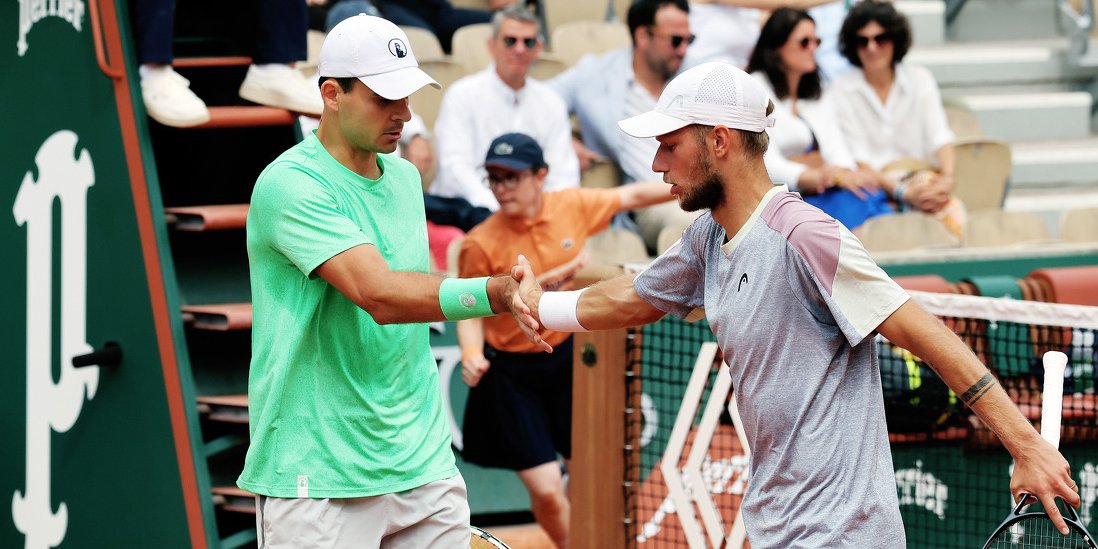
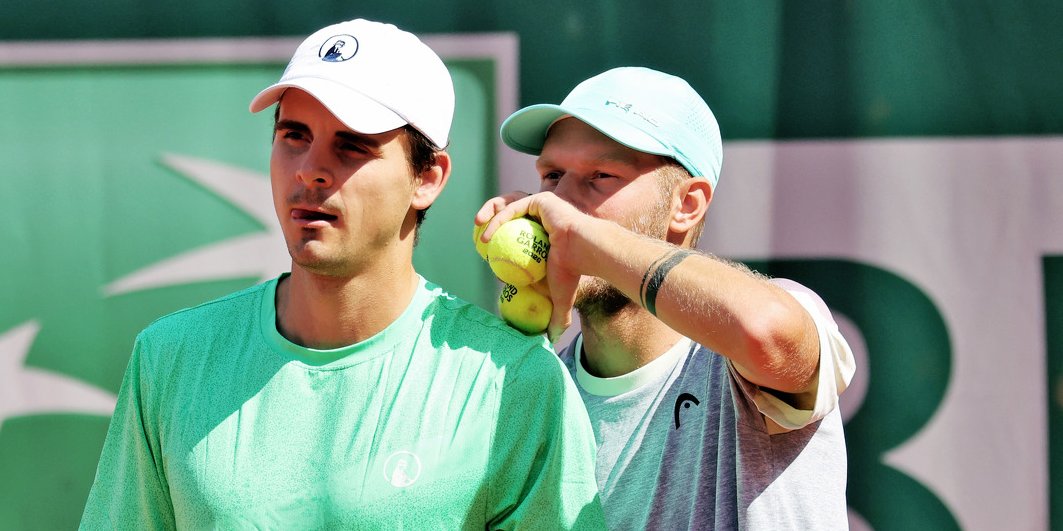
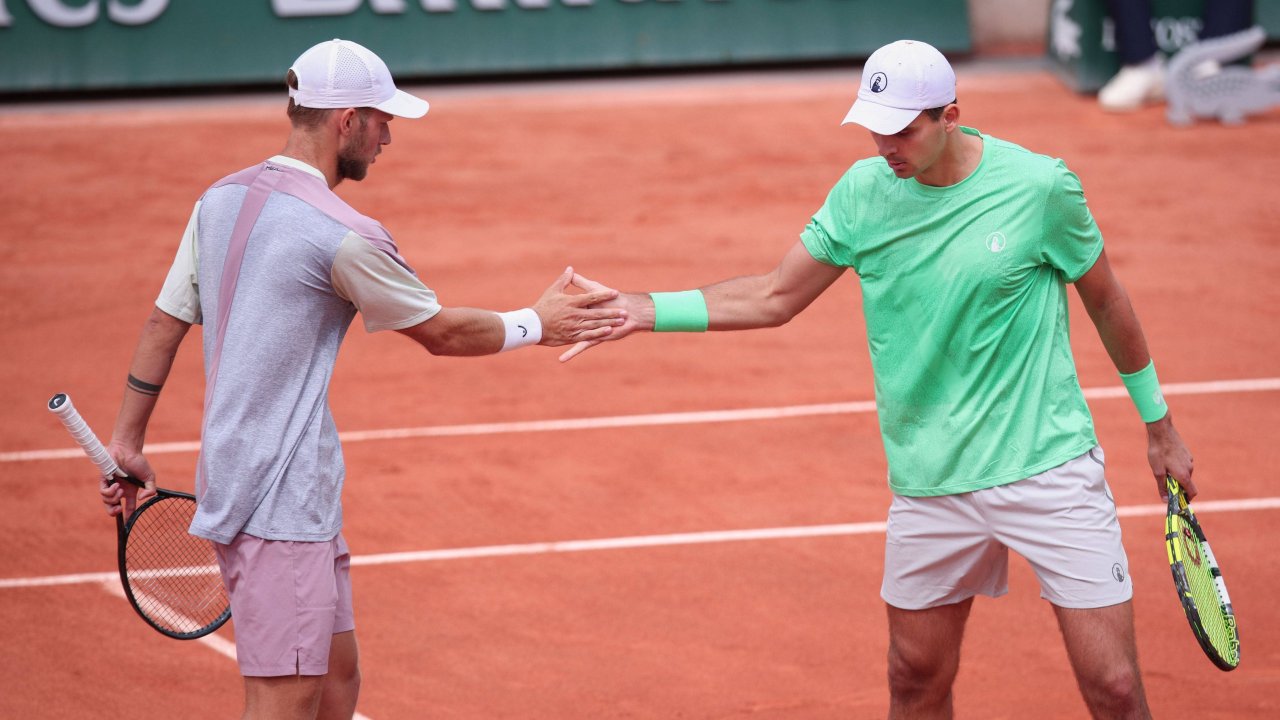
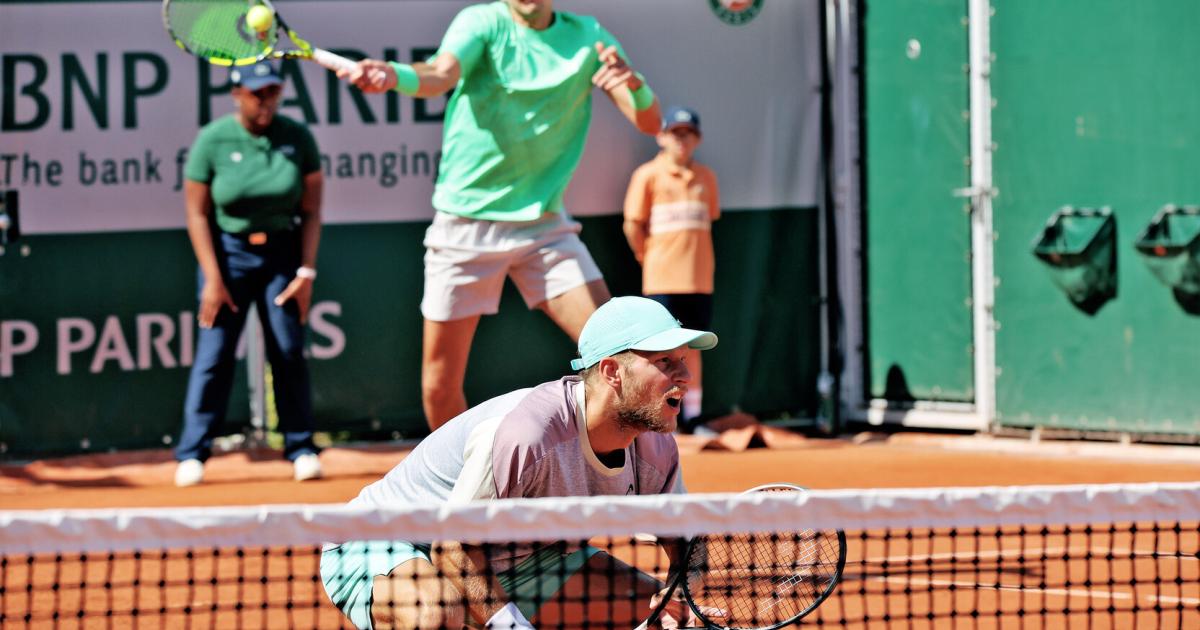
The French Open just delivered one of the most heartbreaking moments in men’s doubles tennis this year: Neil Oberleitner and Petr Nouza, trailing match point twice, lost 7-6 (7), 1-6, 6-7 (12) to Simone Bolelli and Andrea Vavassori in a 2-hour, 40-minute thriller that left Austria without representation in the men’s main draw for the first time since 2024. The defeat caps a rollercoaster week for Oberleitner, who entered the tournament as a Grand Slam rookie and now stands on the brink of his first Top 50 ranking—but with a bitter taste after two match points squandered in the tiebreak.
How Oberleitner and Nouza Went from Match Points to Defeat
The drama unfolded on Court Suzanne Lenglen, where the Austrian-Tschechian pair—ranked 59th and 52nd in doubles respectively—led 3-0 in the third-set tiebreak against the fifth-seeded Italians. With two match points already saved and a 9-8 lead, they had the momentum. But Bolelli and Vavassori, the reigning Miami and Rome Masters winners, clawed back to 11-10 before sealing the victory at 12-14. The loss follows a week where Oberleitner and Nouza had already defied expectations: they reached the quarterfinals on their second Grand Slam appearance, having only qualified for Melbourne’s main draw at the Australian Open earlier this year.
The match’s brutality was underscored by the scoreboard’s finality. After two hours and 40 minutes, the Italians—who had already claimed the ATP Masters 1000 titles in Miami and Rome this season—advanced to face either Marcel Granollers and Horacio Zeballos or Nicolas Mahut and Édouard Roger-Vasselin in the semifinals. For Oberleitner, the pain of the defeat is compounded by the knowledge that his ranking surge is now assured: he is projected to crack the Top 50 as early as next Monday, according to ÖTV.
The Road to the Quarterfinals: A Story of Breakthroughs
Oberleitner’s journey to this point reads like a fairy tale for a player who, just a year ago, was still fighting for his first Grand Slam main-draw appearance. His partnership with Petr Nouza—formed after a split with Sriram Balaji at the start of 2026—has been nothing short of transformative. The duo’s rise is built on a string of strong results leading into Paris: a title at the ATP 175 event in Bordeaux and a final appearance in Cagliari, both in May. Their form carried over to Roland Garros, where they defeated unseeded Czech pair Adam Pavlásek and Patrik Rikl in a three-set thriller (6-2, 6-7 (1), 6-3) to reach the quarterfinals.
cluster (priority): ÖTV
The Austrian’s breakthrough wasn’t just about doubles. His uncle, Alexander Antonitsch—a former doubles specialist himself—has been a vocal supporter, and the younger Oberleitner’s progress mirrors the trajectory of other rising talents who have paired with established partners to leap into the elite. Antonitsch’s influence extends beyond mentorship: he told Kurier that Oberleitner’s ranking surge is critical given upcoming ATP reforms in 2028 that could make it harder for unseeded players to qualify for major tournaments. “It’s important he points now,” Antonitsch said. “The window is closing.”
What Comes Next for Oberleitner: Ranking Surge and a Bitter Aftertaste
Despite the heartbreak, Oberleitner’s ranking leap is all but guaranteed. His current Live Ranking stands at 48th, and with the quarterfinals as his deepest Grand Slam run, he is poised to enter the Top 50 as early as next week. The achievement is a testament to his rapid ascent: just two years ago, he was ranked outside the Top 200 in doubles. His partnership with Nouza has been the catalyst, but the Austrian’s ability to adapt—whether it’s his aggressive baseline game or his clutch performances in high-pressure moments—has set him apart.
cluster (priority): LAOLA1
Yet the defeat leaves a sour note. Oberleitner’s first Grand Slam semifinal would have been a historic milestone, especially for Austrian tennis, which has struggled to produce consistent success in the men’s doubles draw. His loss to Bolelli and Vavassori—who are ranked 11th and 9th, respectively—highlights the gulf between the rising stars and the established elite. The Italians, who also won the ATP 500 event in Rotterdam earlier this year, are a force built on consistency and experience. Oberleitner’s ability to challenge them at all was a statement, but the final moments of the match underscore how fragile such breakthroughs can be.
Austria’s Mixed Bag at Roland Garros
Oberleitner’s near-semifinal run wasn’t the only Austrian story at Roland Garros. His compatriots Alexander Erler and Lucas Miedler, ranked 34th and 22nd respectively, suffered an early exit in their first Grand Slam match as a team. They lost to the top-seeded pair Granollers and Zeballos after Erler withdrew due to an elbow injury when trailing 4-6, 1-1. The loss was a stark contrast to Oberleitner’s resilience, but it also reflected the challenges of pairing two players with different styles and experience levels.
cluster (priority): Kurier
On the junior side, 18-year-old Thilo Behrmann—ranked 7th in the ITF juniors circuit—delivered a bright spot for Austrian tennis. He advanced from the second round of the boys’ singles draw with a 6-3, 6-1 win over French wildcard Benoit Geldof. His path to the quarterfinals continues on Monday, where he’ll face Oliver Majdandzic, another rising German talent. Meanwhile, Anastasia Potapova—ranked 30th on the WTA Tour—is pushing for her first Grand Slam quarterfinal, having already defeated Coco Gauff, the 2025 US Open champion, in the third round.
The Bigger Picture: Why This Loss Stings
Oberleitner’s defeat isn’t just about the points lost or the semifinal missed. It’s about the moment that slipped away twice—first at 9-8 in the tiebreak, then again at 11-10. Those match points represented everything Oberleitner has worked for: the late-night sessions, the sacrifices, the belief that he could compete with the best. The loss is a reminder that in tennis, as in life, the margin between triumph and heartbreak can be razor-thin.
For Austrian tennis, the disappointment is compounded by the fact that Oberleitner’s run was the country’s only bright spot in the men’s doubles draw. With Erler and Miedler’s early exit, Austria now has no representation in the quarterfinals—a first since 2024. The absence of a homegrown success story in the men’s game contrasts sharply with Potapova’s progress on the women’s side, where she remains a beacon of hope for the future.
Looking ahead, Oberleitner’s focus must shift to the next tournament. His ranking surge is a positive, but the mental toll of the French Open loss cannot be underestimated. The challenge now is to channel that frustration into momentum. With the ATP reforms looming in 2028, the pressure is on for players like Oberleitner to capitalize on their current form before the qualifying process becomes even more competitive.
One thing is certain: Oberleitner’s story is far from over. The 26-year-old has already defied expectations in his short career, and his partnership with Nouza has proven to be a winning combination. Whether he can turn this bitter defeat into fuel for future success remains to be seen—but the foundation is there. For now, Austrian tennis fans will have to savor the memory of what could have been, while keeping their fingers crossed for the next chapter.