
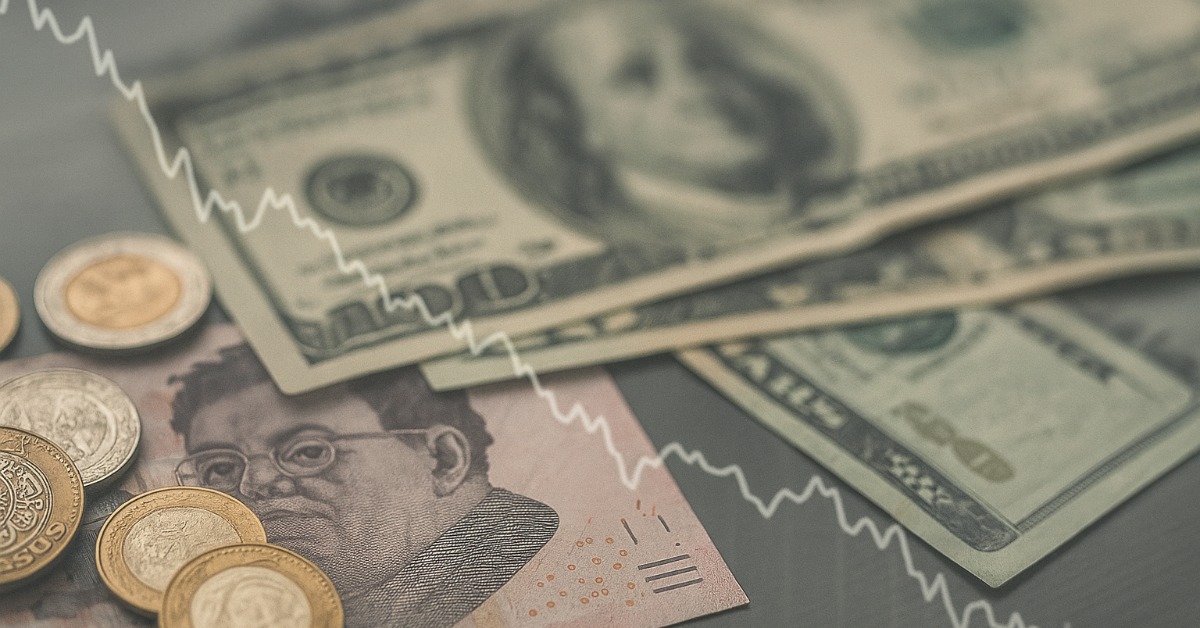
The Mexican peso strengthened to 20.02 per U.S. dollar on Wednesday, May 20, 2026, as traders positioned for the Federal Reserve’s policy announcement later this week, with the central bank’s expected pause on rate cuts offering temporary relief to emerging-market currencies.
Peso Gains Ground Ahead of Fed’s Policy Cue
The Mexican peso’s advance comes as global markets digest the prospect of a delayed Federal Reserve interest-rate cut. While the U.S. central bank has signaled a potential pause in June, traders remain cautious, with the peso’s movement reflecting broader uncertainty over the timing of monetary easing. As of midday Wednesday, the peso traded at 20.02 MXN/USD, up from 20.10 MXN/USD at the start of the week, according to interbank rates tracked by Mexico’s central bank.
The peso’s resilience contrasts with recent volatility in Latin American currencies, where the Brazilian real and Colombian peso have faced downward pressure amid domestic political and economic concerns. Mexico’s currency, however, has benefited from relatively stable inflation data and a stronger-than-expected first-quarter GDP growth report, which the Bank of Mexico (Banxico) cited as a key factor in its latest policy statement.
Analysts attribute the peso’s recent stability to two primary factors: first, the Fed’s perceived reluctance to cut rates aggressively in the near term, which reduces the appeal of U.S. dollar-denominated assets for foreign investors. Second, Mexico’s own monetary policy remains tight, with Banxico holding its benchmark rate at 11.00%—a level that has helped curb inflation but also supported the peso by maintaining higher yields than many regional peers.
Fed’s Stance: The Wild Card for Emerging Markets
The Federal Reserve’s decision—expected after its June 11–12 meeting—will be the decisive factor for the peso’s near-term trajectory. While markets have priced in a 25-basis-point cut by year-end, recent comments from Fed Chair Jerome Powell have tempered expectations, suggesting officials may prioritize further inflation data before easing policy. Powell’s remarks at a May 15 press conference, where he noted no rush to cut rates
, have reinforced this caution.
For Mexico, the implications are twofold. A delayed Fed cut could provide a temporary boost to the peso by narrowing the interest-rate differential between the U.S. and Mexico. However, if the Fed signals a more aggressive easing cycle later in the year, the peso could face renewed downward pressure as capital flows shift back toward higher-yielding U.S. assets.
Banxico Governor Victoria Rodríguez Ceja has emphasized that Mexico’s monetary policy remains data-dependent
, with officials monitoring both domestic inflation—currently at **3.8% year-over-year, below the 4% target—and the Fed’s moves.
Our priority is maintaining price stability, but we are also acutely aware of the external environment. If the Fed’s stance becomes more accommodative than anticipated, we will reassess our own policy stance accordingly.Victoria Rodríguez Ceja, Governor, Bank of Mexico
Rodríguez Ceja’s comments underscore the delicate balancing act for Banxico: avoiding a premature rate cut that could reignite inflationary pressures while avoiding a policy stance that leaves the peso overly exposed to Fed-driven volatility.
Domestic Factors: Inflation and Growth
Beyond Fed policy, Mexico’s economic fundamentals are playing a stabilizing role. The country’s inflation rate has steadily declined since its peak of 8.7% in 2024, a trend that has allowed Banxico to adopt a more cautious tone. The central bank’s latest quarterly report, released May 15, highlighted broad-based disinflation
in goods and services, with core inflation—excluding volatile food and energy prices—holding at 4.2%.
Growth data has also provided a counterweight to external risks. Mexico’s GDP expanded by 2.3% annually in the first quarter of 2026, outpacing forecasts and driven by strong manufacturing and export activity. The automotive sector, a key pillar of Mexico’s economy, reported a 7.1% year-over-year increase in production in April, according to the Mexican Automotive Industry Association (AMIA). This resilience has helped offset concerns about slower U.S. demand, which has weighed on other Latin American economies.
However, risks remain. The peso’s sensitivity to oil prices—a major Mexican export—has been a recurring theme this year. With Brent crude trading around $78 per barrel as of Wednesday, any sharp decline could pressure the currency further. Additionally, Mexico’s fiscal outlook remains a wild card, with the government’s 2026 budget still under review by rating agencies. Moody’s Investors Service downgraded Mexico’s sovereign debt outlook to negative
in April, citing persistent fiscal challenges
, though the rating itself remains stable at Ba1.
What’s Next for the Peso?
- Fed Policy Announcement (June 11–12): A pause on rate cuts would likely support the peso, while any hint of multiple cuts this year could trigger a sell-off. Traders are pricing in a 60% chance of a single 25-basis-point cut by December, according to CME Group’s FedWatch tool.
- Banxico’s June Meeting (June 13): While no rate change is expected, Rodríguez Ceja’s guidance on future moves will be closely watched. Markets are divided on whether Banxico will cut rates in the second half of the year, with some analysts predicting a 50-basis-point reduction by year-end.
- U.S. Inflation Data (May CPI, June 10): A hotter-than-expected reading could delay Fed cuts, providing additional support to the peso. The consensus forecast calls for a 0.2% month-over-month increase in May, but recent strength in U.S. wage growth has raised concerns about stickier inflation.
For businesses and investors, the peso’s recent stability offers a reprieve, but the currency remains vulnerable to external shocks. Corporations with dollar-denominated debt—particularly in the energy and retail sectors—have been hedging aggressively, with swap activity rising 12% year-over-year in the first quarter, according to JPMorgan Chase’s latest report.
Longer-term, the peso’s fortunes will depend on Mexico’s ability to sustain its growth momentum while navigating global monetary policy shifts. With the Fed’s next move looming, traders are bracing for a volatile few weeks ahead.
Why This Matters for Global Markets
The peso’s performance is more than a regional story—it serves as a bellwether for emerging-market currencies in an era of uncertain Fed policy. As the world’s 15th-largest economy, Mexico’s economic health directly impacts trade flows, investment decisions, and even U.S. inflation dynamics through its supply-chain ties.
For Latin America, the peso’s relative strength highlights a divergence in regional fortunes. While Mexico benefits from its manufacturing base and proximity to the U.S., economies like Argentina and Brazil—where political instability and weaker fundamentals persist—continue to struggle. The peso’s ability to weather Fed-driven turbulence could set a template for how other emerging markets navigate the post-rate-cut era.
One thing is clear: the coming months will test whether Mexico’s economic resilience is enough to offset the headwinds from global monetary policy. For now, the peso’s advance offers a glimmer of stability—but the real test lies ahead.
