
In 2001, a fish observed near the Great Barrier Reef remained unidentified for 25 years before researchers finally confirmed it as a new species, while a separate discovery in the Mariana Trench revealed a creature containing plastic waste, and a giant isopod resembling a Star Wars character was identified in Vietnam. These findings highlight both the mysteries of marine biodiversity and the growing threat of plastic pollution.
The 25-Year Mystery of the Unidentified Fish
David Harasti, a marine researcher, first encountered an unidentified fish near the Great Barrier Reef in 2001. Despite extensive efforts to classify the species, it eluded identification for decades. By 2026, the mystery was resolved as the fish was confirmed as a new species, though its exact classification remains unspecified in the sources. The discovery underscores the vast, unexplored diversity of marine life, with new species still being uncovered even after prolonged observation.

https://illvit.
A Plastic-Contaminated Deep-Sea Species
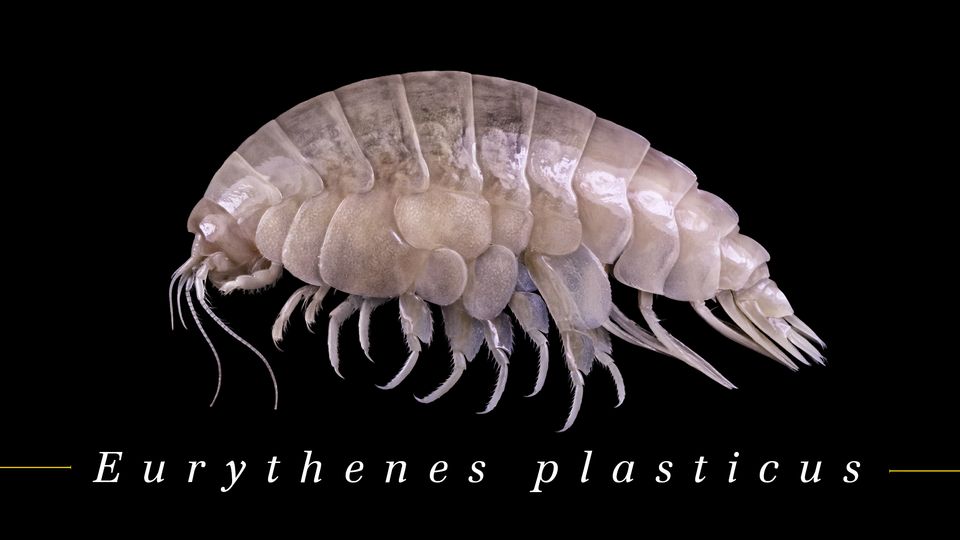
In the Mariana Trench, the deepest part of the world’s oceans, researchers discovered a new species, Eurythenes plasticus, which contained fragments of polyethylene terephthalate (PET), a common type of plastic. The creature, a member of the crustacean family, was named to draw attention to the pervasive impact of plastic pollution. “Finding plastic in one of the most remote areas of the planet highlights the urgent need for global action to reduce marine waste,” said Eirik Lindebjerg of WWF. The study warns that plastic waste could double in oceans within a decade if left unchecked, with 8 million tons of plastic entering the seas annually.
For more on this story, see 66-Million-Year-Old Dinosaur Fossil Reveals Immune Disease Affecting Modern Humans.
https://kommunikasjon.ntb.no/pressemelding/17880815/oppdaget-ny-art-med-plast-i-seg?
The Star Wars-Inspired Giant Isopod
A separate discovery in Vietnam revealed a giant isopod, Bathynomus vaderi, named for its striking resemblance to Darth Vader from the Star Wars franchise. The species, measuring over 30 centimeters and weighing more than a kilogram, was identified after researchers analyzed specimens purchased from seafood markets. The find, published in the journal ZooKeys, emphasizes how little is known about deep-sea ecosystems. “This shows how much we still have to learn about life in the ocean’s depths,” noted the study’s authors.

https://ung.forskning.
Implications for Marine Conservation
The discoveries collectively underscore two critical issues: the vast, uncharted biodiversity of the oceans and the escalating threat of plastic pollution. While the identification of new species offers hope for scientific progress, the presence of plastic in even the most remote environments signals a dire environmental crisis. Efforts to address this include global initiatives to reduce plastic waste, such as the proposed international treaty to combat marine pollution. Meanwhile, the naming of Eurythenes plasticus and Bathynomus vaderi reflects how scientific discoveries can capture public imagination, potentially driving greater awareness and action.
