
Schleswig-Holstein is experiencing a concerning surge in cocaine use, now leading all other German states in diagnosed cases, according to recent data from teh Barmer Institute. The growing trend-fueled by increased availability and changing patterns of consumption-is putting a strain on local counseling services and raising alarms among health officials. This report examines the scope of the problem in the region and the factors contributing to the rise in cocaine abuse, featuring insights from experts and individuals impacted by the drug’s growing presence.
AUDIO: Hoher Kokain-Konsum in SH: Ein Überblick (1 Min)
Stand: 24.01.2026 13:07 Uhr
Schleswig-Holstein has the highest rate of diagnosed cocaine use of any German state. This conclusion is drawn from figures released by the Barmer Institute. Counseling centers are reporting increased demand for their services.
“Snow,” “Charley,” or “Coke” – seemingly harmless nicknames for a destructive drug. Cocaine is often perceived as a performance enhancer, a stimulant, and a source of euphoria. But behind that facade lie addiction, mental health issues, and social ruin. Experts in Schleswig-Holstein are growing increasingly concerned about recent trends.
A recent analysis by the Barmer Institute shows that Schleswig-Holstein led all German states in diagnosed cocaine abuse in 2023. The data, extrapolated from health insurance records, only reflects individuals seeking medical treatment, meaning the actual number of users is likely significantly higher.
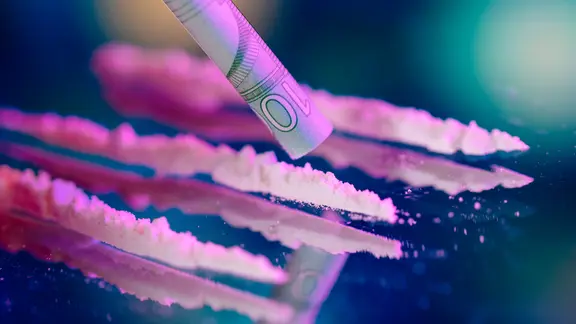
More people were treated for cocaine abuse in Bremen, Hamburg, and Berlin.
When looking at regional differences, Kiel showed the highest rate of cocaine-related medical treatment, with approximately 13 out of every 10,000 residents receiving care for cocaine use in 2023. This is nearly four times the national average. Lübeck and the Stormarn district also showed rates almost three times the national average, with Schleswig-Holstein’s overall rate being more than 70 percent higher.
Highest Rates in Kiel and Lübeck
Table of Contents
- Highest Rates in Kiel and Lübeck
- Expert: Drug Enforcement Struggles to Control Market
- Expert Calls for More Wastewater Analysis
- The Digitalization of the Drug Scene
- Two “Lines” of Cocaine Every Fifteen Minutes
- “If I Had Continued Living Like That, I Would Have Died Soon”
- From Seeker of Help to Helper
- Reasons for Use Often Difficult to Determine
- How Family Members Can Help
As cocaine use rises, so too does related criminal activity. According to the State Criminal Police Office (LKA), cocaine-related offenses have more than tripled since 2015. The LKA reported another significant increase for 2024. The majority of cases were registered in the cities of Lübeck and Kiel. Pinneberg county had the highest number of cases among the districts.
Expert: Drug Enforcement Struggles to Control Market
NDR investigative journalist Benedikt Strunz cautions that statistics on cocaine imports to Germany should be viewed with skepticism. Officially, seizures have even decreased. “At the same time, we know that smugglers are using new routes and deliberately focusing on smuggling routes that customs and police do not yet control as strongly,” Strunz explained. Therefore, determining the actual amount of cocaine entering Germany is very difficult.
However, Strunz says one thing is certain: cocaine remains popular throughout Europe and has become a “drug of the people.” What can be done about it? “No drug enforcement officer I speak to would claim that the police have this market under control. On the contrary, the cocaine trade has poured huge profits into the coffers of organized crime,” Strunz said.
Expert Calls for More Wastewater Analysis
To better understand the extent of the problem, expert Björn Malchow believes more wastewater analysis is needed. “You can detect the breakdown products of cocaine consumption quite well in wastewater,” explained the managing director of the State Addiction Agency. A recent NDR investigation found high levels of drug residues in the wastewater of North German cities, including in Neumünster and Itzehoe (Steinburg county).

The Digitalization of the Drug Scene
The method of procurement has changed significantly with digitalization, according to Strunz. “Cocaine – like any other drug – can now be easily ordered online.” Those seeking anonymity can also order through the difficult-to-control darknet.
“I also know dealers who simply give their customers business cards with a phone number and QR code,” Strunz said. This provides information on current offers and allows customers to order the drugs via “coke taxi.” The dealer then delivers the order to the customers.
Two “Lines” of Cocaine Every Fifteen Minutes

With 15, Jules von Kehler tried cocaine for the first time.
Statistics are stark, but they don’t tell the full story. The story of Jules von Kehler from Flensburg is one example. The 29-year-old grew up in Schleswig and in an environment where drugs were commonplace. “It was part of my everyday life. My threshold for drugs was very low,” he recalls. To fit in, he started drinking alcohol and smoking marijuana at a young age.
At age 15, he tried cocaine for the first time. “A friend just brought it with him and asked if I wanted to try it.” Initially, it was occasional use at parties – partly because the drug was difficult to obtain. But that changed when he turned 17. “Then I started taking it regularly because I had more contacts,” he says. For nearly eight years, he used it daily. At times, he consumed up to nine grams a day. To put that in perspective, a “line” contains approximately 0.3 grams. “Sometimes I would take two lines every 15 minutes,” he admits.
“If I Had Continued Living Like That, I Would Have Died Soon”
After four years of sobriety, Jules von Kehler is now training to be an occupational therapist. “I want to help other people who are in a similar situation to the one I was in,” he says. This goal motivates him to stay away from drugs. He hopes to eventually find his own apartment in Flensburg.
From Seeker of Help to Helper
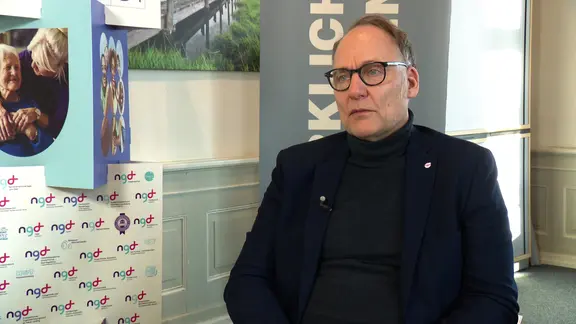
According to NDR expert Nicolai Altmark, many people use cocaine to enhance performance and cope with stress.
He received support on his journey from Nicolai Altmark, director of the Flensburg Addiction Assistance Center. Altmark reports that requests for counseling have increased massively: “In the past five years, the number of counseling requests has tripled. This is more than ever before.” Notably, who is seeking help has changed. “In the past, the people who wanted counseling came from a certain milieu. Today, they are students, craftsmen, or executives.” Most are under 45 years old.
Reasons for Use Often Difficult to Determine
Why people start using cocaine is very different, according to Altmark. “It is more readily available than it used to be, so the threshold for simply trying it is lower.” In addition, the party culture has changed: “Today, people consume together while partying.” The drug and alcohol scenes are no longer as strictly separated as they once were.
Data from the Barmer Institute supports this observation. Nationwide, around 41 percent of patients treated for cocaine abuse also suffered from alcohol abuse. And nearly half showed signs of depression as a co-occurring condition. It is often difficult to determine what is cause and what is effect. “It’s like the chicken or the egg problem. Some people use cocaine because of depression, others become depressed from cocaine,” Altmark said.
How Family Members Can Help
Those who want to help those affected should proceed with caution, the addiction expert advises: “At most, express your concern for the person, that’s all you can do for now.” Too much pressure can be discouraging. It is important to give time and carefully address offers of help – without dramatizing.
