
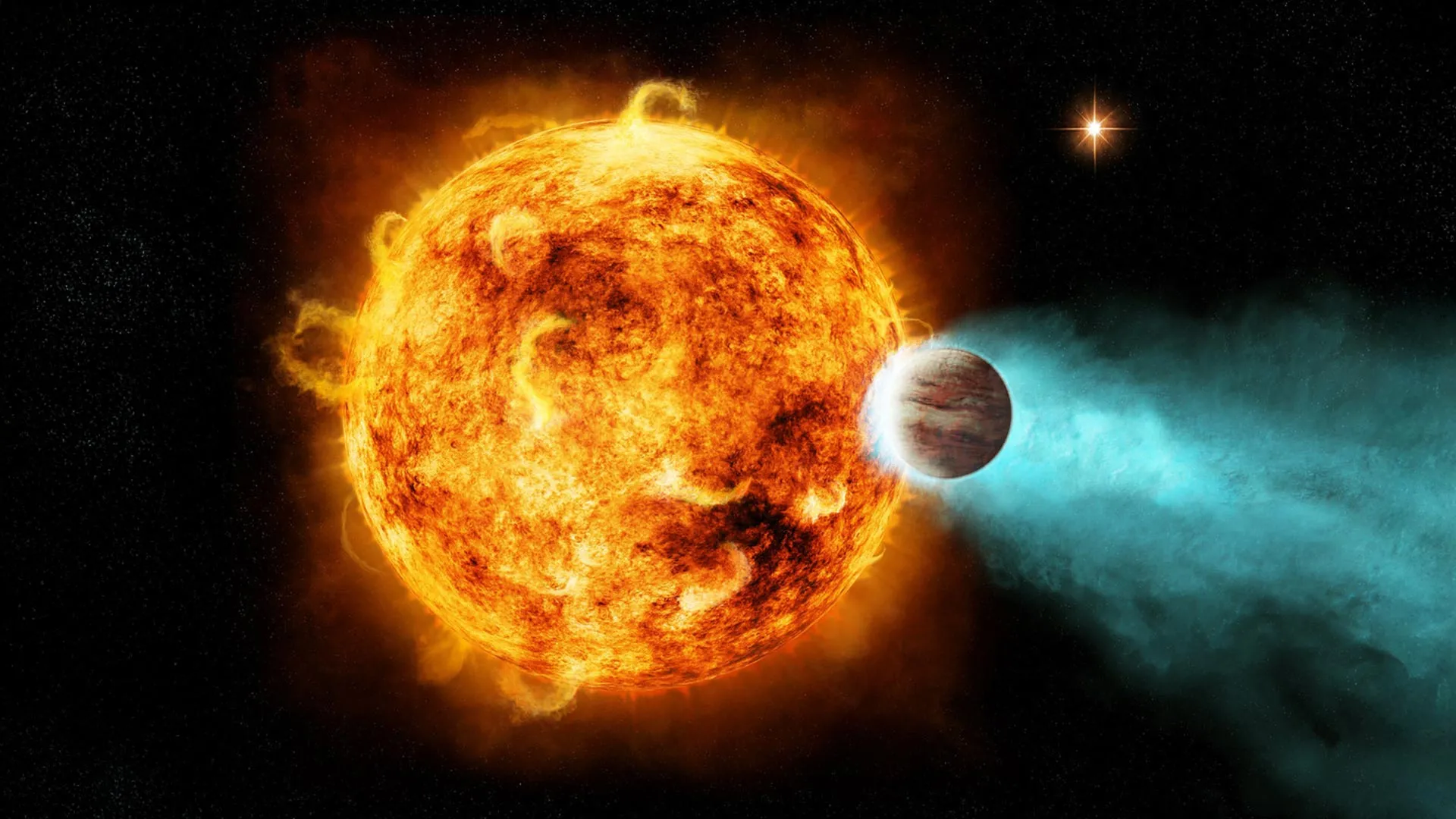
NASA’s Roman Space Telescope is poised to rewrite astronomy by uncovering up to 100,000 exoplanets—more than 16 times the current known total—while probing the galaxy’s hidden regions and the mysteries of dark energy. With its primary mirror now ready for launch in September 2026, the mission marks a generational leap in cosmic discovery, blending cutting-edge technology with a survey scope 1,000 times faster than Hubble. But its real breakthrough may lie in what it reveals about the universe’s darkest secrets: how planets form across galactic environments, and whether Earth-like worlds lurk in the Milky Way’s uncharted bulge.
Why Roman’s Mirror Is a Cosmic Game-Changer
At the heart of NASA’s Nancy Grace Roman Space Telescope is a 7.9-foot primary mirror—identical in diameter to Hubble’s but designed for a radically different mission. Unlike Hubble, which peers deep into the cosmos with narrow, high-resolution views, Roman is built to capture panoramas. Its 300-megapixel camera will image millions of galaxies in a single shot, 100 times more sky than Hubble can survey, and 1.4 terabytes of data daily—23 times the output of the James Webb Space Telescope. The mirror’s silver coating, just 400 nanometers thick (200 times thinner than a human hair), is optimized for near-infrared light, allowing Roman to peer through dust clouds and detect faint signals from distant stars.
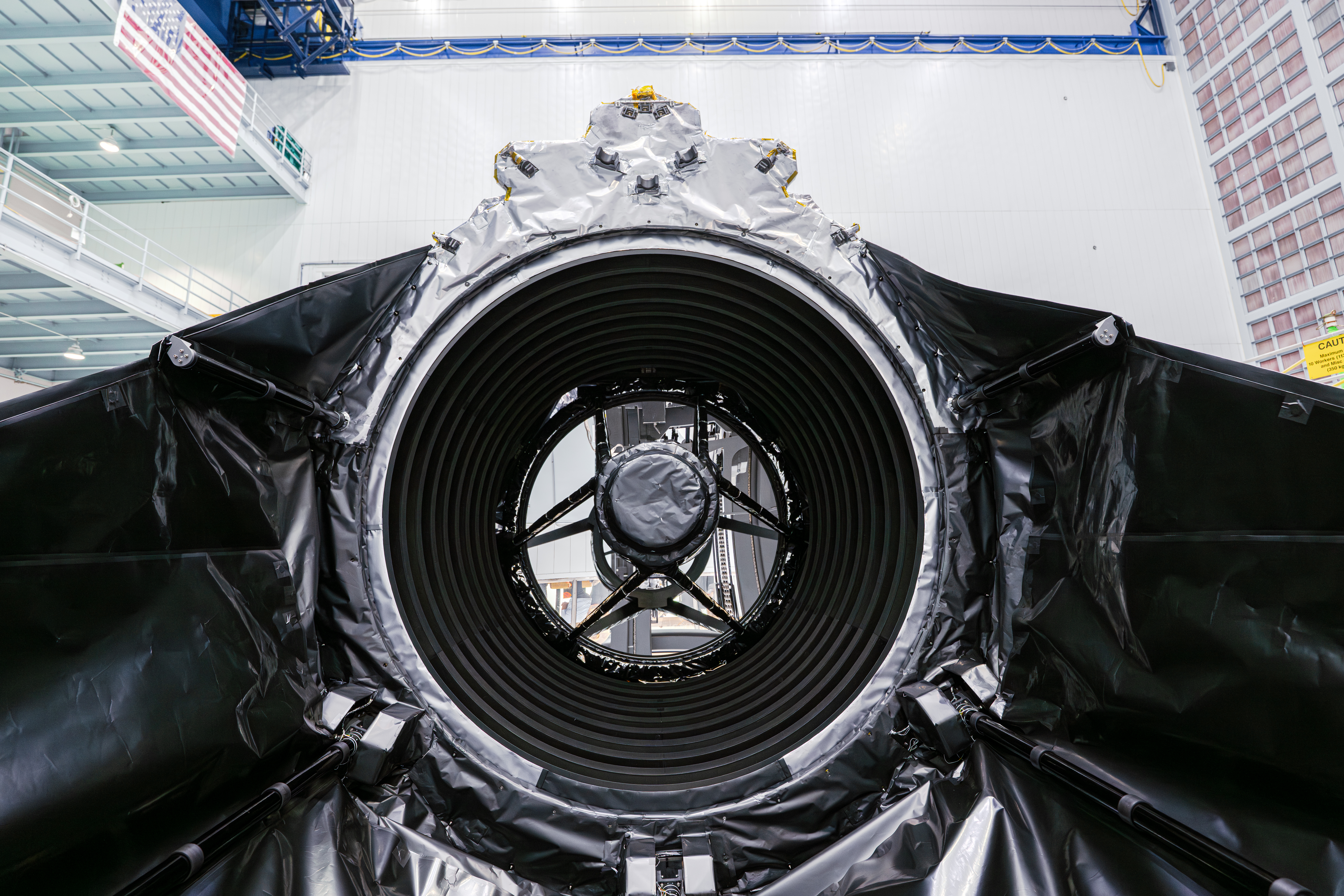
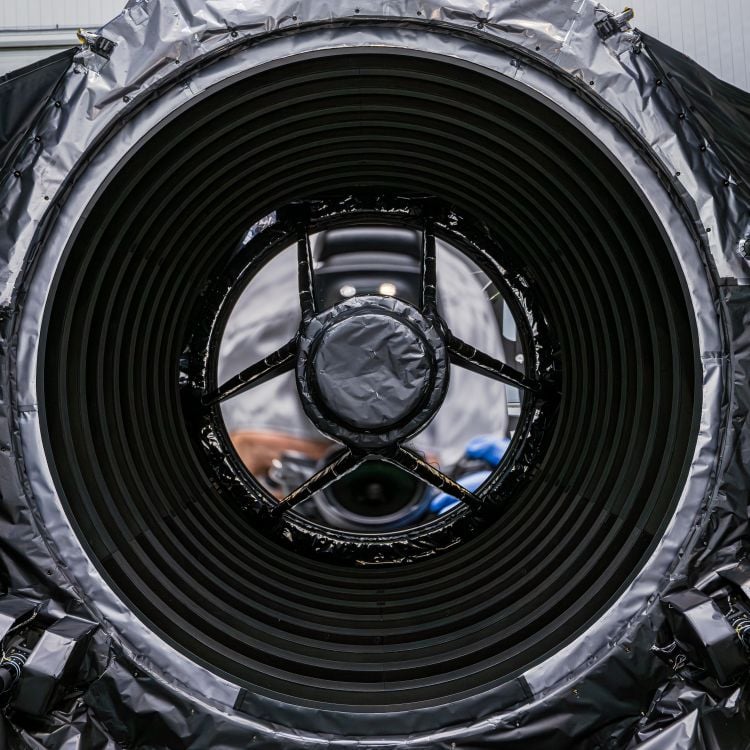
“The Roman engineering team laid eyes on the telescope for the final time before it, in turn, becomes the eyes of humanity, revealing the wonders of the cosmos,” said J. Scott Smith, the Roman telescope manager at NASA Goddard. The mirror’s final inspection in May confirmed its precision: surface bumps average just 1.2 nanometers—twice smoother than required—ensuring the telescope can detect subtle changes in starlight caused by passing planets.
Roman’s launch, slated for September 2026, will send it to the Sun-Earth Lagrange point 2 (L2), 1.5 million kilometers from Earth—a quiet, stable orbit shared by JWST. From this vantage, Roman will avoid Earth’s glare and benefit from gravitational stability, requiring minimal fuel adjustments. “We need to be out there because we need to be really stable, and it’s really nice and quiet out there to take the images we want to take,” noted Dr. Jeremy Perkins, integration and test scientist for Roman. The telescope’s coronagraph—a device akin to “eclipse glasses” for starlight—will further sharpen its focus, blocking out host stars to reveal orbiting planets that would otherwise be lost in glare.
100,000 Worlds in Five Years: How Roman Will Reshape Exoplanet Science
Roman’s exoplanet hunt will rely on two revolutionary techniques. The first, transit photometry, tracks the dimming of stars as planets pass in front of them—a method that has already identified nearly 6,300 exoplanets. But Roman will scale this up 16-fold, uncovering 100,000 transiting planets in its first five years. Most known exoplanets today lie within a few thousand light-years of Earth; Roman will push that boundary, scanning the Milky Way’s densely packed central bulge and even the galaxy’s far side.
The second technique, gravitational microlensing, is where Roman’s discoveries may get truly bizarre. By detecting how foreground stars’ gravity magnifies light from background stars, Roman can spot planets that don’t orbit stars at all. These “rogue planets,” drifting freely through the galaxy, are nearly impossible to find with other methods. The mission is expected to assemble the largest catalog ever of such worlds, offering clues about how planets form and are ejected from their solar systems.

“Our galaxy is home to a variety of different environments, but when it comes to hunting for exoplanets, we’ve really only explored one: our own neighborhood.”
Quintana’s team is developing software to simulate Roman’s transit observations, preparing for a flood of data that will reveal how planet formation varies across galactic regions. The center of the Milky Way, for instance, is rich in heavy elements like silicon and oxygen—ingredients for rocky planets—but also bathed in deadly radiation from crowded stars. Meanwhile, the galaxy’s outskirts, though quieter, may lack the raw materials for planet-building. Roman’s surveys will test whether Earth-like worlds are rare exceptions or common across the galaxy.
Dark Energy and the Universe’s Hidden Architecture
While exoplanets grab headlines, Roman’s primary mission is far more ambitious: mapping the universe’s expansion to understand dark energy—the mysterious force accelerating cosmic growth. Unlike JWST, which studies individual galaxies in detail, Roman will capture billions of stars and millions of galaxies in a single survey, creating a 3D map of the universe’s structure. “We actually need to take pictures of billions of stars and millions of galaxies and thousands of supernovae to figure out how the universe grew and how it changed,” explained Perkins.
Roman’s Wide Field Instrument will detect thousands of supernovae, measuring their brightness and redshift to track how the universe’s expansion rate has evolved over time. By comparing these observations with data from earlier missions like WMAP, astronomers hope to pin down whether dark energy’s influence has changed—a discovery that could rewrite physics. “We’re not going to directly measure dark energy,” Perkins clarified, “but we’ll measure its effects with unprecedented precision.”
What Comes Next: A Timeline for Roman’s Revolution
- June–August 2026: Final pre-launch tests at NASA’s Kennedy Space Center, including deployment of the telescope’s protective “hood” and alignment checks.
- September 2026: Launch aboard a rocket (likely a SpaceX Falcon Heavy or similar), followed by a month-long journey to L2.
- October 2026–2031: Primary mission phase, with exoplanet surveys, dark energy mapping, and galaxy formation studies. Early data releases expected in 2027–2028.
- Beyond 2031: Potential extended mission, depending on funding and telescope health.
Roman’s data will complement JWST’s deep dives into individual objects, offering a statistical view of the cosmos. While JWST can analyze the atmosphere of a single exoplanet, Roman will tell us whether such worlds are common or rare. Similarly, where JWST studies the first galaxies, Roman will chart how galaxies evolve over billions of years. “Roman will be the mother of Hubble—a survey machine that unlocks discoveries JWST can then explore in detail,” said Perkins.
The Big Questions Roman Could Answer
- Are Earth-like planets rare or ubiquitous? By scanning the Milky Way’s diverse regions, Roman will test whether habitable worlds are common in the galaxy’s bulge—or if our solar system’s location is uniquely favorable.
- How do planets form in extreme environments? The galaxy’s center, with its high radiation and dense star clusters, may host planets with wildly different compositions than those in spiral arms.
- What is dark energy really doing? If Roman’s supernova data show that dark energy’s strength has changed over time, it could point to new physics—perhaps a fifth force or a breakdown of Einstein’s general relativity.
- Do rogue planets outnumber stars? Microlensing surveys may reveal that free-floating planets are far more common than predicted, reshaping theories of planetary formation.
Yet challenges remain. Roman’s wide-field surveys will generate petabytes of data, requiring advanced algorithms to sift through noise and false positives. “We developed a method of using a high-resolution camera to inspect the mirror’s alignment,” said Bente Eegholm, optics lead for Roman’s Optical Telescope Assembly. “But the real work starts after launch—processing the data to find the needles in the cosmic haystack.”
Why This Matters: Beyond the Headlines
Roman’s mission is more than a numbers game. It’s a cultural shift in how we see our place in the universe. For decades, astronomers have studied exoplanets in our galactic backyard. Roman will force us to confront the Milky Way’s full diversity—from radiation-blasted worlds near the core to isolated planets drifting in the void. “Roman will extend the search far enough to encompass other galactic habitats,” Quintana said, “which could help us learn how planet formation varies across different regions of the Milky Way.”
The telescope’s legacy may extend beyond science. By making its data publicly available, Roman could inspire a new generation of citizen scientists—much like the Kepler mission did with its planet-hunting crowdsourcing. And if Roman’s dark energy findings hint at physics beyond the Standard Model, they could trigger a paradigm shift comparable to Einstein’s relativity or quantum mechanics.
As Roman prepares for launch, one thing is certain: the next five years will redefine our understanding of the cosmos. The question isn’t whether it will uncover 100,000 worlds—but what those worlds will tell us about our origins, and whether we’re alone in the universe.
