
A new study published in nature warns that the burgeoning number of satellites in low Earth orbit is posing an increasing threat to both professional and amateur astronomical observation. Researchers now say that initial mitigation efforts,such as suggestions to relocate telescopes,are proving inadequate as companies like SpaceX,Amazon,and Chinese firms continue deploying massive constellations. The report details how these satellites-predicted to number in the hundreds of thousands within the next decade-are creating light pollution that interferes with astronomical data, possibly impacting major observatories like Hubble, and next-generation telescopes currently under advancement.
The growing number of satellite megaconstellations poses a significant and increasing threat to both ground-based and space-based astronomical observations, according to a new study published in Nature. Initial responses to concerns about light pollution from these constellations, including suggestions from Elon Musk to relocate telescopes into space, are proving insufficient, researchers now say.
While the problem isn’t currently critical, the situation is poised to worsen rapidly. Several megaconstellations, including Amazon’s Kuiper, and the Chinese SatNet and SpaceSail projects, are already being deployed, with many more planned for the coming decade. Current estimates suggest that the roughly 9,400 Starlink satellites currently in orbit represent only 3% of the total expected within ten years. Around 2040, as many as half a million satellites could be orbiting in low Earth orbit (LEO). This dramatic increase in space debris could affect up to a third of images captured by the Hubble Space Telescope, even if the telescope is no longer operational. Between 2018 and 2021, when far fewer satellites were present, 4.3% of Hubble images were already contaminated by satellite trails.

The impact extends beyond telescopes with small fields of view. Next-generation telescopes equipped with larger sensors and designed for all-sky surveys will be particularly vulnerable. Missions dedicated to mapping the entire celestial sphere, such as NASA’s SPHEREx infrared observatory, the Chinese Xuntian space telescope, and the European ARRAKIHS satellite – with significant Spanish participation – for dark matter research, could see up to 96% of their observations contaminated by satellite trails. The study notes that the newer Starlink v2 Mini satellites are larger – with a surface area of 126 square meters compared to 26 square meters for the v1.5 and v1.0 versions – and, specifically, the DTC (Direct to Cell) series are brighter, with a visual magnitude of 0 to 1, compared to the previous magnitude of 4 to 6.

The authors calculate that with 560,000 satellites in low Earth orbit, Hubble images will average 2.14 satellite streaks, while SPHEREx will have 5.64, ARRAKIHS around 69, and Xuntian as many as 92. A potential solution is to move astronomical telescopes beyond LEO, to the Lagrange point ESML2, for example, where observatories like the James Webb Space Telescope (JWST) and Euclid are already located. However, launching a satellite 1.5 million kilometers from Earth presents challenges related to communications and mission cost, requiring larger rockets. The increasing prevalence of satellite constellations threatens to render low Earth orbit observatories unusable.
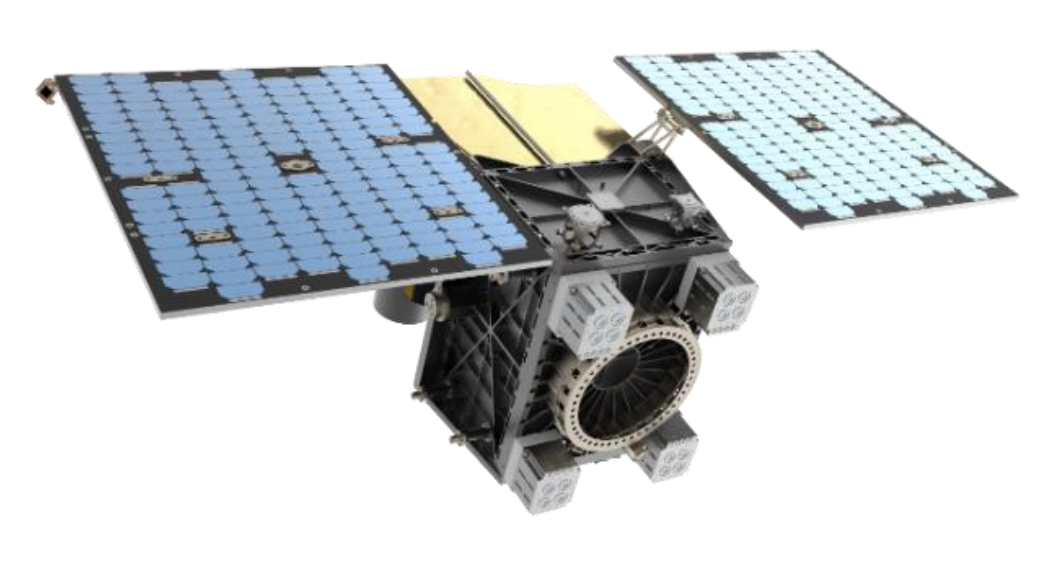

New-generation ground-based telescopes, such as the Vera C. Rubin Observatory with its wide-field imaging capabilities, are also affected. However, the observatory has published statements indicating they do not currently experience issues with Starlink. A response to any future problems, whether with Starlink or other constellations, should be forthcoming, but it may be too late for proactive mitigation. The same sentiment applies to other observatories that remained silent when they had the opportunity to voice concerns.
References:
- https://www.nature.com/articles/s41586-025-09759-5
