
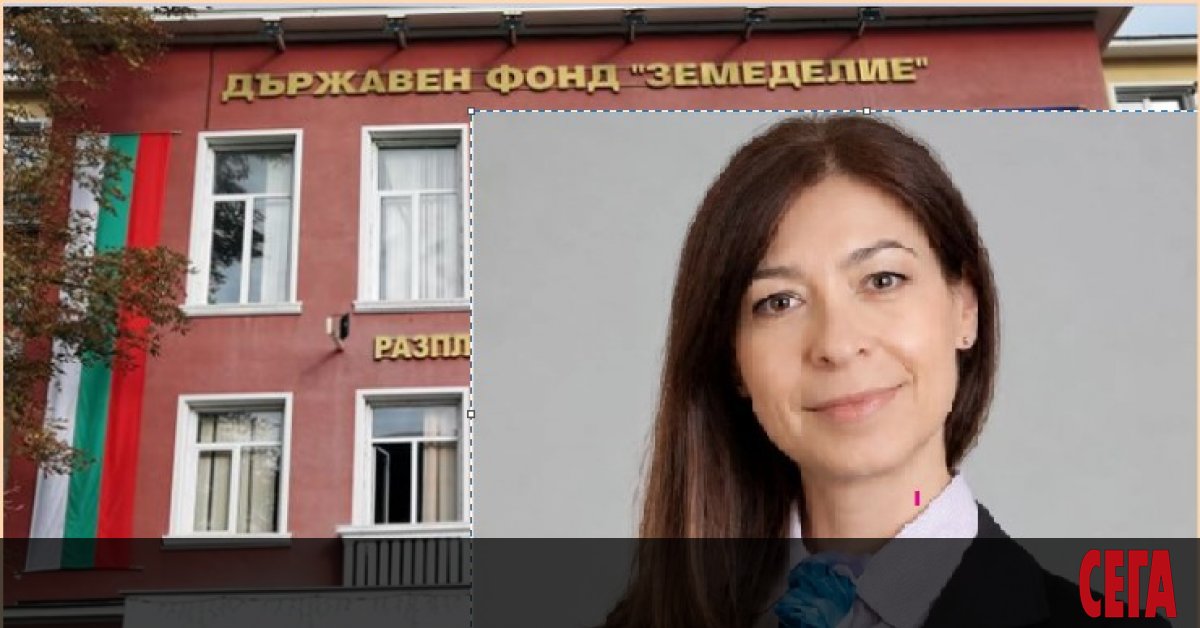
Bulgaria’s State Fund Agriculture has appointed Vladislava Kazakova as its new executive director, part of a broader series of leadership changes within the nation’s agricultural administration. The move follows the dismissal of former director Iva Ivanova and several deputies, as the government accelerates personnel shifts across its key regulatory agencies.
Leadership Transition at State Fund Agriculture
The appointment of Vladislava Kazakova, confirmed by Новини СЕГА, marks a significant shift for the agency responsible for managing substantial European Union agricultural subsidies and state-funded programs. Kazakova, an economist by training, brings over 20 years of experience in public administration and project management. Her history with the fund includes serving in various expert and leadership roles, most notably as deputy director with a portfolio focused on direct payments.

According to БНР Новини, Kazakova’s appointment is part of a wider reorganization within the agricultural ministry, which also saw the replacement of the director of the Food Safety Agency earlier this week. The transition process involves shifting the former executive director, Iva Ivanova, into a deputy role. The new management team will also include Ilya Ilev, Vladimir Atanasov, and Dimitar Govorov as deputy directors. This restructuring of the executive board was authorized by the Management Board of the fund, which holds the legal mandate for appointing the agency’s leadership.
Performance Records and Ministerial Acknowledgments
Agricultural Minister Plamen Abrovski formally acknowledged the outgoing leadership for their contributions during their tenure. The ministry highlighted specific organizational successes, particularly regarding the management of EU-funded development programs.

“Благодаря на Ива Иванова за създадената перфектна организация на успешното приключване на Програмата за развитие на селските райони от предходния период, под чието ръководство бяха разгледани всички подадени заявки по инвестиционните мерки.”
The minister also expressed appreciation for the work of Petya Slavcheva, specifically regarding her efforts in the successful disbursement of funds from the European Agricultural Fund for Rural Development toward the end of 2025. These acknowledgments come as the fund continues to oversee the distribution of approximately 2 billion euros annually, encompassing both EU subsidies and various domestic market mechanisms. The ministry’s formal statement emphasized that the transition is intended to maintain the operational momentum achieved in recent cycles, particularly concerning the oversight of investment measures.
Institutional Context and Financial Stakes
The administrative overhaul occurs against a backdrop of scrutiny regarding the efficiency of agricultural fund management. As reported by Mediapool.bg, recent disclosures indicated that the fund failed to utilize 310 million euros in available capital, resulting in a loss for Bulgaria. A portion of this financial shortfall occurred during the tenure of the previous leadership. This failure to absorb allocated funds has placed significant pressure on the agency to streamline its internal review processes and improve the speed at which it processes applications from agricultural producers.
The incoming director, Kazakova, holds a master’s degree in economics from the University of Economics in Varna. Her predecessor, Iva Ivanova, who led the fund since the spring of 2024, is a graduate of Sofia University “St. Kliment Ohridski” with a degree in European Union Law and also holds a master’s degree in International Business from the University of Economics in Varna. The new administration faces the immediate challenge of maintaining the flow of subsidies while navigating the administrative pressures identified during the previous period. Observers note that the agency’s ability to prevent future losses of EU funding remains the primary metric by which the new leadership will be evaluated by both the ministry and the agricultural sector.
Operational Mandate and Structural Shifts
The decision to retain former executives in deputy roles, as confirmed in the recent ministerial announcement, suggests a strategy aimed at preserving institutional memory. The agency, which operates as the primary paying agency for the state, is currently tasked with managing complex compliance requirements associated with the European Common Agricultural Policy. The integration of Ilya Ilev, Vladimir Atanasov, and Dimitar Govorov into the deputy director roles is designed to address specific bottlenecks that reportedly hampered the agency’s performance in the 2025 fiscal year.

The shift in leadership coincides with the onset of the 2026 application cycle. The agency’s internal directives require the new management to prioritize the processing of investment applications to ensure that producers can access liquidity ahead of the primary planting and harvesting windows. By restructuring the management team, the Ministry of Agriculture aims to decentralize some of the decision-making authority that was previously concentrated at the executive director level, potentially allowing for faster approvals on smaller-scale projects.
Future Outlook for Agricultural Administration
The administrative changes are viewed as part of an effort by the current government to accelerate decision-making processes within the agricultural sector. By retaining some of the previous leadership in deputy roles, the ministry appears to be aiming for a balance between continuity and the implementation of new strategic priorities. For the agricultural sector, the coming months will be critical as the new management team takes over the responsibility of ensuring that EU funds are effectively absorbed and that the administrative burden on producers is minimized. The effectiveness of this new team will likely be tested by their ability to meet the remaining deadlines for the current funding period and their success in rectifying the deficiencies that led to the underutilization of capital in the previous term.
