

Tesla is accelerating its push into autonomous driving technology with a series of hardware upgrades designed to transform its existing fleet into a potential robotaxi network, according to recent reports from European tech and automotive publications. The moves approach as the electric vehicle giant faces growing scrutiny over which of its vehicles can support its most advanced self-driving features—and which may be left behind.
Millions of Teslas Won’t Support Full Self-Driving, Company Confirms
In a disclosure that could reshape expectations for Tesla’s autonomous ambitions, the company has acknowledged that approximately four million of its vehicles worldwide will never be eligible for its Full Self-Driving (FSD) software. The limitation stems from hardware constraints in older models, which lack the processing power and sensor capabilities required for the system’s most advanced features.

The revelation, first reported by German financial outlet Trading-Treff, underscores the challenges Tesla faces in retrofitting its massive global fleet for autonomous operations. Whereas the company has not specified which models are affected, industry analysts suggest the cutoff likely applies to vehicles produced before the introduction of Tesla’s Hardware 3 (HW3) computer, which debuted in 2019.
Hardware Upgrades Target Robotaxi Future
To bridge the gap for its newer vehicles, Tesla is rolling out a series of hardware enhancements aimed at preparing its fleet for a future of autonomous ride-hailing services. Reports from notebookcheck.com and IT-Boltwise detail the company’s plans to retrofit HW3-equipped vehicles with its next-generation AI4 computer and additional cameras. The upgrades are widely seen as a critical step toward Tesla’s long-promised robotaxi service, which CEO Elon Musk has repeatedly touted as a key revenue driver for the company.
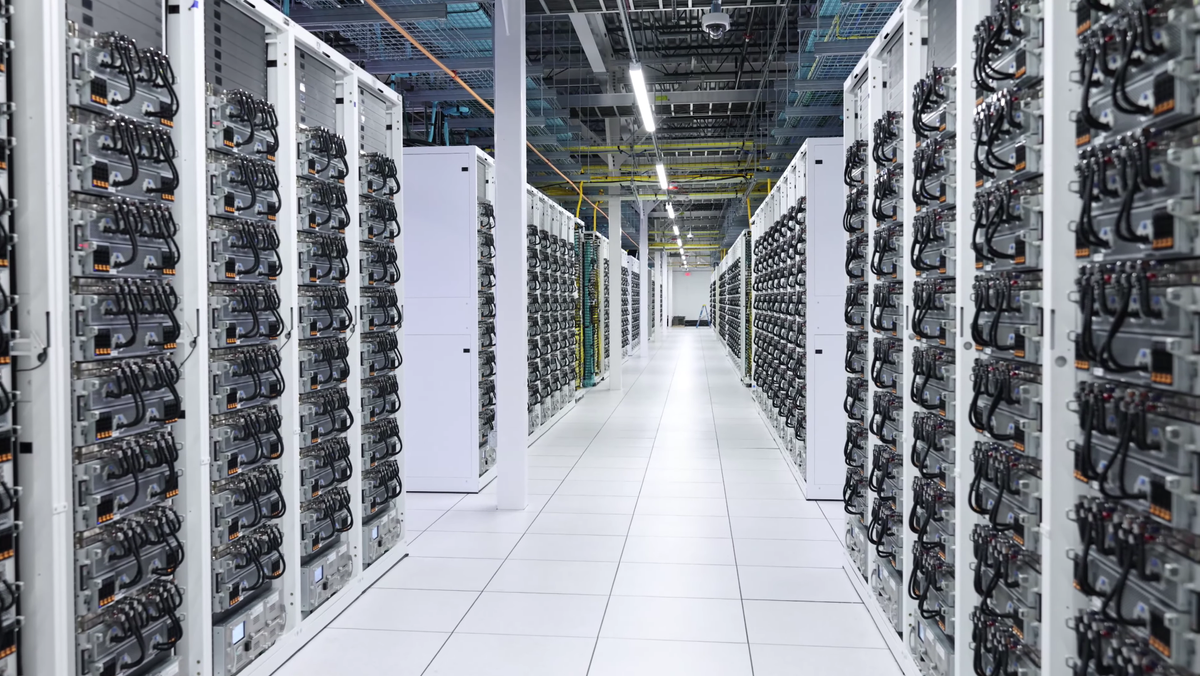
“The hardware improvements are designed to enhance perception and decision-making capabilities, bringing Tesla closer to its goal of fully autonomous operation,” one report noted. The AI4 computer, which Tesla has described as a significant leap in processing power, is expected to handle the complex neural networks required for real-time navigation in urban environments.
European Drivers Test New FSD Features
As Tesla works to expand its autonomous capabilities, drivers in Europe are getting their first taste of the company’s latest Full Self-Driving beta software. According to a report from the Neue Zürcher Zeitung, early adopters in Switzerland and Germany have begun testing the updated system, which Tesla claims offers improved lane-keeping, traffic-light recognition and obstacle avoidance. However, the rollout has not been without challenges. Drivers have reported mixed experiences, with some praising the system’s responsiveness in highway driving while others noted persistent issues with urban navigation, particularly in complex intersections.
“The technology is impressive, but it’s clear that fully autonomous driving is still a work in progress,” one tester told the publication. “There are moments when the car handles situations flawlessly, and others where it hesitates or requires driver intervention.”
Market Implications and Industry Skepticism
Tesla’s aggressive push into autonomous driving comes at a pivotal moment for the company, which has seen its stock price fluctuate amid concerns over demand for its electric vehicles and the viability of its self-driving technology. While Musk has repeatedly assured investors that robotaxis will revolutionize transportation—and Tesla’s business model—critics argue that regulatory hurdles and technical limitations could delay widespread adoption for years.
Industry analysts have also raised questions about the scalability of Tesla’s approach. Unlike competitors such as Waymo and Cruise, which rely on high-definition maps and lidar sensors, Tesla’s system is designed to operate using only cameras and radar. While this approach reduces hardware costs, it also places greater demands on the company’s AI software, which must interpret complex driving environments in real time.
A recent analysis from AUTOBILD highlighted Tesla’s progress in autonomous driving but cautioned that the company remains years away from achieving Level 5 autonomy—the industry benchmark for fully driverless operation. “Tesla is making meaningful strides, but the gap between its current capabilities and true autonomy is still significant,” the report concluded.
What’s Next for Tesla’s Autonomous Ambitions?
With the hardware upgrades now underway, Tesla’s next major milestone will likely be the expansion of its FSD beta program to more markets, including the United States. The company has not yet announced a timeline for the broader rollout, but industry observers expect it to coincide with the deployment of the AI4 computer in eligible vehicles.
For now, Tesla’s autonomous driving efforts remain a high-stakes gamble—one that could either cement its leadership in the EV market or expose the limitations of its camera-based approach. As the company continues to refine its technology, the coming months will be critical in determining whether Tesla can deliver on its promise of a driverless future—or if it will be forced to recalibrate its ambitions in the face of technical and regulatory realities.
